
Himax WiseEye powers WAFERLOCK L322 palm vein smart lock
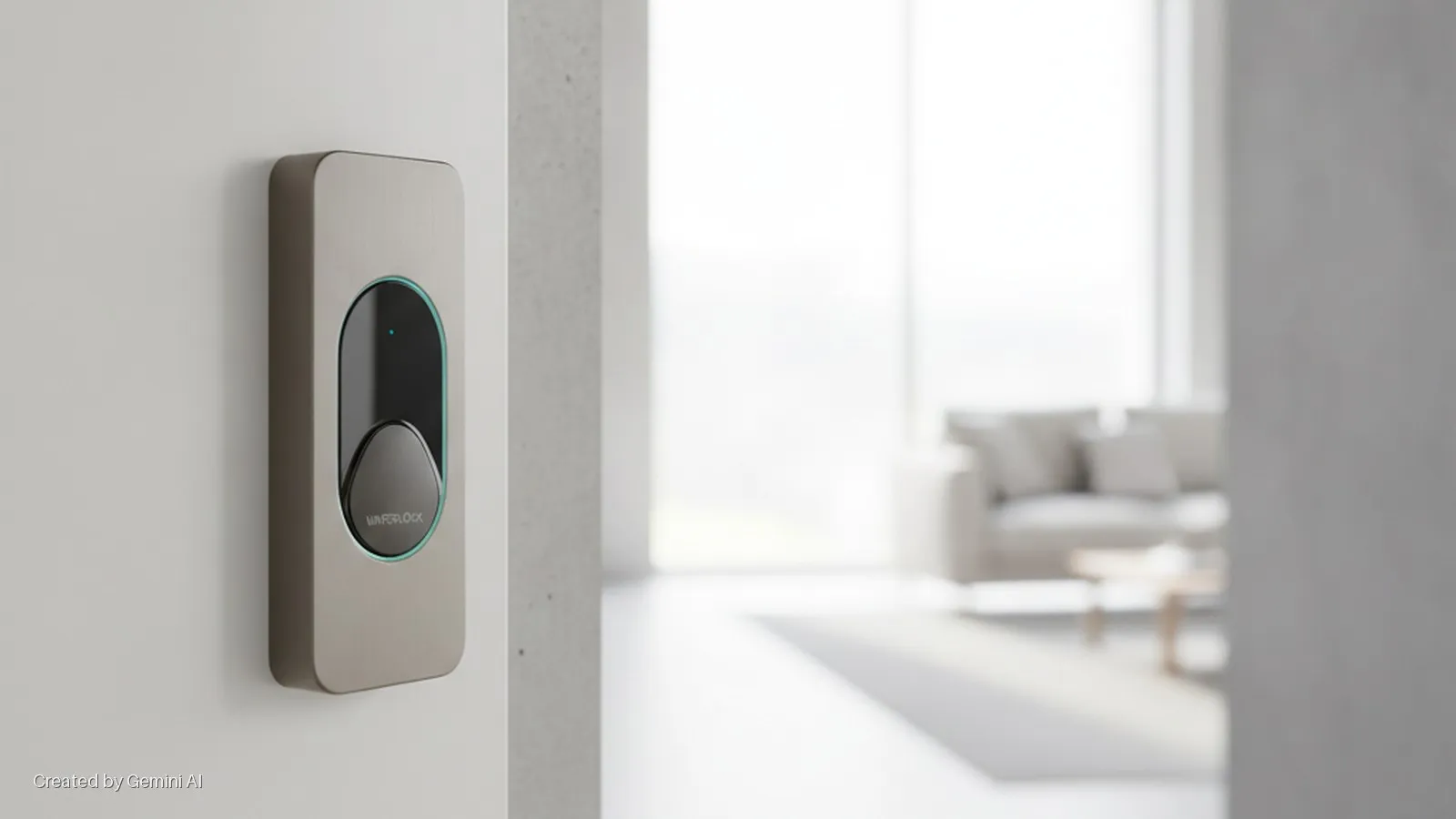
Himax Technologies and WAFERLOCK Corporation have jointly announced the commercial availability of the WAFERLOCK L322, a smart lock that uses Himax's WiseEye palm vein biometric authentication module to provide contactless identity verification. The partnership pairs Himax's endpoint AI expertise with WAFERLOCK's vertically integrated lock manufacturing, and the two companies say the product targets homes, residential communities, and smart buildings in Taiwan and overseas markets including Europe, the United States, and Japan.
The L322 supports multiple access modes alongside palm vein recognition: RFID cards, PIN codes, mechanical keys, and an optional mobile app. The device is also compatible with EasyCard, iPASS, and MIFARE contactless card standards, broadening its appeal in markets where transit-integrated credentials are common.
How the technology works
Palm vein authentication reads the unique vascular patterns beneath the skin of the hand using near-infrared imaging. Because it relies on internal biological features rather than surface characteristics, it is less susceptible to the degradation that affects fingerprint sensors over time, including worn ridges, perspiration, skin conditions, or age-related changes. Himax notes that even identical twins have distinct vein patterns, and the module incorporates liveness detection to reduce spoofing risk.
The WiseEye module performs image capture, feature extraction, and matching entirely on-device, using an ultralow power AI processor and a CMOS image sensor. No cloud connectivity is required for authentication, which the companies position as a privacy advantage over server-side biometric systems. Mark Chen, Vice President of Smart Sensing Business at Himax, said the company expects demand for palm vein technology to increase as customers seek "authentication solutions that combine contactless operation, high accuracy, spoof resistance, and strong privacy protection."
WAFERLOCK brings established manufacturing credentials to the collaboration: its lock mechanisms have achieved ANSI Grade 1 certification in the United States and meet European standards EN 15684 and EN 16867, with selected products rated to IP68 for water and dust resistance. The company reports distribution across more than 25 countries via over 100 partners worldwide, and holds patents in the US, UK, EU, Japan, and Taiwan.
Market and competitive context
Biometric access control is a growing sub-segment within the broader physical security and smart building market. Fingerprint-based entry, which has dominated consumer smart locks for the past decade, faces increasing competition from palm vein and facial recognition as sensor costs fall and edge AI processing becomes more power-efficient. Himax's WiseEye platform, already deployed in consumer electronics and AIoT devices, gives the company a ready-made silicon and algorithm stack to address this shift without designing purpose-built hardware for each application.
The on-device processing approach also sits well with tightening data privacy expectations. In Europe, the EU AI Act classifies remote biometric identification as high risk, but on-device authentication that never transmits biometric data off the product is subject to a lighter compliance burden. WAFERLOCK's existing CE-mark programme and European distribution network reduce the go-to-market friction for EU expansion.
Himax faces competition from a range of fabless and integrated semiconductor vendors active in edge AI sensing, including Espressif, Arm Ethos-based designs, and various Chinese AIoT chipmakers. Its principal differentiator in the smart lock segment is the combination of a production-ready palm vein algorithm, a low-power always-on processor, and an image sensor offered as an integrated module rather than discrete components. Investors and smart building integrators will watch for additional named OEM wins beyond WAFERLOCK as the clearest measure of platform traction.