
Kratos Valkyrie CCA passes BLOS command-and-control flight test
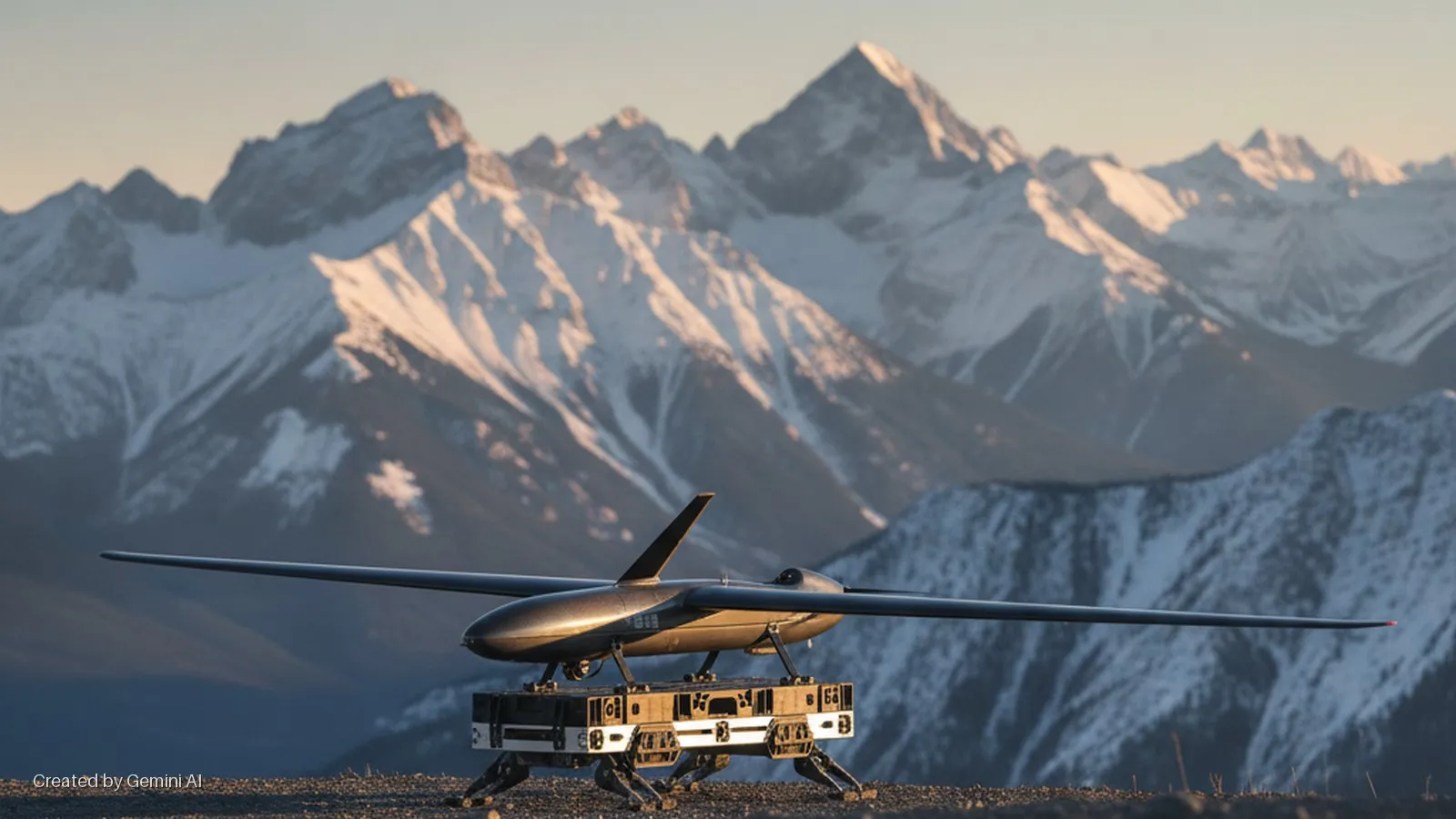
Kratos Defense & Security Solutions has confirmed that a missionised United States Marine Corps Valkyrie Collaborative Combat Aircraft completed a beyond-line-of-sight (BLOS) command and control demonstration in southern California in April 2026, a milestone the Nasdaq-listed defence technology company disclosed on 18 August. The test, conducted at a US Navy range, involved coordinated electronic warfare objectives flown alongside USMC F-35s and an F/A-18 before the Valkyrie returned autonomously to its recovery point.
The aircraft launched from a zero-length launcher, validated the BLOS datalink, and then handed control from a Kratos ground station to an Autonomy Government Reference Architecture (A-GRA)-compliant human-machine interface developed by Autonodyne LLC. The architecture is designed to allow any A-GRA-compliant operator interface to assume control without proprietary lock-in, a design principle that has become central to US military unmanned systems procurement. The test was led by the Expeditionary Maritime Aviation-Advanced Development Team, with contributions from a USMC Operational Test and Evaluation Squadron, US Naval Air Test and Evaluation Squadrons, Northrop Grumman Corporation, and Autonodyne.
Programme context
Steve Fendley, president of Kratos Unmanned Systems Division, said the April flight was "the fourth new mission system configuration flown on USMC Valkyrie platforms in less than three years," adding that the company is producing more Group 5 unmanned jet aircraft than any other provider. Kratos expects to deliver over 150 systems in 2026, with annual production scaling toward approximately 40 Valkyries to meet domestic and international demand.
In January 2026, Kratos and Northrop Grumman Mission Systems were awarded the USMC Marine Air-Ground Task Force Unmanned Expeditionary Tactical Aircraft (MUX TACAIR) Collaborative Combat Aircraft contract. Under that programme, Northrop Grumman supplies a mission kit and open-architecture autonomy software integrated onto the Kratos air vehicle. The first prototype MUX TACAIR Valkyrie is reported to be on track for completion in summer 2026, meaning the April BLOS demonstration adds weight to the programme's near-term delivery timeline.
Competitive and regulatory landscape
The CCA market is becoming one of the most watched segments in defence technology procurement, with both the US Air Force and Marine Corps running parallel programmes. Kratos competes in this space against General Atomics, Boeing and Anduril Industries, each pursuing different cost and autonomy trade-offs. The USAF's own CCA increment one contract, awarded in late 2024, set a template for how the Pentagon intends to integrate attritable unmanned aircraft with crewed platforms at scale.
Open-architecture autonomy standards such as A-GRA are central to the Department of Defense's broader push for vendor-agnostic interoperability across unmanned systems, reducing single-supplier dependency and shortening upgrade cycles. The approach maps directly to the principles outlined in the DoD's Replicator initiative, which prioritises rapid, low-cost attritable drone production. Export-control considerations under US International Traffic in Arms Regulations will govern how far the Valkyrie's BLOS and EW configurations can be shared with allied customers, a constraint Kratos acknowledged by citing an unnamed international customer base without further detail.
For enterprise and government technology observers, the significance of the April test lies less in any single flight and more in the demonstrated cadence: four distinct mission configurations in under three years points to a modular integration pipeline that could reshape how defence procurement offices think about software-defined, upgradeable unmanned platforms over the coming decade.