
Lunar Outpost wins NASA backing for Starweave swarm software
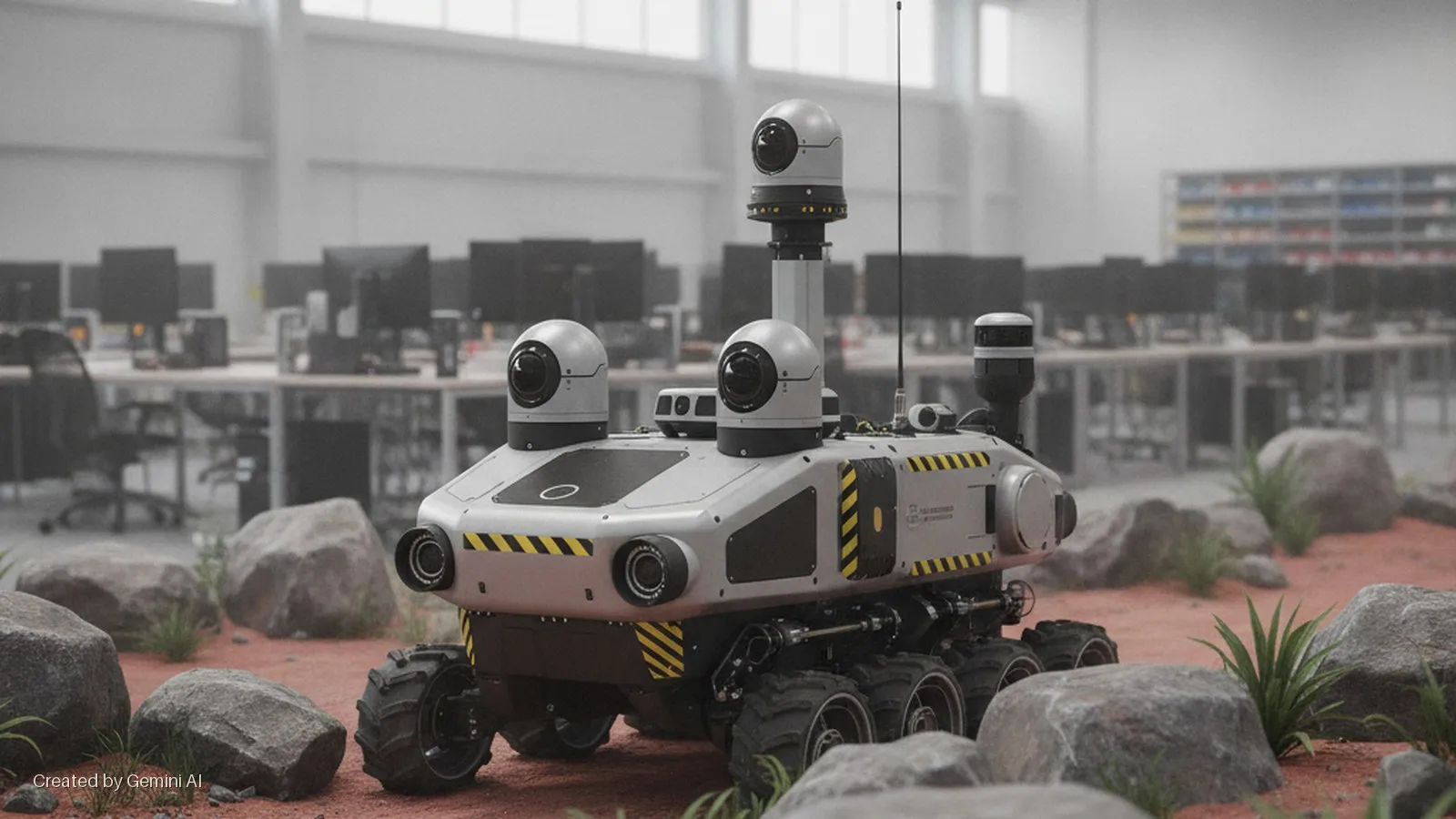
Lunar Outpost has been selected by NASA under the agency's Announcement of Collaboration Opportunity (ACO) programme to advance Starweave, a distributed software layer that coordinates autonomous robotic fleets in GPS-denied and communication-delayed environments. The Colorado-based company says the selection will accelerate Starweave's development as the core coordination layer for sustained lunar and, eventually, Martian operations.
Starweave is designed to allow operators to manage thousands of heterogeneous robotic systems working in concert without continuous human oversight from Earth. The software handles autonomous decision-making, self-healing swarm organisation, and resilient communications when links to mission control are interrupted or constrained by distance-induced latency. Lunar Outpost positions the platform as part of a broader suite that includes Stargate and Spark, together covering mission control, networking, and AI-driven decision support.
Justin Cyrus, founder and chief executive of Lunar Outpost, said the company's ambition goes well beyond individual missions: "Establishing a sustainable presence in space will take more than a single mission, rover, or spacecraft. It requires fleets of intelligent robotic systems that can communicate, make decisions, and execute work in unison."
Commercial momentum
The ACO selection adds institutional weight to a business that already carries ten contracted missions scheduled for launch through 2030. Lunar Outpost also holds a place in NASA's Lunar Terrain Vehicle Services programme through its Pegasus rover, giving the company a dual foothold in both physical mobility hardware and the autonomous software stack that would coordinate it at scale.
NASA ACO agreements are non-funded Space Act Agreements, meaning NASA provides technical expertise, facilities access and collaborative development support rather than direct cash. The arrangement is common in the agency's commercial partnerships and allows companies to mature technologies with NASA input while retaining intellectual property rights. The absence of a disclosed contract value is therefore expected rather than a gap in the announcement.
Market and regulatory context
Autonomous swarm coordination for space infrastructure sits at an early but accelerating stage of development. On Earth, analogous multi-agent robotics software is being developed for defence logistics, mining and warehousing, with companies such as Palantir, Shield AI and a growing cohort of well-funded startups pursuing coordination-layer software for GPS-degraded environments. The cross-domain relevance of Starweave is not incidental: Lunar Outpost explicitly notes multi-domain readiness across Earth and space as a use case, which points toward potential defence and commercial terrestrial licensing alongside the space programme.
Regulatory oversight of autonomous systems operating in space is still nascent. The FCC and ITU govern satellite spectrum and orbital debris, but there is no equivalent framework specifically governing autonomous robotic decision-making on planetary surfaces. As commercial lunar activity scales toward sustained outposts, standards bodies and government agencies will need to develop comparable frameworks, a process that typically lags operational deployment by several years.
Next milestones
The immediate priority under the ACO collaboration will be maturing Starweave's core autonomy capabilities against NASA's requirements for robotic workforce coordination. Investors and industry observers will look for Lunar Outpost to publish performance benchmarks, announce a first named commercial partner deploying Starweave outside the NASA relationship, and demonstrate the platform's scalability claims as mission manifests grow ahead of the 2030 horizon.