
Kratos and GE Aerospace ignite GEK800 cruise missile turbofan
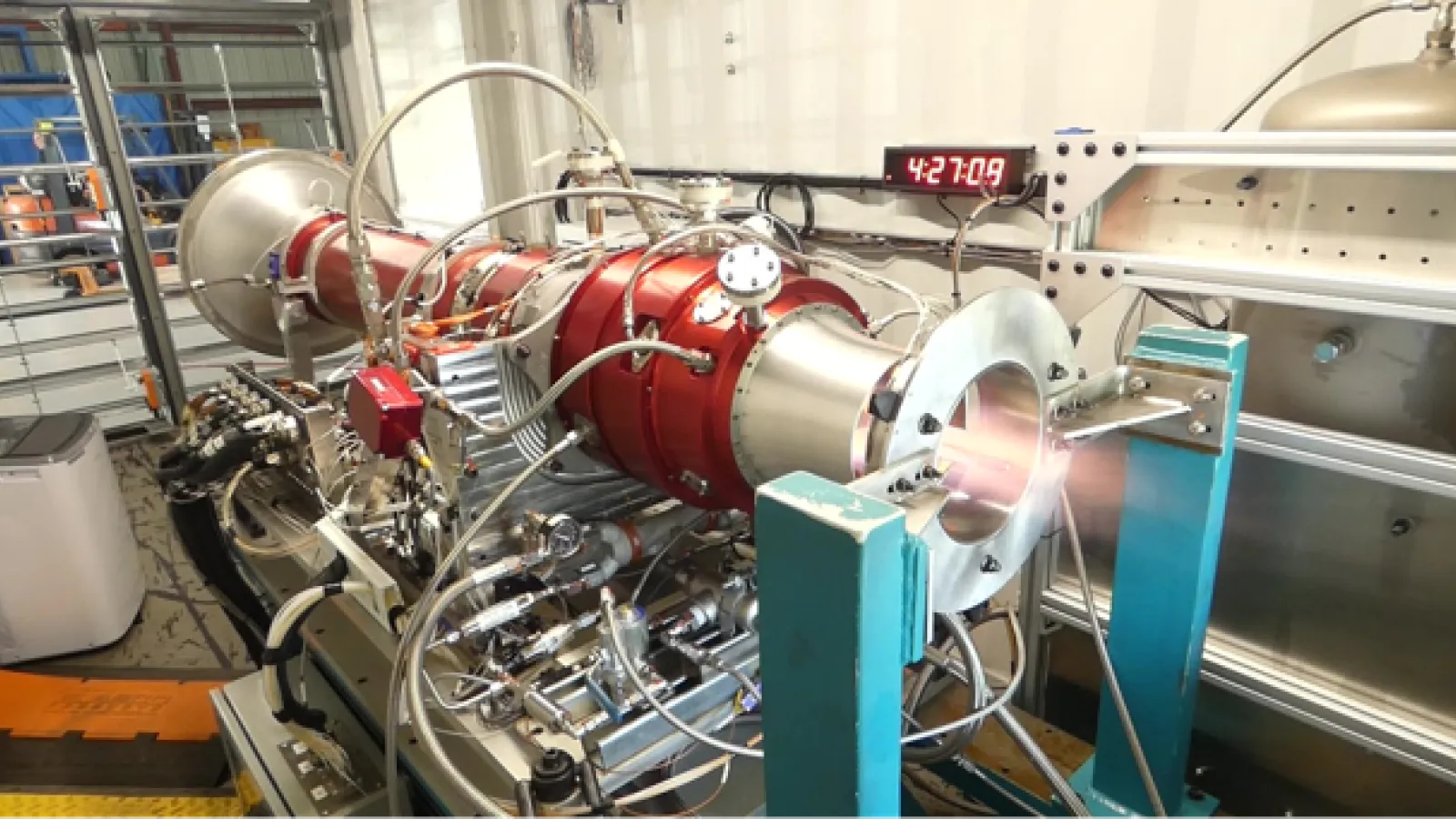
Kratos Defense & Security Solutions and GE Aerospace have completed the first ignition test of their jointly developed GEK800 turbofan engine, a milestone the companies say keeps a programme aimed at affordable, long-range cruise missile propulsion firmly on schedule. The test was conducted at Kratos's X-58 facility using GEK800 Serial Number 1, and both partners described the outcome as a 100 per cent success rate for this phase of development.
The engine has been formally designated the F143 by the US Department of Defense and is being developed to meet defined requirements for long-range, stand-off strike capabilities. Kratos and GE Aerospace say the design prioritises cost-effective manufacturing alongside high performance, positioning it for what they describe as large-volume production in support of advanced cruise missile systems.
The programme
Chris Rawlings, Vice President of Kratos's Defense Engine Portfolio, said the joint government and industry test team had shown "exceptional focus, discipline, and schedule execution," and framed the result as evidence that turbine engines can be developed "affordably and at pace." Jorge Perez, General Manager of Edison Works Advanced Combat Engines at GE Aerospace, said the GEK800 had demonstrated "strong performance and durability" and was designed to meet the demanding requirements of cruise missile applications.
Stacey Rock, President of Kratos's Turbine Technologies Division, said the company is preparing for large-volume production of the engine, though no production quantities, unit costs, or contracted volumes were disclosed in the release.
The successful ignition initiates a broader testing campaign. Kratos indicated the system's technological architecture, reliability, and readiness for integration have been validated by the X-58 test, though further development milestones remain before the engine reaches production readiness.
Market context
The GEK800 sits within a broader acceleration of Western investment in attritable and expendable strike systems. Demand for affordable cruise missile propulsion has intensified following sustained consumption of munitions stocks in recent conflicts, prompting governments to reassess production capacity and lifecycle costs across the supply chain.
GE Aerospace brings substantial military propulsion heritage to the programme through its Edison Works advanced combat engines unit, which also develops engines for other precision-strike and unmanned applications. Kratos, meanwhile, has built a distinct position in the attritable drone and propulsion segment by pursuing low-cost, high-volume production models that differ from the traditional prime contractor approach. The partnership structure here mirrors that broader strategy: Kratos manages the test infrastructure and production scale-up while GE Aerospace contributes propulsion engineering depth.
Competing approaches to cruise missile propulsion include Williams International, which supplies engines for several existing US programmes, and a number of European consortium efforts aimed at satisfying NATO stand-off strike requirements. Cost-per-unit economics and supply-chain resilience are likely to be primary procurement criteria as governments seek to rebuild stockpiles and extend operational reach.
Defence procurement outlook
The F143 designation indicates the engine has cleared an early formal threshold in the US military acquisition process. However, a successful ignition test sits at the opening stage of a qualification and certification path that typically spans several years before operational fielding. Defence procurement timelines for propulsion systems are heavily influenced by government budget cycles, test-range availability, and shifting operational priorities.
Both Kratos and GE Aerospace noted the engine is designed to serve not only the US Department of Defense but also allied defence prime contractors seeking competitive missile solutions for government procurement programmes. Export licensing and foreign military sales processes would apply to any allied-nation deployments, adding regulatory complexity to the commercial timeline.
Investors in Kratos, which trades on NASDAQ as KTOS, will be watching for further test milestones, a named prime-contractor customer, and detail on contracted production volumes as the programme progresses through its testing campaign.