
Tower Semiconductor to showcase SiPho and SiGe platforms at ECOC 2026
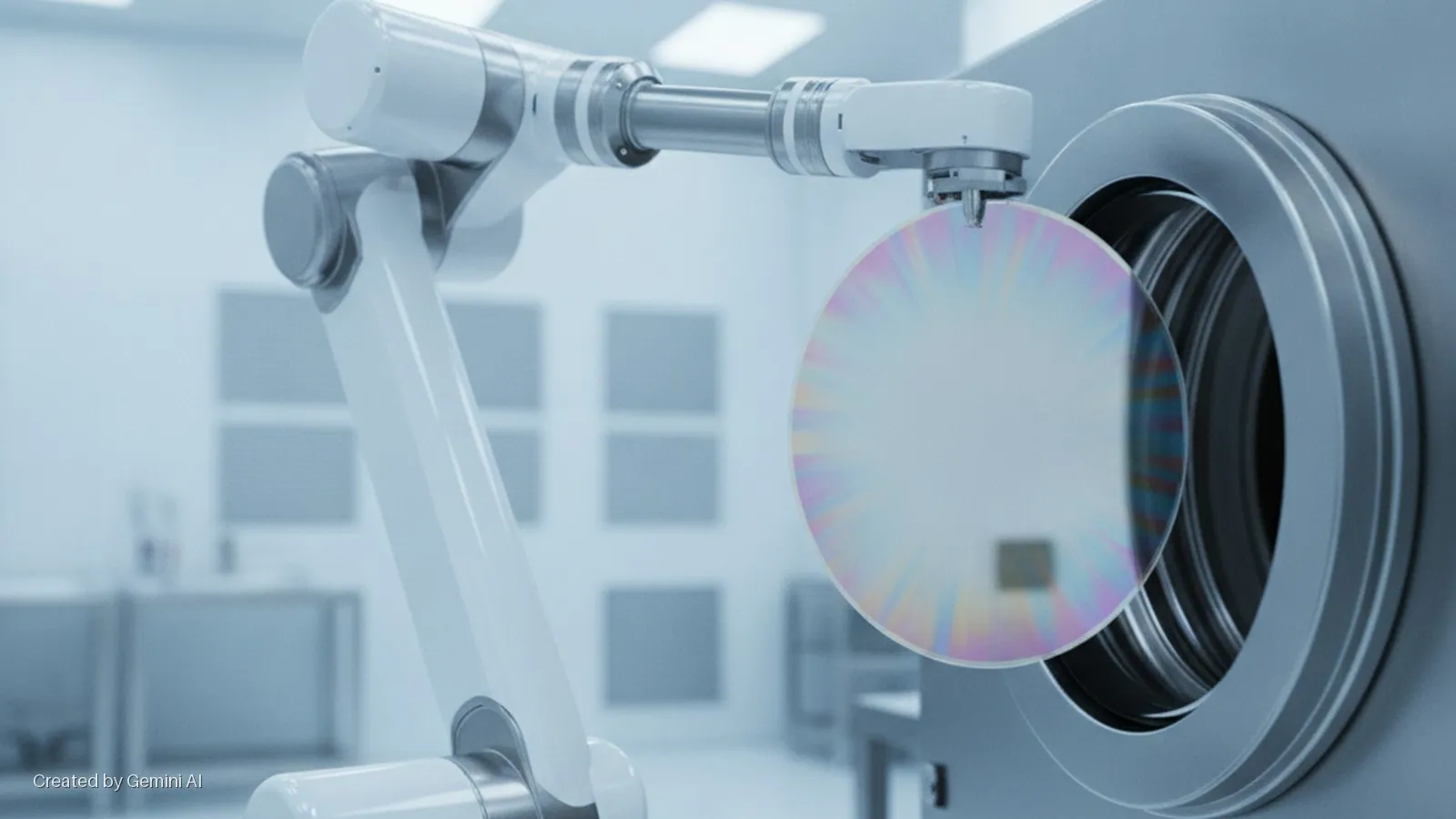
Tower Semiconductor, the NASDAQ- and TASE-listed analogue semiconductor foundry, has confirmed it will exhibit at ECOC 2026, the European Conference on Optical Communication, running 21–23 September at FYCMA in Malaga, Spain. The company will use booth C1014 to present its silicon photonics (SiPho) and Silicon Germanium (SiGe) BiCMOS platforms to customers and prospective partners, with company representatives available for one-to-one roadmap discussions throughout the event.
The Migdal HaEmek-based foundry says its SiPho platform is already deployed at high volume for datacentre and telecom optical transceivers. At ECOC it plans to highlight applications that go further up the value chain, including near-packaged optics and co-packaged optics (NPO/CPO) for next-generation AI cluster interconnects, dense wavelength-division multiplexing (DWDM) lasers, optical circuit switching, frequency-modulated continuous-wave (FMCW) LiDAR for physical AI systems, and quantum computing interconnects.
The technology case
Alongside its SiPho work, Tower will feature its SiGe BiCMOS process, which the company positions as a complement to silicon photonics for applications requiring higher bandwidth, lower latency and reduced power draw. SiGe bipolar transistors can operate at higher frequencies than standard CMOS, making them relevant for the electro-optic driver and transimpedance amplifier circuits that sit alongside photonic components in high-speed optical links.
The co-packaged optics angle is particularly timely. As AI training and inference clusters scale to hundreds of thousands of GPUs and accelerators, the electrical signalling between compute and networking silicon becomes a critical bottleneck. Moving optical interconnects closer to or directly into the package is widely regarded as the next architectural step by hyperscalers and switch ASIC vendors alike. Tower's pitch is that a proven, high-volume SiPho foundry process lowers the risk for customers designing CPO components for volume production.
Market context and competitive positioning
Tower competes in silicon photonics foundry services against a small field of specialised players, including IMEC's photonics pilot line and GlobalFoundries' silicon photonics process, as well as integrated device manufacturers that keep photonics in-house. The company's stated differentiator is volume manufacturing capability rather than research-scale prototyping, which matters to optical transceiver vendors that need to ship millions of units per year.
Demand for optical connectivity is being driven from two directions simultaneously. On the AI infrastructure side, the shift from copper to optical within and between GPU racks is accelerating. On the telecom side, 5G and fibre-to-the-premises roll-outs continue to drive transceiver volumes. Tower's decision to address both audiences at ECOC reflects the convergence of these two demand pools around shared photonic process technology.
Tower currently operates fabs in Israel, the United States and Japan, and shares a 300mm facility in Agrate, Italy with STMicroelectronics. That European manufacturing footprint may carry additional significance as the EU Chips Act continues to incentivise domestic semiconductor production, though Tower did not reference that programme in its release.
The company did not disclose customer names, process node specifics, volume figures, or pricing for its SiPho or SiGe platforms in this announcement, and no financial guidance was updated.