
Heron Power and RWE sign solid-state transformer pilot in Texas
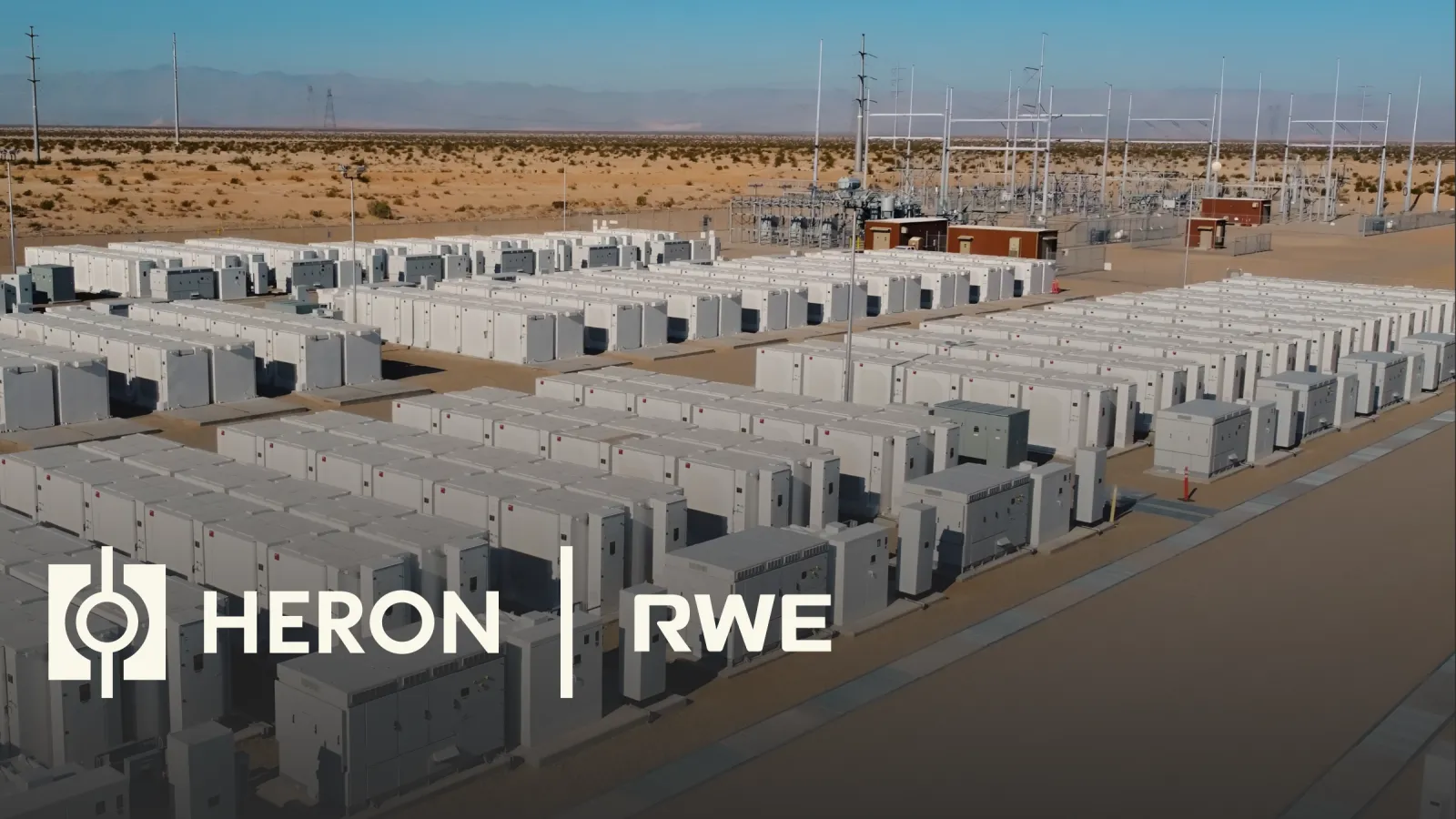
Heron Power, a California-based manufacturer of medium-voltage power electronics, has signed a pilot agreement with RWE Americas to deploy its Heron Link solid-state transformer at a battery storage facility co-located with the Pyron Wind Farm in Scurry County, Texas. Installation is targeted for April 2027, with both parties intending to use the pilot as a stepping stone to a broader supply agreement covering solar and storage projects.
The agreement includes a stated path for RWE to reserve at least 500 megawatts of annual capacity from Heron Power's US manufacturing facilities, subject to finalisation of definitive purchase agreements. That conditional commitment is significant given the scale of RWE's US renewable portfolio, which spans more than 13 GW of operating capacity across 27 states, including approximately 6 GW of solar photovoltaic and 1.2 GW of battery energy storage assets.
What Heron Link does
Conventional utility-scale solar and storage installations use low-voltage inverters and separate medium-voltage transformers to step DC output up to grid-ready AC. Heron Link replaces both components with a single modular 5 MW medium-voltage inverter. The company claims a DC-to-medium-voltage efficiency of 98.6% and a lifetime availability figure of 99.5%, though these benchmarks appear in the company's own release without independent third-party verification.
Drew Baglino, chief executive and founder of Heron Power, said the agreement marks "the first utility-scale pilot we have signed for Heron Link" and emphasised the domestic supply angle. Andrea Hu-Bianco, senior vice president of engineering at RWE Americas, pointed to 800V DC data centre architectures as one of the addressable markets, a detail that underlines how the technology straddles the energy and data infrastructure sectors.
Heron announced in August 2026 that it is building a 286,000 square-foot manufacturing facility in Morgan Hill, California, branded Heron Factory One, designed to produce up to 10,000 Heron Link units a year, equivalent to more than 40 GW of annual capacity. The plant requires over $100 million in investment and is expected to create more than 600 jobs, with mass production beginning in late 2027. The company notes that domestic manufacturers currently supply less than 10% of the US utility-scale solar inverter market.
Market and regulatory context
The solid-state transformer market is drawing interest as grid operators seek to simplify renewable integration and reduce the number of discrete components in the power chain. Established power electronics names including ABB, Siemens Energy and a range of US-based specialist vendors are pursuing similar architectures, though few have reached utility-scale commercial deployment with a domestic manufacturing footprint.
Domestically manufactured inverters and transformers have become a specific focus under the Inflation Reduction Act's domestic content bonus provisions, which offer project developers additional tax credits when a qualifying share of components are produced in the United States. Heron Power's California manufacturing strategy appears designed, at least in part, to enable its customers to capture those credits, giving the commercial proposition a regulatory tailwind that independent analysis has not yet quantified.
From a grid-code perspective, Heron Link's native grid-forming control capability is relevant to FERC Order 2023 interconnection reforms and emerging state-level grid reliability requirements that increasingly distinguish between grid-following and grid-forming inverter technologies. Demonstrating grid-forming performance at the Pyron site could accelerate permitting timelines for future projects where grid stability requirements apply.
The next milestones to watch are confirmation of the April 2027 installation date and, thereafter, independent performance data from the Pyron pilot that could support or challenge Heron Power's claimed efficiency and availability figures. Finalisation of the broader supply agreement with RWE would represent a material commercial proof point for a company that has not yet disclosed commercial revenue or customer volumes beyond this announcement.