
Red Cat's Teal Drones wins $2.49m US Air Force Black Widow order
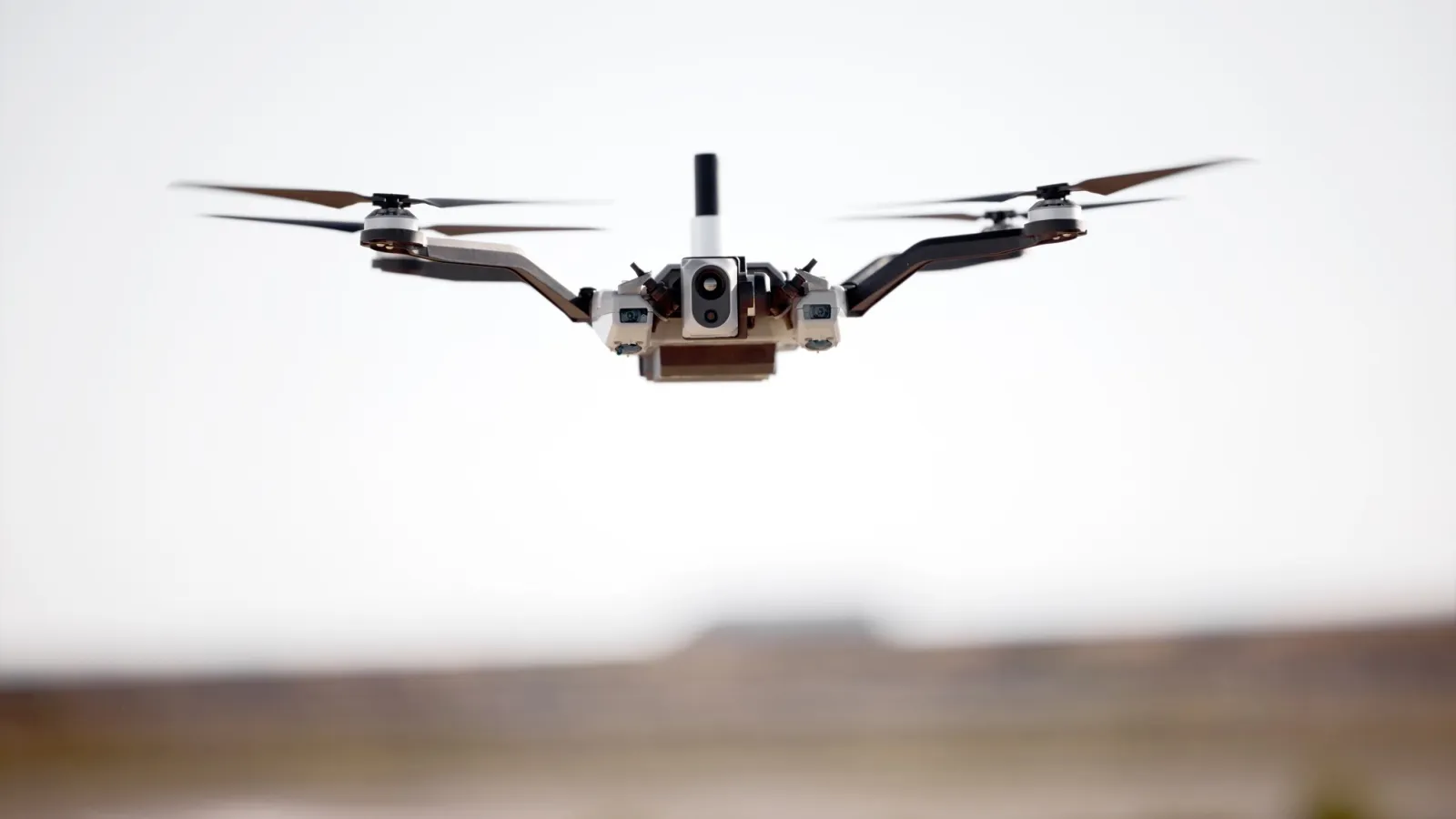
Red Cat Holdings has announced that its Teal Drones subsidiary has received a $2.49 million firm-fixed-price contract from the US Air Force for its Black Widow small unmanned aircraft system. The award covers hardware, train-the-trainer support, batteries, spares and shipping, with delivery required by 24 August 2026.
The contracting customer is the US Air Force Security Forces Center (AFSFC), the body responsible for training and equipping Air Force security personnel across active-duty, Air National Guard and Air Force Reserve units worldwide. The stated purpose of the contract is a technical and operational assessment of Black Widow as a candidate successor to the AFSFC's existing Teal 2 fleet.
The deal
Black Widow is Red Cat's flagship short-range reconnaissance platform and already holds the distinction of being the US Army's selected system under its Short Range Reconnaissance (SRR) programme. The Air Force assessment builds directly on that Army selection: if Black Widow clears the AFSFC evaluation, it could displace the Teal 2 across a much larger combined force of active, National Guard and Reserve defenders.
Jeff Thompson, chief executive of Red Cat, said the contract reflected "growing recognition across the Department of War that secure, American-made systems are essential for the operations our national defense and security organizations carry out every day." The company positioned the award as evidence of cross-service momentum rather than a standalone contract win.
The contract is firm-fixed-price, meaning Red Cat bears cost risk but is protected from scope creep on the government side. At $2.49 million it is a relatively small order in defence procurement terms, but assessment contracts of this kind are typically the pathway to larger follow-on production awards if the system passes evaluation criteria.
Market context
The small unmanned aircraft systems market for defence applications has been reshaped in recent years by US government concerns about supply-chain security, particularly following restrictions on DJI and other Chinese-manufactured drones under the National Defense Authorization Act provisions that bar the use of federal funds to procure covered equipment. Red Cat's domestic manufacturing positioning is a deliberate competitive response to those restrictions, and its Blue sUAS status (systems approved for Department of Defense procurement) is central to its federal sales strategy.
The SRR programme selection Red Cat references gives it a degree of incumbency advantage in Army channels, but other domestic vendors including Skydio and Joby-affiliated platforms are also active in the military short-range ISR market. The Air Force assessment outcome will be a meaningful signal of whether Red Cat can extend its Army foothold into Air Force security operations, a distinct customer base with its own procurement cadence.
Broader US defence drone policy is in active flux: the Pentagon has been accelerating its Replicator initiative, which targets the procurement of thousands of attritable autonomous systems, and Congress has increased appropriations for unmanned systems in successive defence bills. That macro tailwind benefits domestic sUAS vendors, though it also draws in new entrants and increases competition for assessment and follow-on contracts.
Red Cat has not disclosed its current backlog or annual recurring revenue, and the company's SEC filings note the forward-looking risks inherent in defence contract pipelines. Investors will look for a follow-on production award from the AFSFC as the key near-term milestone once the assessment concludes.