
TurbineOne opens Maine facility for defence AI and autonomous systems
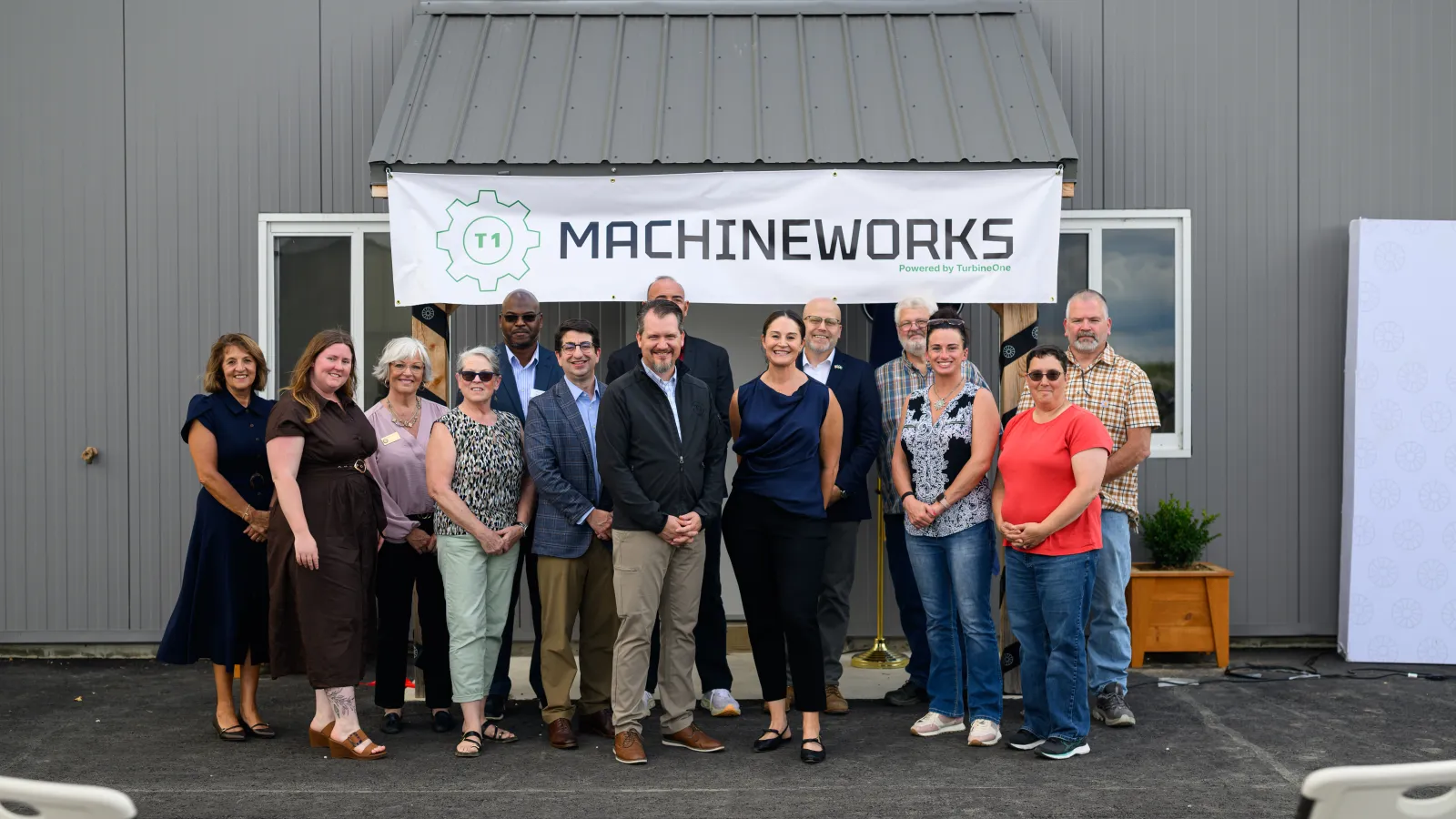
TurbineOne has inaugurated T1 MachineWorks, a new engineering and prototyping facility in Old Town, Maine, dedicated to advancing its edge AI software and autonomous hardware capabilities for defence customers. The opening comes as the company executes a nearly $99 million US Army contract, making it one of the more substantial publicly disclosed defence-AI deals of recent years at the software-and-edge-hardware intersection.
The company plans an initial investment of $275,000 in the Old Town site. The location was chosen for its proximity to the University of Maine and access to aerial and maritime environments suited to live testing of autonomous systems. Engineers will work on cross-platform autonomy software, 3D manufacturing, and rapid prototyping for aerial platforms alongside local manufacturing partners.
What T1 MachineWorks does
TurbineOne's core proposition is edge-first AI: software that enables frontline military operators to run and adapt AI models on tactical hardware regardless of network connectivity. That disconnected-environment capability is a critical differentiator in contested operational theatres where cloud-dependent inference is a liability rather than an asset.
Chief executive Ian Kalin said the facility would give engineers the freedom to iterate across software and autonomous hardware. "We will collaborate with local manufacturing partners to iterate quickly," he said. "It will accelerate the delivery of valuable solutions to the frontlines." The company did not disclose headcount targets or a timeline for scaling the Old Town site beyond its initial phase.
Maine's Commissioner of Economic and Community Development, Michael A. Duguay, said the investment strengthened connections to the state's research and innovation ecosystem. US Senator Susan Collins also welcomed the facility in a letter to the company, citing Maine's tradition of defence-sector support.
Market context and competitive landscape
The defence-AI segment is attracting significant venture and contract activity, driven by the US Department of Defense's sustained push to integrate AI at the tactical edge. TurbineOne competes in a field that includes Palantir, Anduril, Shield AI, and a growing number of smaller specialist vendors, all competing for programme-of-record contracts and deployment partnerships with the military services.
Edge inference for defence differs meaningfully from commercial edge computing: size, weight and power constraints on tactical hardware are more severe, software must operate without software-as-a-service dependencies, and procurement cycles are shaped by export-control and classification requirements rather than commercial SLAs. The US Bureau of Industry and Security's export-control framework and International Traffic in Arms Regulations (ITAR) govern how dual-use AI software can be developed, tested, and transferred, which affects facility design and partner selection even at the prototyping stage.
The choice of Maine reflects a broader trend of defence-technology companies establishing engineering presence outside traditional hubs such as Northern Virginia and San Diego. Proximity to the University of Maine offers a pipeline for robotics, composites and computer-science talent at a time when defence primes and smaller vendors alike are competing intensely for engineers with security clearances.
TurbineOne did not provide a revenue figure or valuation alongside this announcement. Investors and programme managers will be watching for evidence of expanded contract awards and customer deployments as the company scales both its software stack and its hardware prototyping capacity through the new facility.