
Virtuix Omni One selected for NASA Moon and Mars analog mission
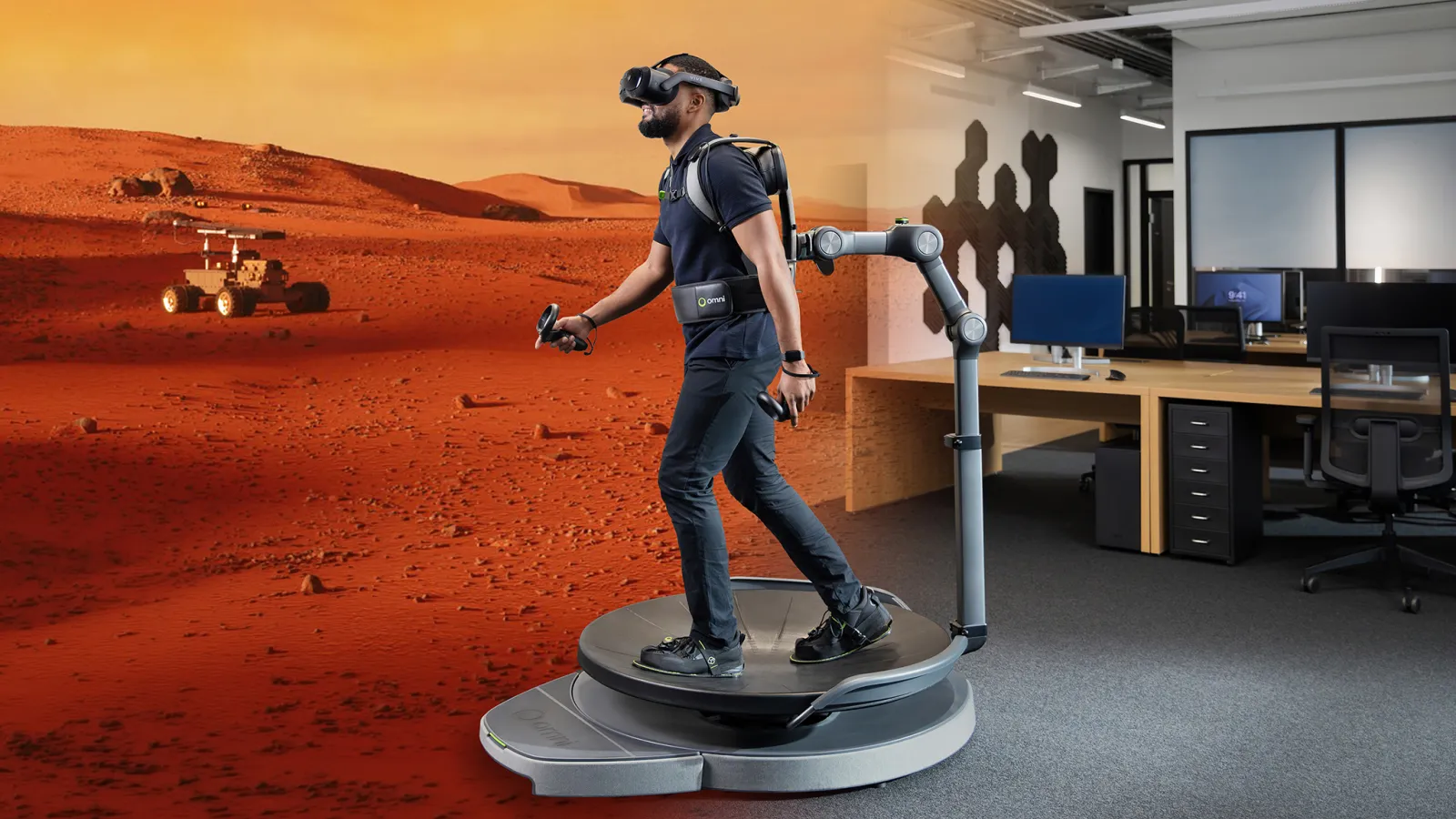
Virtuix Holdings (NASDAQ: VTIX) has been selected by NASA to supply its Omni One omnidirectional treadmill platform for the Moon and Mars Exploration Analog (MMEA) mission, a year-long programme designed to study astronaut performance in simulated deep-space conditions. The mission is expected to begin in 2027 at NASA's Johnson Space Center in Houston.
The MMEA places a crew of four volunteers inside a 650-square-foot habitat for twelve months, simulating transit to Mars, surface operations and the return journey. During simulated extravehicular activity sequences, crew members will use the Omni One treadmill to walk, kneel, turn and navigate virtual Martian terrain, rather than standing stationary in a conventional VR setup. Virtuix says the physical movement capability supports training for tasks including equipment inspection, rock sampling, emergency response and mission replanning.
Government momentum
The NASA selection follows a run of recent deployments across US defence branches: Virtuix says it has completed sales or active projects with the Air Force, Marine Corps, Navy, Army and Air National Guard. The company positions this as evidence of broadening adoption of full-body immersive simulation in aerospace, defence and research environments, though it has not disclosed contract values for any of these engagements.
Jan Goetgeluk, founder and chief executive, said the NASA collaboration "represents another important milestone in Virtuix's expansion across government and research applications," and argued that enabling natural physical movement within virtual environments improves the fidelity of data researchers can collect on astronaut readiness.
Beyond organic contract growth, Virtuix disclosed that it is actively reviewing acquisition targets in the defence training and simulation sector, with a focus on companies generating between $10 million and $50 million in annual revenue. The company framed these potential deals as a route to accelerate market penetration and access to government contract vehicles, though no specific targets have been named and the release carries standard forward-looking-statement caveats.
Market context
The defence and government simulation market is a contested space that has attracted both specialist vendors and larger defence primes. Companies such as L3Harris, CAE and Bohemia Interactive Simulations operate at scale across military training contracts, while a tier of XR-focused startups competes on immersive fidelity and compact hardware footprint. Virtuix's differentiation rests on the omnidirectional treadmill form factor, which allows natural locomotion inside a relatively small physical space, a characteristic that suits habitat-based research environments like the MMEA.
The broader extended-reality training market has benefited from increased US Department of Defense interest in synthetic training environments as a cost-effective supplement to live exercises. That tailwind, however, also attracts well-capitalised competitors, and Virtuix will face pressure to demonstrate repeatable contract scale and integration with existing simulation ecosystems as it pursues larger procurement vehicles.
For the NASA programme specifically, the research outputs, particularly data on physical and cognitive performance during simulated EVAs, could strengthen the case for immersive locomotion platforms in future astronaut-preparation curricula, providing Virtuix with a credible reference deployment as it builds its government portfolio.