
Atos and GCH open AI-driven SOC in Dubai for UAE market
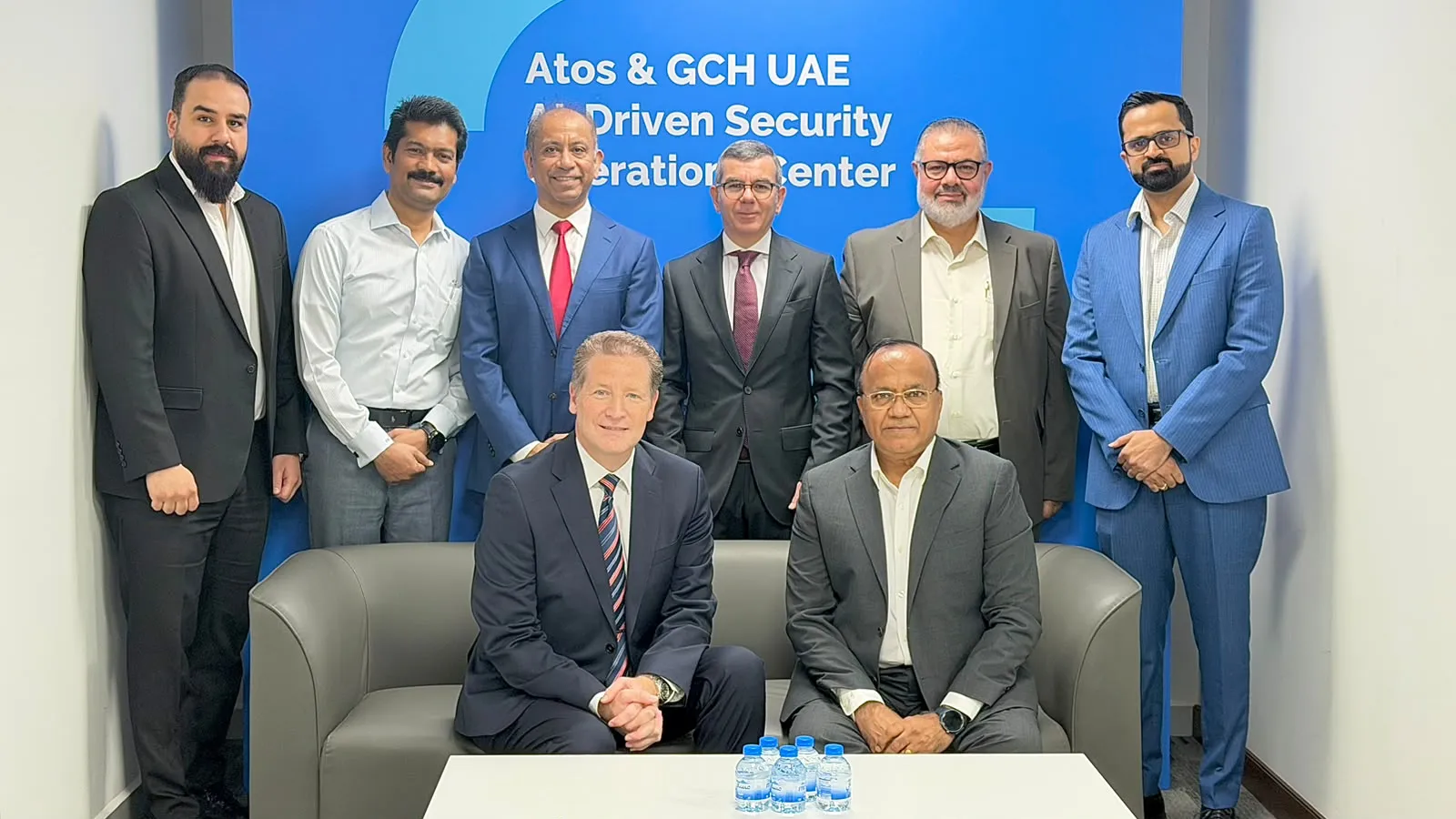
Atos and Gulf Cyberfender Hub (GCH) have opened a jointly operated security operations centre (SOC) in Dubai, combining AI-assisted threat detection with a local data-residency model intended to meet UAE regulatory standards. The facility is designed to serve government entities, critical infrastructure operators and enterprises across the UAE and the wider Gulf region.
The SOC is built to comply with UAE Information Assurance Standards and National Electronic Security Authority (NESA) requirements, both of which mandate that sensitive government and infrastructure data remain within the country's borders. Local data hosting is increasingly a hard prerequisite for public-sector contracts across the Gulf, making sovereign SOC capability a commercial as well as a compliance consideration for managed security providers.
What the facility offers
The centre will use what Atos describes as agentic AI to automate elements of threat investigation and incident response, with the stated goal of reducing mean time to detect (MTTD) and mean time to respond (MTTR). Atos did not publish baseline benchmarks against which customers could measure those improvements, nor did it disclose pricing or contract structures for the managed service.
The Dubai SOC will be linked to Atos's Global Threat Research Center, which is intended to feed curated threat intelligence calibrated to the regional threat landscape into locally hosted operations. Atos operates a global network of SOCs, so the UAE facility inherits access to that wider telemetry base while maintaining in-country data handling.
Daniele Principato, head of International Markets at Atos, said the partnership was intended to let customers "respond faster, safeguard critical operations, and advance their digital sovereignty" in what he characterised as an increasingly complex threat environment. Surendrasinh Gohil, chief executive of GCH, described the centre as reflecting both organisations' commitment to the UAE's digital-sovereignty agenda.
Market context and competitive landscape
The Gulf region has become a contested market for managed security services, with several global integrators and specialist cybersecurity vendors building sovereign SOC capacity to capture public-sector and critical-infrastructure spending. Regional competitors include IBM Security, Palo Alto Networks' XMDR service, and a growing cohort of locally incorporated managed security service providers aligned to Saudi Arabia's Vision 2030 and the UAE's own digital-economy targets.
Atos Group, listed on Euronext Paris with annual revenue of approximately €7.2 billion, positions cybersecurity as a core capability and describes itself as the European number one in the category by revenue. The group operates under two brands: Atos for services and Eviden for products and platforms. GCH is a Dubai-headquartered technology consulting firm focused on infrastructure management, application management and cybersecurity for enterprise clients across the Middle East and Africa.
The launch comes as threat actors are increasingly automating attack tooling using AI, raising the stakes for detection speed. Regulators and standards bodies across the GCC are tightening their cybersecurity frameworks accordingly: NESA in the UAE and the National Cybersecurity Authority in Saudi Arabia have both updated their control frameworks in the past two years to address AI-enabled threats and cloud-hosted operations. A locally operated SOC with a verifiable data-residency model is likely to become a baseline expectation rather than a differentiator as those frameworks mature.
Atos did not announce a named customer win at the facility's opening, and the partnership has not disclosed the capital committed to building out the centre. Observers will look for contract announcements and published performance data as the key near-term indicators of commercial traction.