
Castrol CORE brings integrated thermal management to data centres
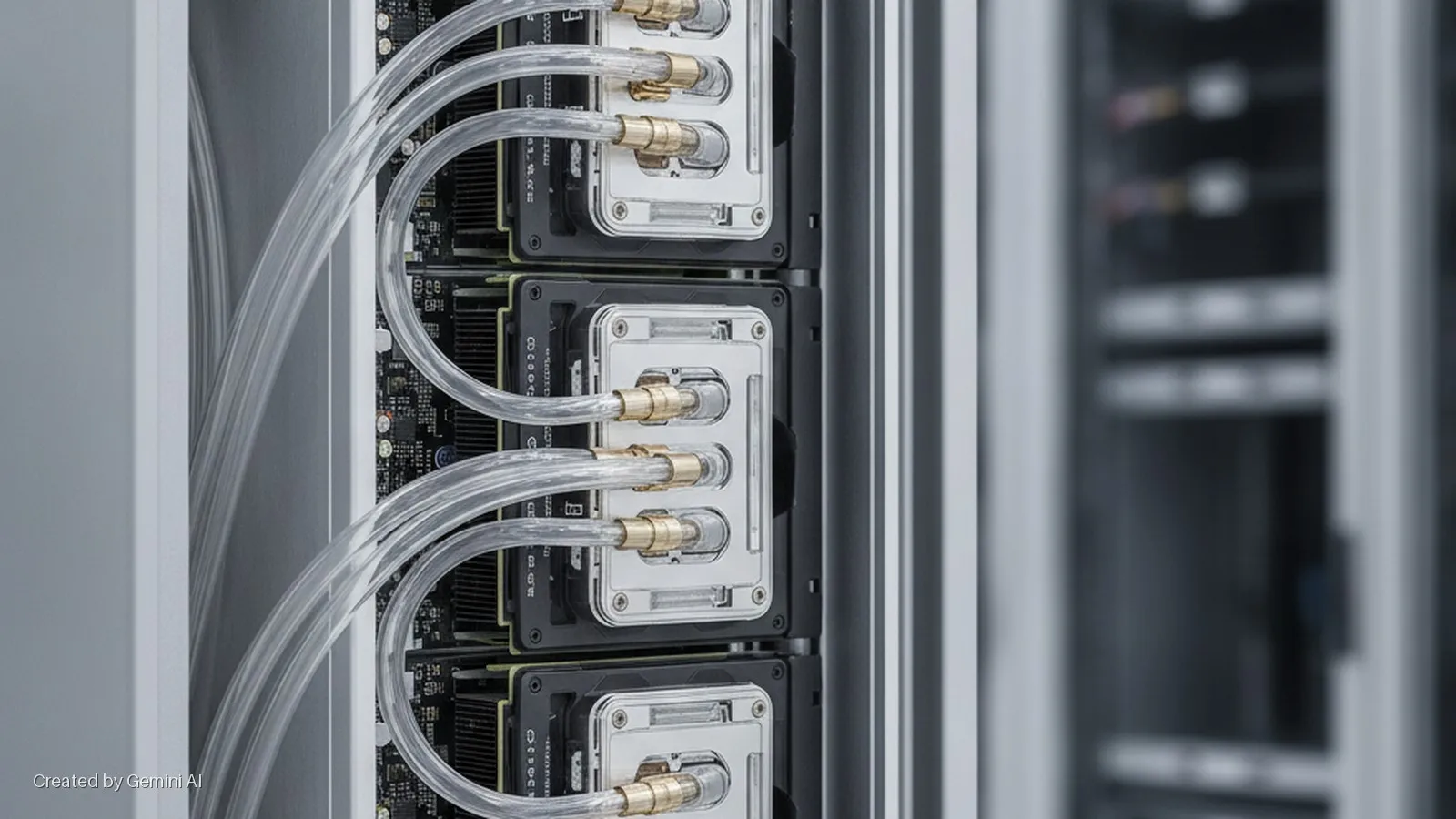
Castrol has launched Castrol CORE, a service-led thermal management offer for data centre operators, marking a shift away from the lubricant giant's existing product-only cooling business. Announced on 29 September 2026 from Singapore, the offer spans the full project lifecycle, from early-stage design and specification through to deployment, ongoing operations and maintenance.
The move is a direct response to what Castrol describes as growing demand for integrated cooling partnerships. Its own customer research identified supply-chain complexity, multi-vendor coordination burden, and the high cost of unplanned downtime as the sector's primary pain points. By positioning itself as a single point of contact across the cooling value chain, Castrol CORE aims to reduce the number of specialist suppliers an operator must manage during a build.
The offer
Central to Castrol CORE is a portfolio of cooling technologies that the company says have been tested and validated in partnership with NVIDIA and Intel, giving operators confidence the fluids and systems can handle next-generation AI accelerator thermal loads. The offer is backed by Castrol's global testing infrastructure, which includes laboratories in the UK, the US, Germany and China, joint facilities across Asia, and a service-provider network spanning more than 150 countries.
In the Asia Pacific region, Castrol has assembled a dedicated data centre design team supported by local specialists. The company said it has completed a proof-of-concept programme with a named but undisclosed "leading data centre operator" in China, with further proof-of-concept engagements under way with global operators. No revenue figures, contract values or customer names were disclosed.
Peter Huang, Global President of Data Centre and Thermal Management at Castrol, said: "Customers are telling us they do not simply want another standalone product. They want experienced partners that can help them solve the complete thermal management challenge."
Market context
Data centre cooling has become one of the more consequential engineering problems in the technology industry. The shift from air cooling to liquid-cooled and immersion-cooled infrastructure, driven by the power density of modern AI accelerators, has opened the market to a broader range of industrial fluids and systems vendors. Competitors in the specialist coolant and thermal-management space include Engineered Fluids, Cargill's thermal fluids division, and established HVAC and precision-cooling players such as Vertiv and Stulz, alongside hyperscaler in-house programmes.
Castrol's differentiation claim rests on its long heritage in fluids formulation and its existing relationships with chip manufacturers. However, the thermal management market for data centres is still relatively nascent as a services category, and the company has not yet disclosed a commercially live deployment at scale. The proof-of-concept stage in China suggests the offer remains in early validation rather than broad rollout.
Regulatory and standards read-across
Rising power consumption in data centres is drawing increasing regulatory attention. The EU's Energy Efficiency Directive now requires large data centres to report energy performance, and the UK government has signalled that planning guidance for new facilities will increasingly incorporate power and cooling efficiency criteria. Operators that can demonstrate reduced cooling overhead and higher power usage effectiveness ratings are better positioned for both regulatory compliance and investor scrutiny under ESG frameworks.
Castrol CORE's emphasis on design-stage involvement is strategically timed: cooling architecture decisions made at the design phase have an outsized impact on a facility's lifetime energy profile. Whether Castrol can convert proof-of-concept engagements into long-term service contracts at meaningful scale will be the measure of how far the brand can travel from its origins as a lubricant supplier into the data centre services market.