
RETN adds sixth Taiwan subsea route to boost network resilience
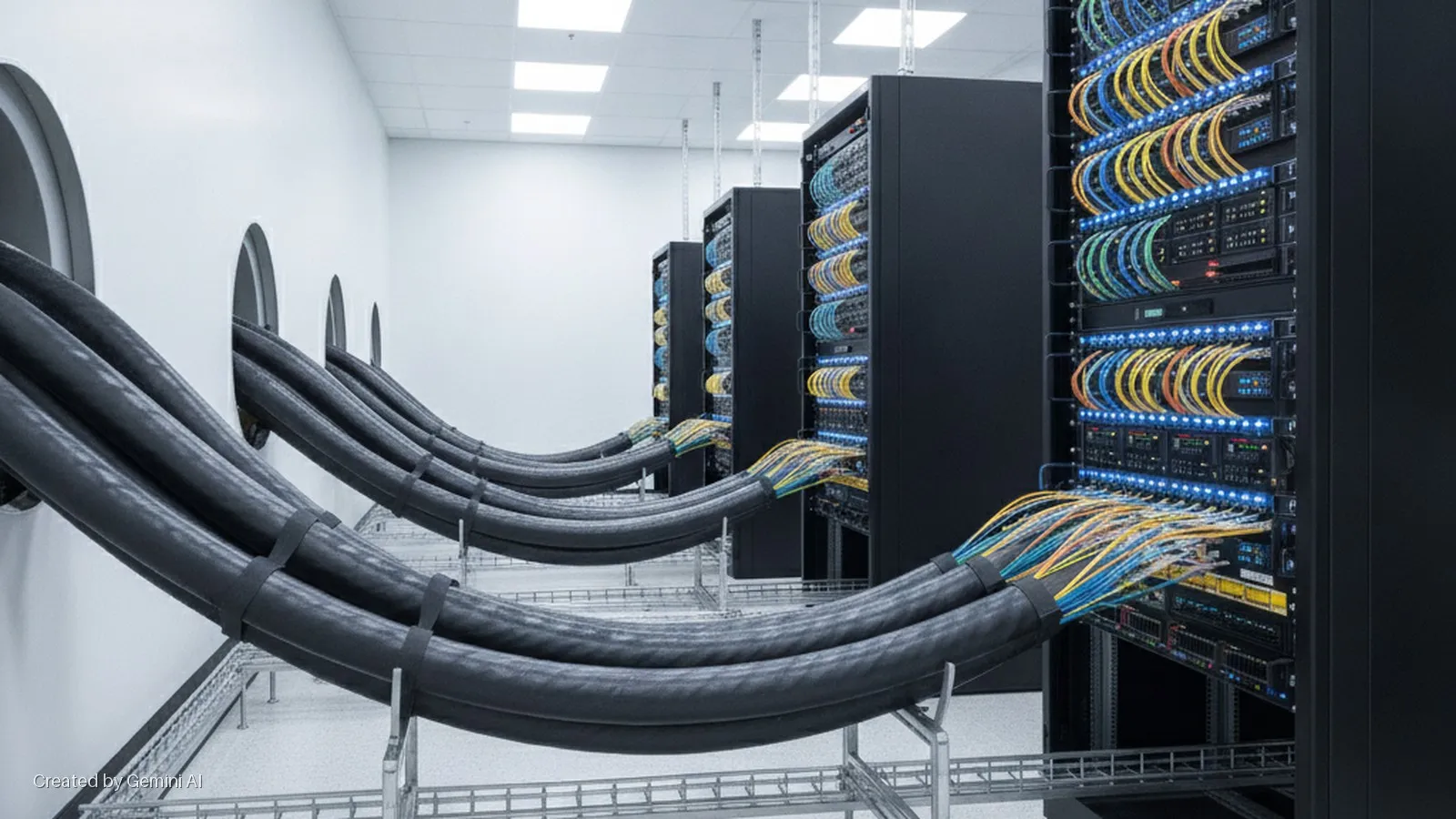
RETN has activated a sixth independent subsea internet route serving Taiwan, bringing its total to six physically diverse paths: four between Taipei and Hong Kong and two between Taipei and Tokyo. The network service provider says the expansion is a direct response to repeated cable disruptions around Taiwan and rising demand from data-intensive workloads, including AI inference and training traffic.
The newly added Taipei-Hong Kong route is engineered to terminate in multiple, geographically separate data centres rather than a single carrier hotel. RETN says the design deliberately avoids shared landing points, terrestrial corridors and equipment vendors across its six routes, reducing the probability that a single fault cascades into a network-wide outage.
Lessons from the Red Sea crisis
RETN points to its experience during the 2024 Red Sea cable disruptions as evidence that its architecture holds up under pressure. During that period, the company says it successfully rerouted approximately 60 to 70 per cent of affected traffic via TRANSKZ, a terrestrial network system that connects Europe and Asia overland. The statistic suggests the diversification strategy delivers measurable continuity rather than theoretical resilience, though RETN has not published independent verification of the figure.
Oswald Huang, Managing Director for RETN's Taiwan market, said: "Recent cable disruptions have reinforced our view that network operators should plan for at least four independent routes per major geography, and preferably five or more, including terrestrial alternatives."
Huang added that RETN intends to interconnect with more local data centres in Taiwan as part of its support for the island's "Smart Technology Island" national programme, signalling further infrastructure investment beyond the current six-route footprint.
Market context
Taiwan sits at a geopolitical and physical chokepoint for subsea cable infrastructure. The island is a termination point for several of the highest-capacity transpacific cable systems, and repeated incidents, including fishing-vessel damage and more deliberate interference, have kept cable resilience high on the agenda for carriers, cloud providers and enterprise buyers with Asia-Pacific exposure.
The broader subsea cable market is expanding rapidly, driven by hyperscaler investment in private cable systems (Google, Meta and Microsoft have all funded or part-funded dedicated transoceanic routes) and by growing AI-related bandwidth demand between Asia and North America and Europe. For independent providers such as RETN, competing with hyperscaler-owned infrastructure means differentiation through route diversity, terrestrial bypass options, and service flexibility rather than raw capacity alone.
RETN holds the title of Best Pan-European Operator of the Year at the Carrier Community Global Awards 2026, which underlines its positioning as an independent Eurasian transit provider. The company's TRANSKZ terrestrial route through Central Asia is a distinct competitive asset in a market where most resilience schemes rely on additional subsea paths rather than true overland alternatives.
Regulatory and standards read-across
Connectivity resilience in the Taiwan Strait corridor sits at the intersection of commercial network engineering and geopolitical risk management. The EU's NIS2 Directive and equivalent UK frameworks place obligations on critical infrastructure operators to maintain service continuity, requirements that flow down to carriers serving European enterprises with Asia-Pacific operations. Enterprise buyers sourcing international capacity for AI workloads will increasingly factor route-diversity counts and terrestrial bypass availability into procurement criteria alongside cost and latency benchmarks.