
EdgeMode and BlackBerry AIF plan merger to form BLACK AI platform
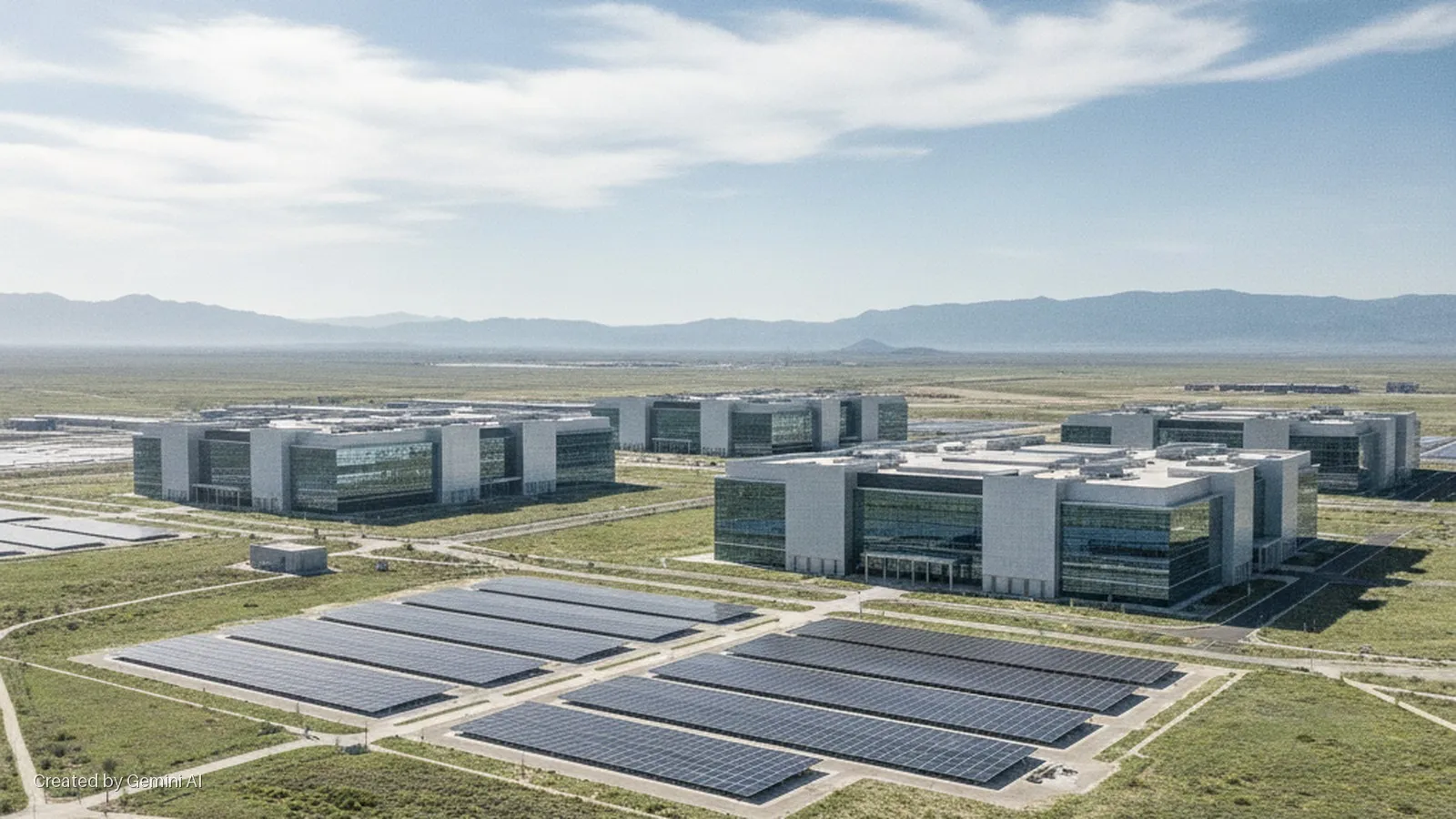
EdgeMode and BlackBerry Alternative Investment Fund have announced their intention to merge and form a new publicly listed entity to be called BLACK AI. The combined business is positioned as a globally scaled AI data centre infrastructure platform, though the deal remains subject to completion of due diligence, finalisation of definitive commercial terms, and customary closing conditions.
EdgeMode brings a portfolio of sites across Europe and the Americas earmarked for tier-3-ready AI campuses, with an aggregate stated capacity of over 4GW. A distinctive feature of the pipeline is its reliance on off-grid Solid Oxide Fuel Cell technology for power generation, an approach the company argues insulates developments from grid-capacity constraints that have become a material bottleneck for conventional data centre builds. BlackBerry AIF contributes project development expertise across renewable energy, infrastructure, real estate and green data centre construction, and is based in Spain.
Charlie Faulkner, chief executive of EdgeMode, said: "AI is driving one of the largest investment cycles the world has ever seen, because success in the market needs an infrastructure platform that requires more than real estate. It requires land, energy, engineering, permitting, capital, strategic partnerships, and long-term vision."
The deal and Vision 2035
The merger is described by the companies as the foundation of a longer-term strategy called Vision 2035, under which BLACK AI intends to develop, deliver, and ultimately own AI infrastructure assets through to that horizon. Initial markets are Spain and Panama, with further international expansion planned beyond those two. No deal valuation, share-exchange ratio, lead investor, or listing venue was disclosed in the announcement. The release is accompanied by a video interview with Faulkner but provides limited financial or technical detail beyond the capacity headline and the two initial markets.
The note that final commercial terms are still being negotiated is significant: this is an announcement of intent rather than a signed transaction, meaning regulatory, capital-markets, and integration risks remain live.
Market context and competitive landscape
The AI data centre infrastructure sector is experiencing intense capital formation, with demand from hyperscalers and sovereign AI programmes outpacing available grid-connected capacity in most tier-1 markets. The use of off-grid SOFC technology is a differentiating claim worth watching. Solid Oxide Fuel Cells can deliver high energy efficiency and low-emission generation without dependence on grid interconnection, but deployment at gigawatt scale remains largely unproven in production data centre environments; buyers and investors will want independently verified performance data as the pipeline matures.
Competitors in the AI campus development space include purpose-built platforms backed by sovereign wealth funds, infrastructure private equity, and hyperscaler-anchored joint ventures. Spain is a growing data centre hub, benefiting from renewable energy availability and EU digital-infrastructure investment programmes, while Panama serves as a regional connectivity hub for the Americas. Both markets are subject to their own permitting and grid-regulation regimes, which can affect delivery timelines materially.
From a regulatory standpoint, any public listing route for BLACK AI will attract scrutiny depending on the chosen exchange. A US listing would require SEC disclosure of material contracts and risk factors; a European listing would engage relevant national competent authorities alongside ESMA prospectus rules. Neither venue nor timeline has been indicated.