
Kratos completes $50m hypersonic payload facility in Indiana
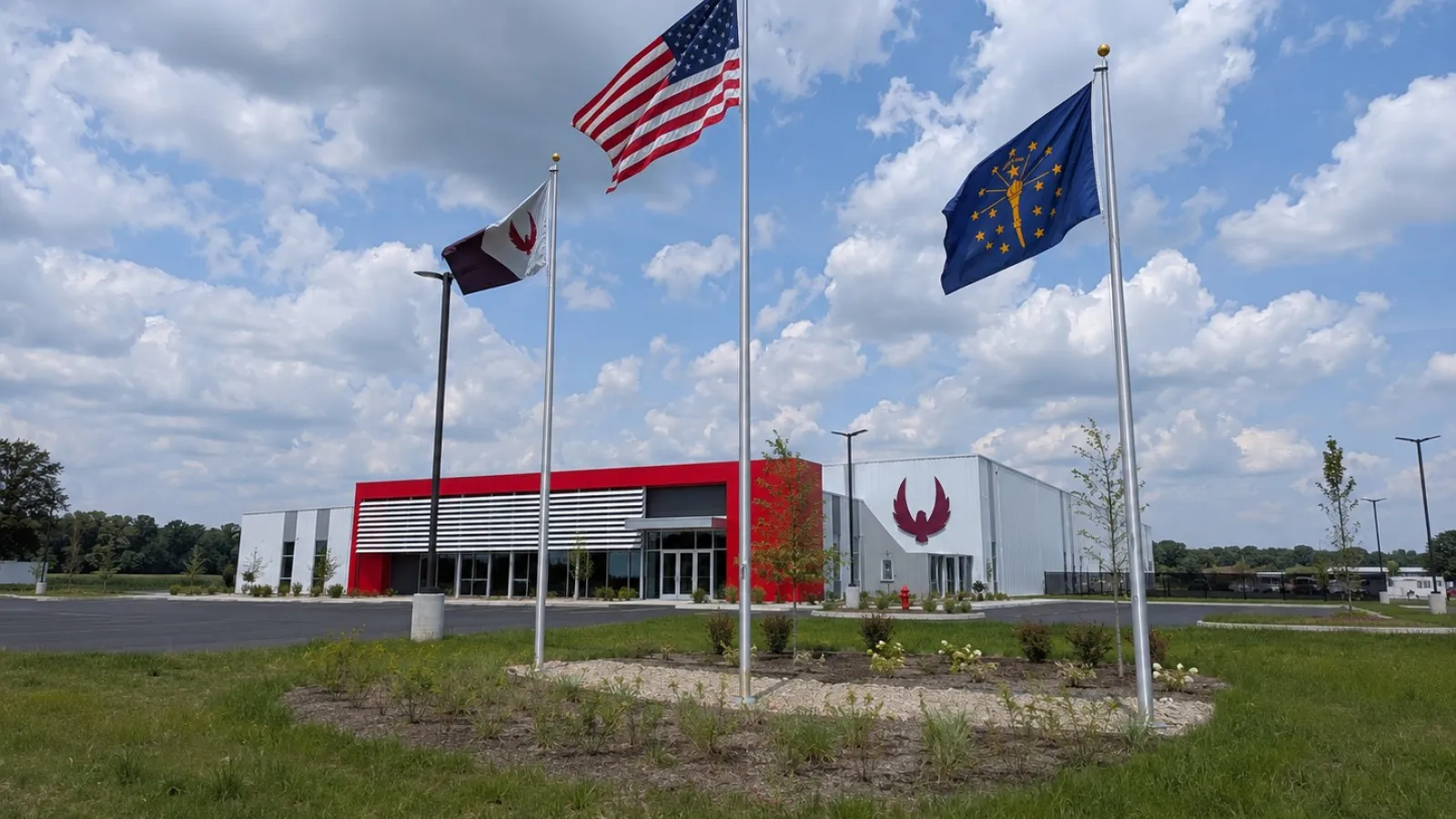
Kratos Defense and Security Solutions has completed construction of its Indiana Payload Integration Facility (IPIF) in Crane, Indiana, ahead of schedule and within a $50 million budget. The 68,000-square-foot site is purpose-built for the advanced manufacturing, integration and testing of experimental hypersonic payloads, with capacity to process up to six payloads simultaneously.
The NASDAQ-listed defence technology company said the facility is designed to accelerate the cadence of Mach 5-plus flight testing for next-generation systems. It is expected to create more than 100 jobs in southern Indiana, with an average annual wage cited as exceeding $80,000. Hiring is already underway, according to the company.
The facility
The Crane site sits adjacent to the Naval Surface Warfare Center Crane Division, a major US Navy research and test installation in south-central Indiana. Dave Carter, President of Kratos Defense and Rocket Support Services, described the location as part of a broader strategy to establish an advanced defence hub in the region, with multiple purpose-built facilities planned.
Mike Johns, Vice President of Kratos SRE, said the investment "brings online a national asset and critically needed infrastructure to rapidly scale the cadence of hypersonic testing in the United States." Kratos said the IPIF will support programmes including the Multi-Service Advanced Capabilities Hypersonic Testbed (MACH-TB), a US Department of Defense initiative to increase the frequency and affordability of hypersonic flight experiments.
Kratos positions itself as the only company currently delivering both propulsion systems and complete hypersonic flyer platforms. Its named products include the Erinyes Hypersonic Flyer and a family of solid rocket motors under the Dark Fury, Zeus and Oriole designations.
Market context
The completion of the IPIF reflects a broader push by the US defence establishment to accelerate hypersonic weapons development, an area where American programmes have historically lagged behind Chinese and Russian equivalents in fielded capability. Congressional funding for hypersonic research and test infrastructure has grown steadily since 2019, and the MACH-TB programme specifically targets the bottleneck of limited test range availability and slow payload turnaround.
Kratos occupies a mid-tier contractor position in the US defence industrial base, competing on affordability and speed against larger prime contractors such as Lockheed Martin, Raytheon and Northrop Grumman, which also hold hypersonic development contracts. The company's strategy of investing its own capital in production-ready infrastructure before contracts are fully awarded is a deliberate differentiator, though it carries balance-sheet risk that investors track closely.
From a regulatory and export-control standpoint, hypersonic technologies sit at the intersection of ITAR controls and US Commerce Department export licensing. The facility's focus on experimental payloads for US military programmes means near-term work is likely domestic, but any allied-nation supply chain participation would require careful BIS and State Department licensing review.
Kratos said it views the IPIF as a cornerstone of its expected long-term growth in hypersonic franchises. Investors will watch for named programme awards and contract values tied to the facility as the primary indicators of whether the capital outlay translates to revenue.