
Kratos wins multi-million-dollar GAIA 100 Tri-Band antenna orders
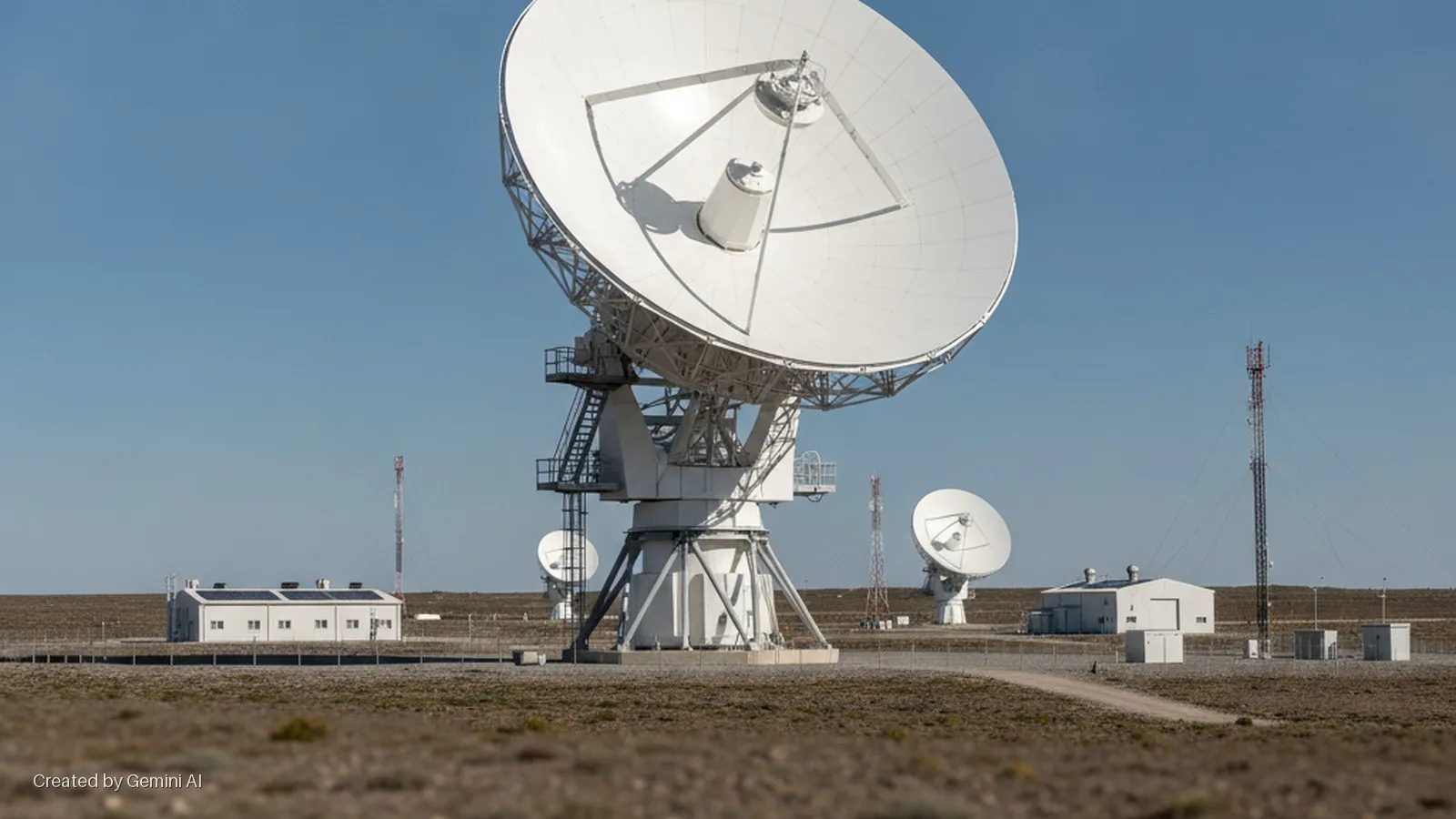
Kratos Defense and Security Solutions has announced that Orbit Communication Systems, its Israeli subsidiary acquired in March 2026, has received multi-million-dollar orders from multiple international customers for the GAIA 100 Tri-Band antenna systems. The 5.5-metre and 6.1-metre antenna configurations support Earth Observation, New Space and satellite communications applications.
Alongside the order announcement, Orbit is introducing the GAIA 100 Tri-Band 6.1, an enlarged variant designed to deliver higher gain, improved link margins and enhanced Ka-band tracking performance. The system incorporates Orbit's Auto Track technology, which provides the pointing accuracy required to maintain satellite alignment throughout a pass on Ka-band links, and an integrated Radome architecture intended to reduce lifecycle maintenance costs and extend operational life.
The product and the deal
The 6.1-metre system builds on the established GAIA family, which already supports uninterrupted horizon-to-horizon tracking and full hemispherical coverage across low Earth orbit, medium Earth orbit and geostationary missions. The family is available in multiple antenna sizes and frequency configurations, sharing a common platform architecture that Orbit positions as reducing integration complexity for operators running mixed satellite fleets.
Daniel Eshchar, General Manager of Orbit Communication Systems, said the new variant was developed to address the shift toward higher-frequency communications and larger data volumes driven by next-generation satellite constellations. "The GAIA 100 Tri-Band 6.1 was developed to address these evolving requirements by combining enhanced antenna performance, highly accurate Ka-band tracking and a robust, low-maintenance architecture within a single platform," he said.
Kratos did not disclose the precise contract values, the number of customers, or the delivery schedule for the ordered systems.
Market context
Ground station infrastructure is a fast-expanding segment within the broader New Space supply chain. The proliferation of low Earth orbit broadband constellations, notably those operated by and competing with SpaceX Starlink, has driven demand for high-throughput Ka-band ground terminals capable of tracking rapidly moving satellites. Alongside commercial operators, defence agencies across NATO member states are increasing investment in resilient SATCOM ground infrastructure as part of broader efforts to harden space-based communications against jamming and interference.
Kratos competes in this space against established ground-system integrators including General Dynamics Mission Systems, ViaSat and a number of European defence primes, as well as specialist antenna vendors. The Orbit acquisition, completed in March 2026, was framed by Kratos as a deliberate move to expand its microwave and digital systems portfolio and to position the combined entity as a provider of end-to-end communications and mission solutions rather than point products.
The ground station market is also subject to growing export-control scrutiny. Antenna systems capable of Ka-band satellite tracking carry dual-use classification under US Export Administration Regulations and equivalent EU controls, meaning international sales to certain markets require licences from the US Bureau of Industry and Security. The multi-customer, multi-geography nature of these orders suggests Kratos and Orbit have cleared the relevant approvals, though the company has not commented on the specifics of licensing.