
CSG launches UpVision MAIA platform for digital airspace management
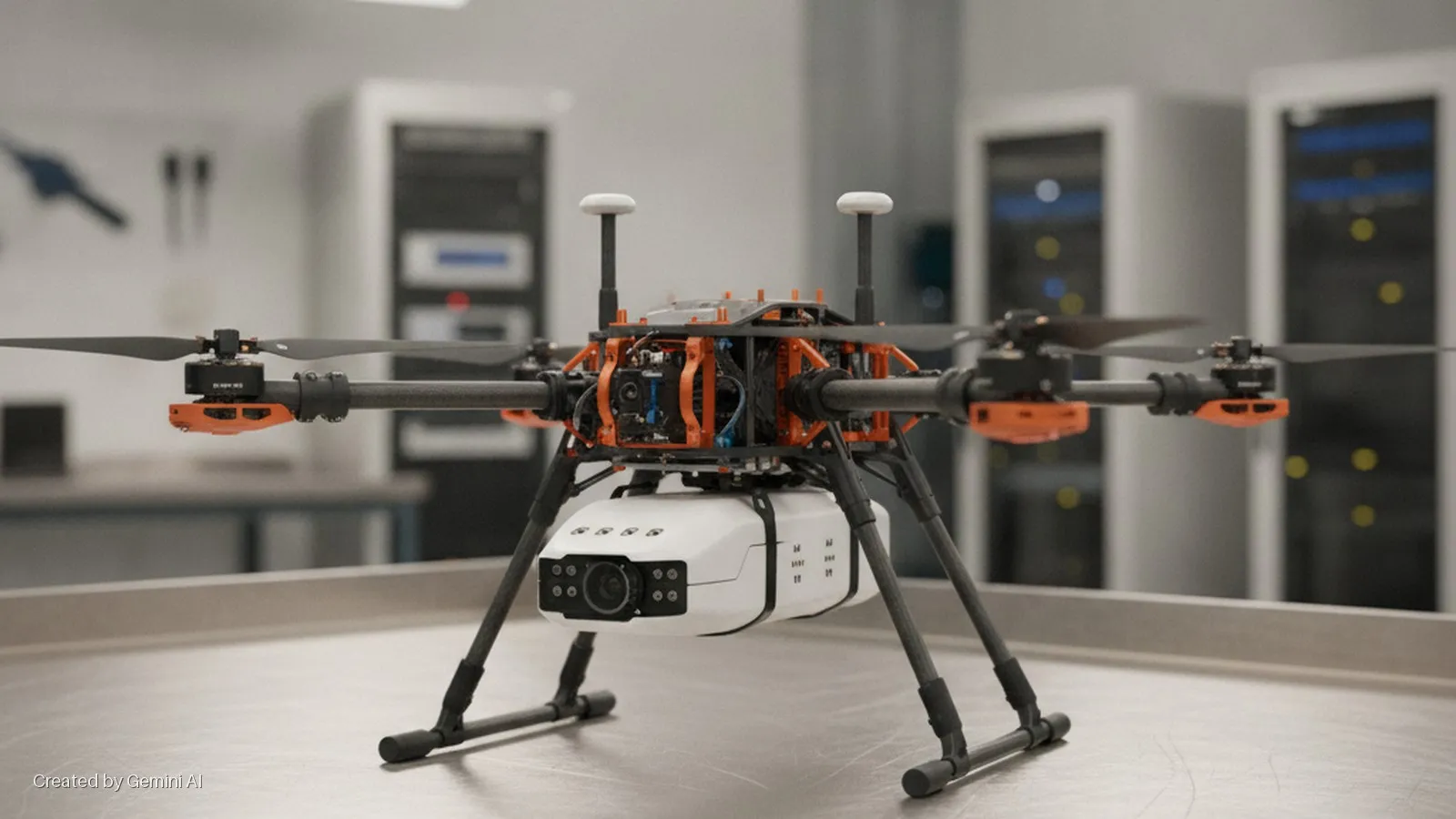
CSG, the Czech technology group, has launched MAIA, a software platform developed by its UpVision subsidiary that enables digital coordination of unmanned aircraft alongside manned aviation. The platform connects air navigation service providers, drone operators, regulatory authorities, security organisations and common information services providers (CISPs) in a shared situational picture of live airspace.
UpVision chief executive Štěpán Alexa described the practical motivation: "Imagine a situation where a police drone, an air ambulance helicopter and a fire service drone mapping the extent of an incident are all operating simultaneously above the scene of a road traffic accident. Each is performing a different mission, yet all require access to the same up-to-date information about the airspace. MAIA creates a shared digital picture of the airspace, enabling organisations to coordinate their activities safely and exchange information in real time."
The platform incorporates artificial intelligence to predict potential risks and support automation in unmanned operations. CSG says the long-term objective extends beyond airspace coordination to supporting operational decision-making, though no specific performance benchmarks or customer deployments were disclosed at launch.
Regulatory fit and market context
MAIA is built to comply with EU Regulation 2021/664, which underpins the European U-space framework and requires the exchange of key operational data through a CISP. U-space is the EU's structured answer to the rapid growth in commercial, public-safety and defence drone operations, setting out a layered set of services that enable manned and unmanned aircraft to share airspace safely. MAIA's alignment with these obligations gives it a natural entry route to air navigation service providers and national aviation authorities across EU member states who are now required to implement compliant infrastructure.
Beyond the immediate regulatory requirement, several EU member states are actively seeking to reduce reliance on non-European vendors for critical airspace infrastructure, a concern heightened by broader digital sovereignty policy discussions. Developed in the Czech Republic and grounded in European research programmes including CERTIFLIGHT, U-Space4UAM and ATM-EXCITE, MAIA is explicitly positioned as a sovereign European option. That framing may carry weight with procurement teams in defence and public-safety contexts where supply-chain provenance is increasingly scrutinised.
Competitive positioning and CSG's ecosystem play
CSG frames MAIA not as a standalone product but as the digital coordination layer in a wider technology stack. Radar detection and tracking comes from group subsidiaries Retia and Eldis; air traffic management software and decision-support tools come from CS Soft and Atrak. The company argues this integration across sensors, data processing and digital coordination differentiates it from point-solution vendors.
The unmanned traffic management (UTM) software space includes a number of specialist vendors alongside offerings from established air traffic management incumbents such as Frequentis and Thales. CSG does not name direct comparators and has not published pricing or capacity specifications. Tomáš Vlček, CEO of CSG's Aerospace and Defence Electronics division, framed the broader ambition: "Our ambition is to develop technologies that connect these individual layers into one integrated ecosystem. MAIA is an important part of this long-term strategy."
The primary customer segments identified are air navigation service providers, U-space service providers, airports, regulatory authorities, and critical infrastructure operators. Civil and defence markets are both in scope. No named launch customers, contract values or deployment timelines beyond a general European and international ambition were included in the announcement.