
Turbo Energy posts 180% revenue growth in first half 2026
Turbo Energy, the Nasdaq-listed Spanish energy storage and management integrator, has reported preliminary first-half 2026 revenue of $17.2 million, a 180% year-on-year increase from $6.1 million in the same period of 2025. The company also swung to positive operating income of $0.61 million, against an operating loss of $1.44 million in H1 2025, and reported a marginal net profit of $10,606 compared with a net loss of $1.65 million a year earlier.
The figures are unaudited and subject to completion of the company's financial review procedures. Turbo Energy expects to file its Form 6-K, including the formal interim financial statements, by the end of September 2026.
What drove the numbers
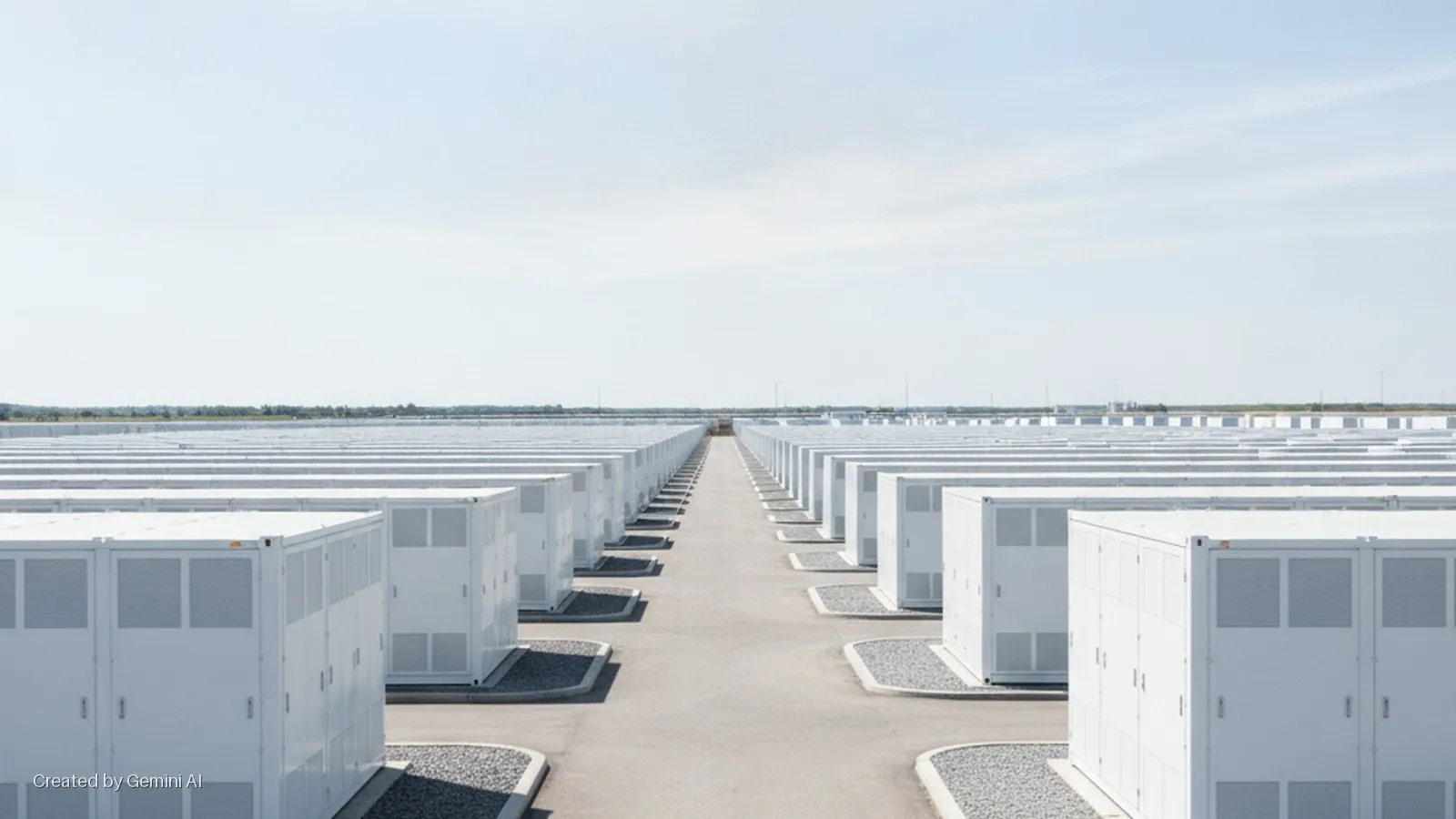
The bulk of the revenue uplift came from large-scale commercial and industrial (C&I) project execution. C&I contracts accounted for 55% of total first-half revenue, anchored by continued delivery against the Pamesa Net Zero project, with more than 130 MWh of battery storage systems shipped in connection with that scheme. A further 50 MWh of residential battery storage was sold through the company's international distribution network, and 4.8 MWh of C&I storage was deployed across nine separate industrial and electric-vehicle charging projects.
EBITDA, on a non-IFRS basis, improved to $0.89 million from negative $1.37 million in the prior-year period. The company cautioned that EBITDA should not be viewed as a substitute for IFRS net income or operating cash flow.
Chief executive Mariano Soria said the results reflect the maturation of a two-year strategic pivot: "The strategic investments we have made over the past two years in technology, international expansion and Commercial & Industrial solutions are now translating into sustainable, profitable growth."
Turbo Energy also announced the expansion of its Turbo Energy Solutions subsidiary into Chile, extending its Latin American footprint alongside existing operations in Europe and North America.
Market context and competitive positioning
The C&I battery storage market has expanded sharply as industrial energy costs remain elevated across Europe and as EV charging infrastructure build-out accelerates. Turbo Energy competes in a fragmented space that includes larger integrated players such as Fluence Energy and Wärtsilä Energy Storage, alongside specialist software-defined energy management vendors and domestic European installers. The company's stated differentiation is the combination of proprietary energy management software with turnkey project delivery, a model that aims to reduce procurement complexity for industrial customers.
The shift toward C&I from residential storage is a recurring theme across the sector. Residential margins have been compressed by falling panel and battery prices, while C&I projects tend to carry higher absolute contract values and longer-term service agreements. Turbo Energy's revenue mix moving to 55% C&I in H1 2026 suggests that pivot is advancing, though the company has not disclosed gross margin by segment, making it difficult to assess the full profitability profile.
Outlook and regulatory backdrop
Turbo Energy said it expects continued commercial momentum in the second half of 2026, driven by its international project pipeline and growing demand for integrated energy infrastructure. It did not provide a specific revenue or EBITDA target for the full year.
The company's European operations sit within the EU's evolving energy storage regulatory framework, including the revised Renewable Energy Directive (RED III) and national-level grid-balancing incentive schemes, which are increasingly supportive of commercial-scale storage deployment. In Latin America, Chile's grid modernisation programme provides a policy tailwind for the newly expanded local subsidiary.
Investors will be looking for audited figures when the Form 6-K lands, alongside visibility on recurring software and services revenue, which the company flagged as a strategic priority but did not quantify in this preliminary release.