
Volaris Group acquires Biodiv-Wind, French wind-farm AI firm
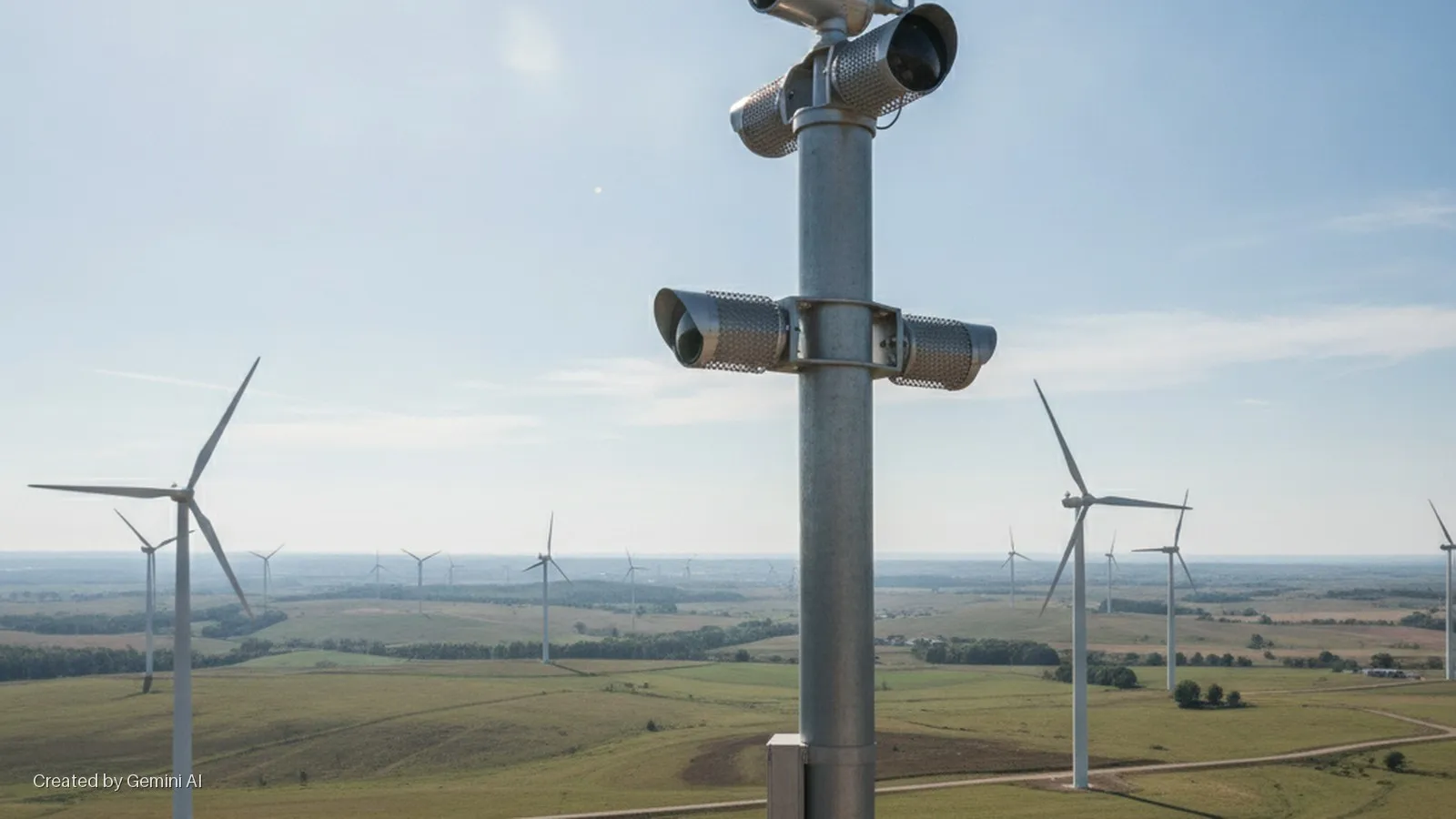
Volaris Group, the vertical-market software acquirer and Constellation Software division, has completed the acquisition of Biodiv-Wind SAS, a French company that supplies real-time avifauna detection and deterrence systems to onshore wind farms. Financial terms were not disclosed.
Biodiv-Wind's flagship SafeWind platform combines cameras, radars and acoustic sensors with software integrated directly into turbine SCADA systems. An in-house team of ornithologist-supervised analysts provides reporting that helps wind-farm operators satisfy the environmental permit conditions set by French prefectorial authorities. The company counts more than 700 systems installed, primarily across France but with a growing presence in the rest of Europe and Latin America, including Brazil where it launched in 2022.
The deal
Henri-Pierre Roche, who founded the company and filed its first patent in 2008, will remain chief executive, reporting into Johannes Fetz, Group Leader at Volaris Southern Europe. Roche said the acquisition gives Biodiv-Wind "the right conditions to keep growing the business sustainably" after a decade building what he described as a solution that "reconciles renewable energy with biodiversity protection."
Rémy Jacquier, Portfolio Manager, and Halima Nejjah, M&A Director at Volaris Group, said the business met the acquirer's investment criteria of resilient recurring revenue and deep customer integration, citing Biodiv-Wind's regulatory underpinning and its proprietary data assets as key attractions. The company began commercial operations in 2015, received Pass French Tech Laureate status in 2019, raised regional funding in 2020, and in 2024 joined the I-NOV programme backed by BPI France and ADEME, which supports high-potential innovation for the French economy.
Market context
The acquisition sits at the intersection of two structurally expanding trends: rapid onshore wind deployment across Europe and tightening biodiversity regulation. The EU Nature Restoration Law, which entered force in 2024, and the EU Biodiversity Strategy set new obligations for member states to protect and restore natural habitats, adding compliance pressure on infrastructure operators beyond existing environmental permitting regimes. French prefectorial permits have progressively mandated certified detection systems on wind sites near migratory corridors since before 2010, and similar requirements are spreading to other European jurisdictions.
For Volaris, Biodiv-Wind represents a classic vertical-market software target: a niche with high switching costs, regulatory lock-in, and an incumbent with proprietary data accumulated over many years of field deployment. The company's AI-powered detection models are trained on several years of annotated ornithological data, a dataset that would take a new entrant significant time and capital to replicate. Competitors exist in the broader wildlife-monitoring sensor space, but certified wind-turbine-integrated detection with SCADA connectivity and regulatory sign-off is a narrower category where scale and track record matter to risk-averse energy operators.
Standards path
Biodiv-Wind's AI detection models and its developing 3D technology represent a product roadmap that Volaris is signalling it intends to invest in, with Jacquier explicitly citing "3D detection to artificial intelligence" as areas for scaling. As AI systems used in environmental compliance gain scrutiny under the EU AI Act's risk-classification framework, vendors in this space may face additional conformity-assessment obligations; Biodiv-Wind's ornithologist-validated reporting layer and long operational history could prove advantageous in demonstrating system reliability to regulators.
Volaris has not disclosed an integration timeline or expansion targets beyond the company's existing European and Latin American footprint.