
ASML raises 2026 outlook to €43–45bn on AI-driven chip demand
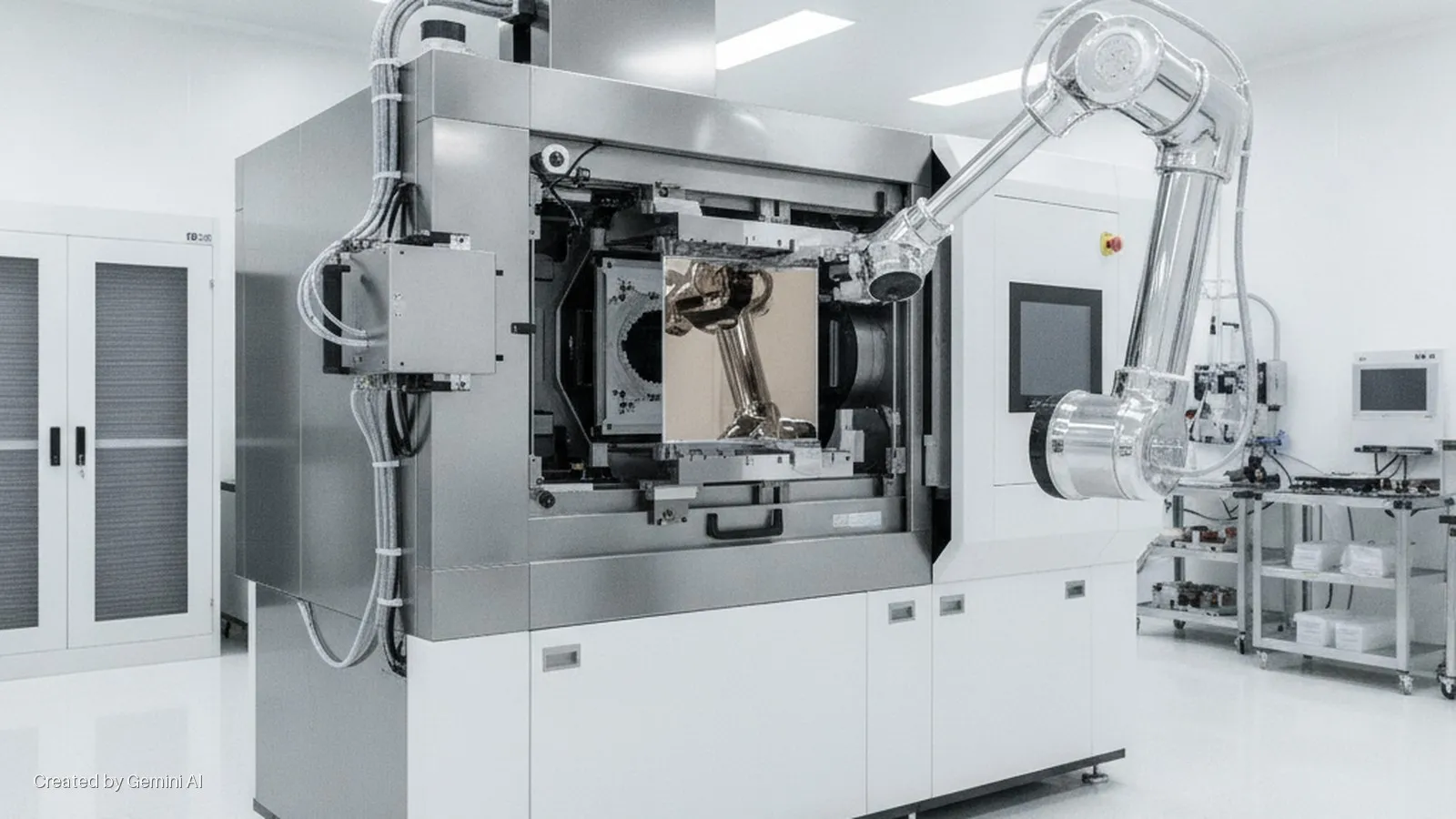
ASML Holding has reported second-quarter total net sales of €9.3 billion and net income of €2.9 billion, both ahead of its own guidance, and has lifted its full-year 2026 revenue forecast to between €43 billion and €45 billion. The Veldhoven-based lithography equipment maker cited stronger-than-expected Installed Base Management (IBM) revenues, its service and field-option business, as the primary driver of the quarterly beat, with IBM contributing €2.76 billion of the quarter's total.
Gross margin reached 54.0% in the quarter, up from 53.0% in Q1 2026, and the company is guiding for a further improvement to between 55% and 57% in Q3, when it expects total net sales of between €11.0 billion and €12.0 billion. For the full year, ASML projects a gross margin in the 54–56% range. The company sold 86 new lithography systems in the quarter, up from 67 in Q1, while used-system sales fell from 12 to 5 units. Basic earnings per share came in at €7.59, against €7.15 in the prior quarter.
AI demand drives capacity expansion plans
Chief executive Christophe Fouquet attributed the strength of order intake directly to the ongoing build-out of AI infrastructure. "Ongoing AI-related investments and continued progress in AI technologies are driving demand for advanced Logic and Memory chips, further strengthening the semiconductor industry's growth outlook," he said. "Our customers, in turn, continue to accelerate their capacity expansion plans."
In response to that demand, ASML said it plans to increase its low-NA EUV system capacity by approximately 30% on its 2026 base of around 65 units per year, targeting 2027 output, and is investigating a further 30% lift for 2028. The same cadence applies to its DUV immersion line, where 2026 capacity stands at around 130 systems annually. ASML also said it would continue to expand its upgrade portfolio, which bolsters the IBM revenue line. The company repurchased approximately €1.1 billion in shares during Q2 under its 2026–2028 buyback programme and declared an interim dividend of €1.88 per ordinary share, payable on 5 August 2026. A Capital Markets Day is scheduled for 10 June 2027, at which ASML intends to update its longer-term financial targets.
Market context and export-control risk
ASML occupies a near-monopoly position in extreme ultraviolet lithography, the process essential for manufacturing chips at the most advanced nodes. That position underpins pricing power and margin resilience, but it also draws sustained regulatory attention. The Netherlands tightened export-licence requirements for ASML's DUV immersion systems in 2023 under US pressure, and the US Bureau of Industry and Security has continued to expand its restrictions on advanced semiconductor equipment destined for China. ASML's own forward-looking disclosures explicitly cite export controls and potential shipment restrictions as material risks to its backlog conversion.
The company's raised guidance implies a significant acceleration in the second half of the year, with H2 2026 revenue implied at roughly €24–26 billion against H1's €18.1 billion. That ramp depends on customer capacity-expansion timelines holding firm, supply-chain readiness, and the continued absence of further disruptive export-licence changes. Investors and procurement teams across the semiconductor supply chain will be watching ASML's Q3 print closely as an early indicator of whether AI-driven capex commitments are translating into recognised revenue at the systems level.