
AtomiQ wins three USPTO allowances for nuclear diamond battery
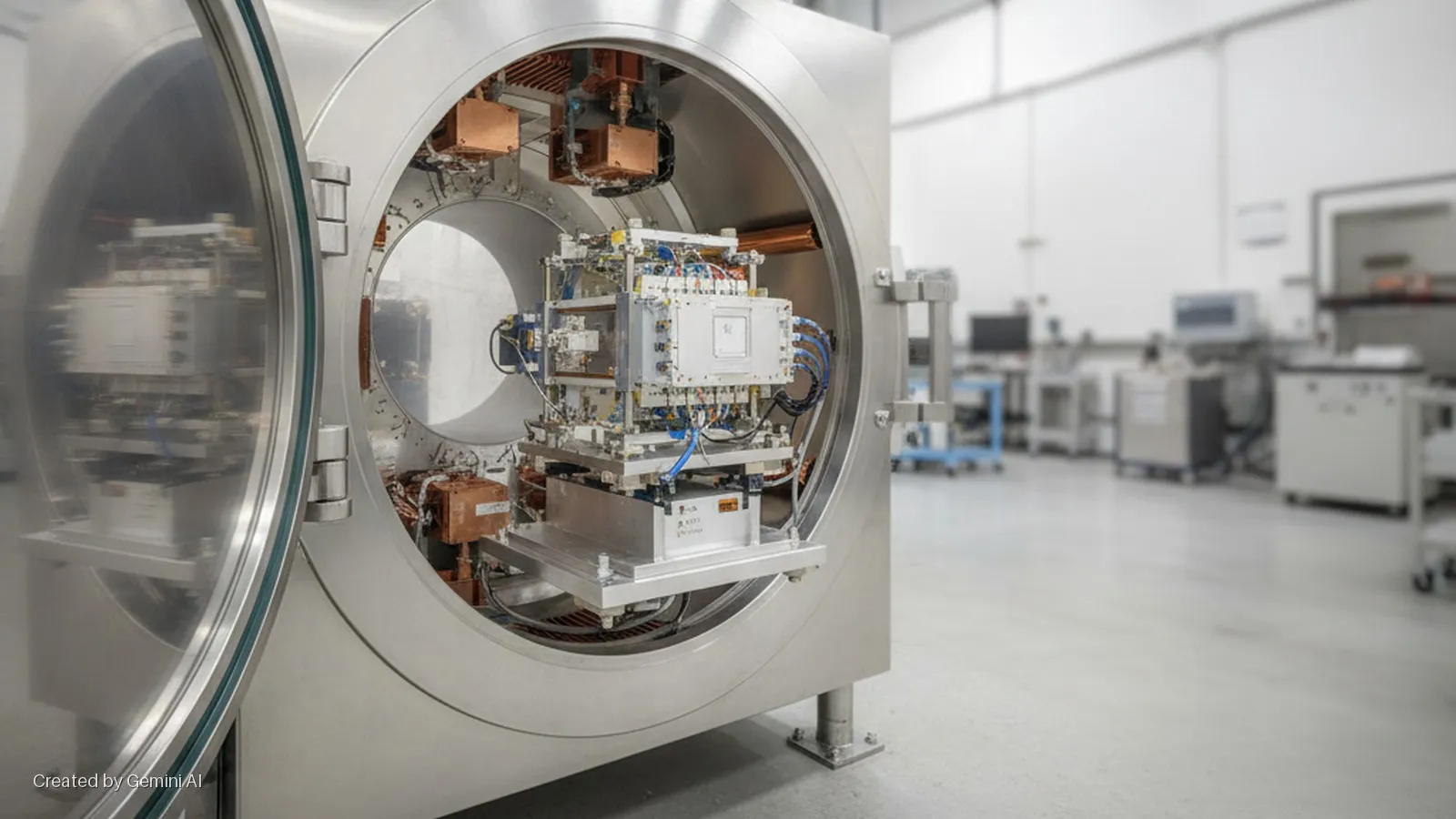
Nuclear Diamond Batteries, Inc. (OTC: NDBI) has disclosed that its majority-owned subsidiary AtomiQ has received three Notices of Allowance from the United States Patent and Trademark Office, covering the foundational layers of its nuclear diamond battery platform. The company, which remains in the development stage and has not commenced commercial production, described the allowances as protecting its energy-generation, energy-storage, and materials-synthesis innovations in a single patent portfolio sweep.
The three allowed applications address distinct technical layers. The first, already issued as US Patent No. 12,394,534 B2, covers the core nuclear voltaic power-source architecture, converting radioisotope decay energy into usable electricity via a diamond semiconductor structure. The second, granted a Notice of Allowance in May 2026 and carrying 19 claims, covers high-porosity metal-organic framework electrodes coated with carbon nano-onion structures to improve charge storage and long-term stability. The third, allowed on 7 July 2026 with 18 claims, covers proprietary synthesis and functionalisation methods for carbon nano-onions, the nanomaterial underpinning the electrode coatings described in the second application.
IP strategy and near-term milestones
AtomiQ chief executive Greg Rubin said the three allowances in a relatively short period "demonstrate meaningful progress in protecting the differentiated elements of our nuclear diamond battery technology." The company intends to complete formal issuance of the two most recent allowances by paying the outstanding USPTO issue fees, advance remaining pending applications through examination, and evaluate international filings to broaden geographic coverage.
Additional applications related to semiconductor structures, isotope integration methods, and energy-optimisation systems remain pending. NDBI also noted that its IP strategy will need to align with regulatory requirements for radioisotope handling, including licensing from the US Nuclear Regulatory Commission, and potential strategic partnerships on isotope supply and commercialisation pathways.
Market context and competitive landscape
Betavoltaic power is attracting renewed interest from researchers, defence primes, and space-systems integrators seeking ultra-long-life, maintenance-free energy sources for applications where conventional batteries are impractical. Cited applications include cardiac implants, remote industrial sensors, low-earth-orbit CubeSats, lunar night operations, and deep-space missions. The July 2026 launch of what has been described as the first commercial betavoltaic-powered CubeSat, using technology from City Labs, has provided a visible proof-point for the sector.
NDBI is not alone in pursuing this space. UK-based researchers at the University of Bristol and UKAEA have been developing carbon-14 diamond batteries for low-power applications, and a number of university spin-outs and defence contractors in the US, Europe, and Asia are pursuing betavoltaic and radioisotope thermoelectric approaches at various readiness levels. The competitive moat for any single vendor will ultimately depend on radioisotope supply chains, NRC licensing timelines, and the ability to demonstrate reliable microwatt-to-milliwatt output at scale over claimed multi-decade lifespans, none of which NDBI has yet published data on.
Investors should note that a Notice of Allowance is not a granted patent; issuance remains contingent on payment of issue fees and final USPTO processing. The company has disclosed no revenue, no commercial partners, and no production timeline beyond its development-stage designation, making the patent portfolio the primary tangible asset at this stage of the business.