
Bosch secures $225m CHIPS Act grant for Roseville SiC fab
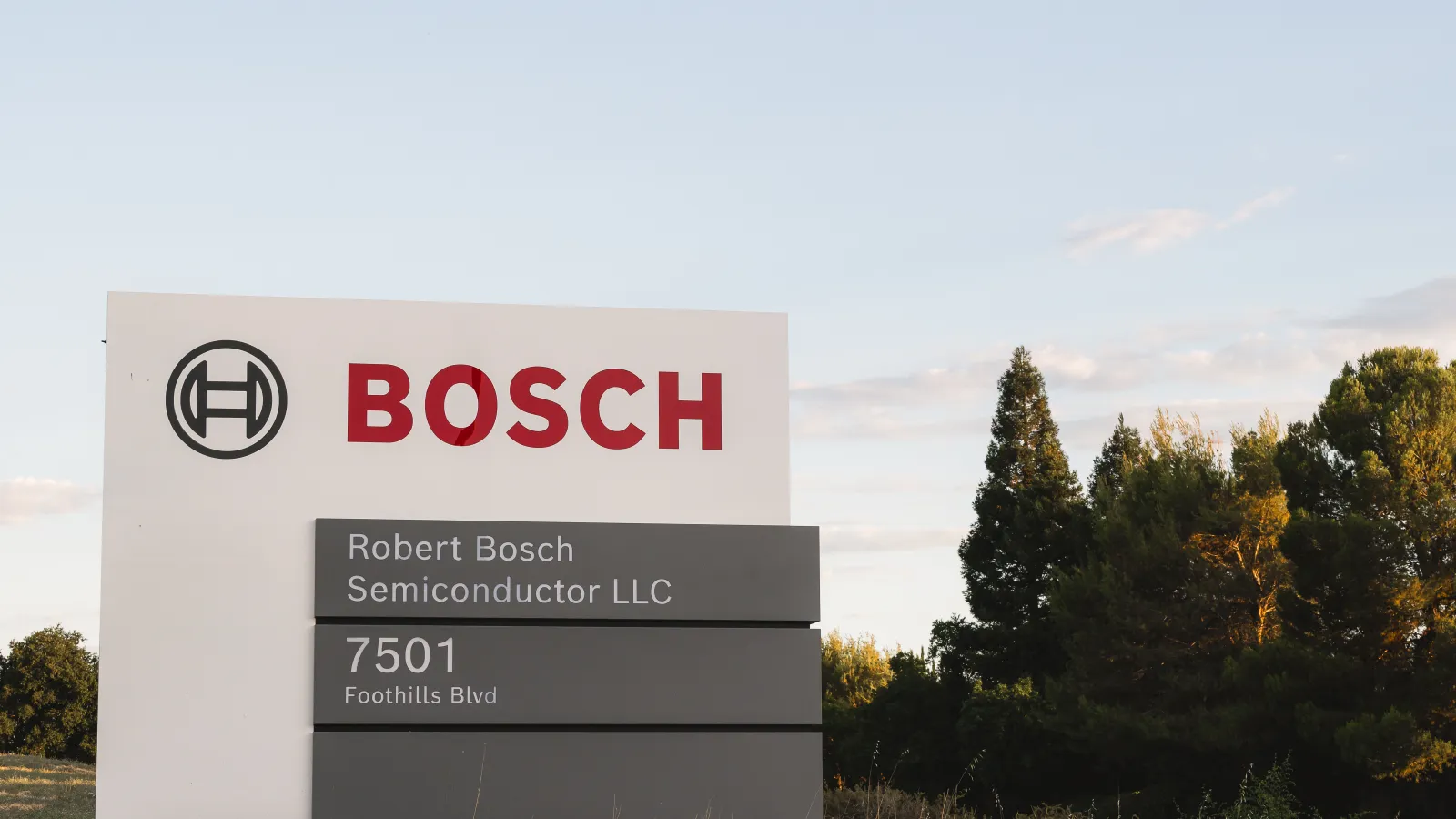
Bosch has signed a definitive funding agreement with the US Department of Commerce's CHIPS Program Office, securing up to $225 million in direct grants to support its $2 billion transformation of a legacy wafer fabrication site in Roseville, California into a silicon carbide (SiC) semiconductor manufacturing facility. The German industrial group said sample production has already begun, with commercial-scale output on 200-millimetre wafers targeted for later in 2026.
The Roseville site, which Bosch acquired in August 2023 following an announcement of intent in April of that year, has roughly four decades of semiconductor manufacturing history. Bosch has constructed new cleanroom space and a high-tech production line at the facility and retained the existing workforce throughout the conversion, investing in retraining through its wider production network. The site currently employs more than 300 people, with headcount expected to grow as output scales.
The deal and the technology
The CHIPS Program Office grant sits alongside a separate $25 million California Competes Tax Credit awarded by the state's Governor's Office of Business and Economic Development, making the combined public subsidy roughly $250 million against Bosch's stated $2 billion capital commitment. Paul Thomas, president and CEO of Bosch in North America, described the agreement as "a milestone in providing our local customers with what they have requested: localised US-based manufacturing."
The facility will initially produce Bosch's current-generation SiC chips, with third-generation devices planned for Roseville in the near term. The company said its third-generation SiC chips deliver up to 20 per cent higher performance at a smaller die size than their predecessors. Bosch has shipped more than 60 million SiC chips globally since entering the market in 2021. Beyond automotive applications including battery-electric and plug-in hybrid vehicles, the company highlighted data-centre power conversion as a secondary target market, noting that SiC components support higher-efficiency power delivery for AI workloads while reducing heat and cooling overhead.
Market context and competitive landscape
The global SiC semiconductor market is consolidating rapidly around a small number of vertically integrated suppliers. STMicroelectronics and Wolfspeed are among the largest dedicated SiC producers, while Infineon, ON Semiconductor and Rohm also hold significant positions. Automotive OEMs have been pressuring suppliers to diversify away from single-source or single-geography supply, a concern sharpened by pandemic-era chip shortages and subsequent trade-policy volatility.
Bosch entering US-based SiC production is therefore as much a supply-chain resilience move as a technology play. The CHIPS Act, signed into law in 2022, was explicitly designed to reduce dependence on Asian fabs for strategically sensitive devices; SiC for defence, automotive and industrial energy is squarely within its scope. Ford's chief supply chain officer and Lucid's equivalent both issued supporting statements, signalling that Tier 1 automotive customers have a direct interest in the Roseville ramp.
Bosch's broader US investment commitment stands at up to $7.5 billion through 2031. The Roseville facility is its first semiconductor production site in the country, though the company operates 20 manufacturing locations across the US in total and employs around 10,000 people in US manufacturing. Investors and customers will look for confirmed offtake agreements and published wafer-yield data as the commercial ramp proceeds over the next 12 to 18 months.