
HII commits up to $900m to AI robotics firms for Navy shipbuilding
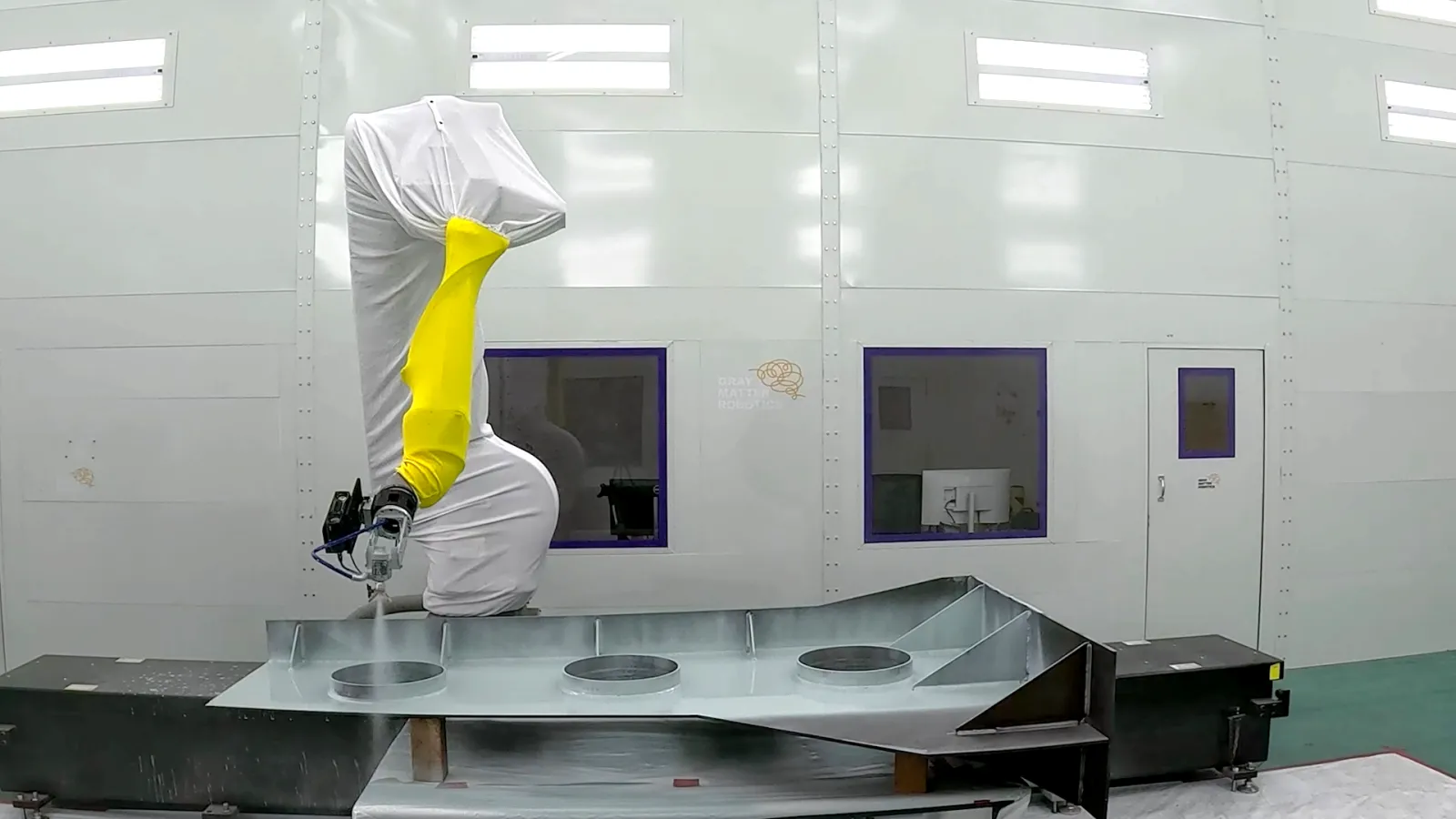
HII, America's largest shipbuilder by tonnage, has signed long-term performance-based production agreements with Path Robotics and GrayMatter Robotics, two physical AI automation companies grouped under its High-Yield Production Robotics (HYPR) programme. The agreements, announced on 6 August 2026, commit HII to awarding up to $900 million in shipbuilding work across seven years, subject to both companies meeting clearly defined technology, manufacturing readiness, and performance milestones.
The scope covers autonomous welding, grinding, blasting, painting, assembly, inspection and related fabrication processes across a broad range of US Navy programmes, including aircraft carriers, submarines, destroyers, amphibious ships, future frigates and unmanned surface vessels. HII said it plans to outsource more than 2.5 million hours of shipbuilding work in 2026 alone, a 30% increase on 2025, as part of a wider distributed shipbuilding strategy that begins with small steel structures and scales progressively to larger units and modules.
The deal structure
The agreements are staged. In a first Navy-grade development phase, Path Robotics and GrayMatter Robotics will partner with HII to validate and qualify their respective autonomous production techniques before integrating them into a dedicated production line. Only on passing that qualification process, and subject to cost, schedule and quality performance, does the second delivery stage activate.
Eric Chewning, executive vice president of maritime systems and corporate strategy at HII, described the programme as "automation that can adapt to extreme levels of complexity, mix, and size," adding that the collaboration is intended to strengthen the US industrial base and expand distributed shipbuilding capacity. Path Robotics CEO Andy Lonsberry said the HYPR arrangement was "a powerful validation" that physical AI could scale in "one of the world's most demanding production environments." GrayMatter Robotics CEO Ariyan Kabir said the deal advances what the company calls Factory SuperIntelligence, describing autonomous production systems that "learn, adapt, and improve over time."
Path Robotics, founded in 2018, has raised more than $370 million to date and is known for its Obsidian welding model and Rove mobile robotic welding system. GrayMatter Robotics, founded in 2020 and headquartered in Carson, California, claims to have processed over 30 million square feet of surface area across more than 20 industries, and cites throughput improvements of up to 12 times that of skilled manual labour alongside a 95% reduction in rework. Its architecture is described as air-gapped and edge-deployed, a design choice that suits defence and classified environments.
Market context and competitive landscape
The physical AI and industrial robotics market has attracted substantial capital over the past two years, with defence and aerospace manufacturing emerging as priority verticals alongside automotive. The labour shortage in skilled trades such as welding is a structural driver: the American Welding Society has repeatedly projected a six-figure shortfall in certified welders in the US by the late 2020s, making autonomous welding cells commercially attractive well beyond defence.
HII's decision to anchor the demand signal at up to $900 million over seven years is notable precisely because it removes a common barrier for robotics scaleups: the absence of long-horizon purchase commitments that justify capital expenditure on facilities and workforce. This model bears comparison with how automotive OEMs historically gave tier-one suppliers multi-year volume guarantees to fund tooling investment, though the qualifying milestone structure limits HII's exposure should either vendor fail to meet Navy-grade standards.
The defence industrial base context is also significant. The US Navy's shipbuilding plan has faced recurring programme delays and cost overruns, and congressional pressure to accelerate fleet expansion has intensified. Autonomous fabrication technology is increasingly cited in Pentagon planning documents as a lever for closing the gap between ship demand and domestic production capacity. Regulatory and export-control considerations will apply to any technology developed under these agreements, given their integration into classified programmes, though HII and its partners have not disclosed the specific security frameworks governing the HYPR collaboration.