
Sentinel launches Canadian defence consortium with Lockheed funds
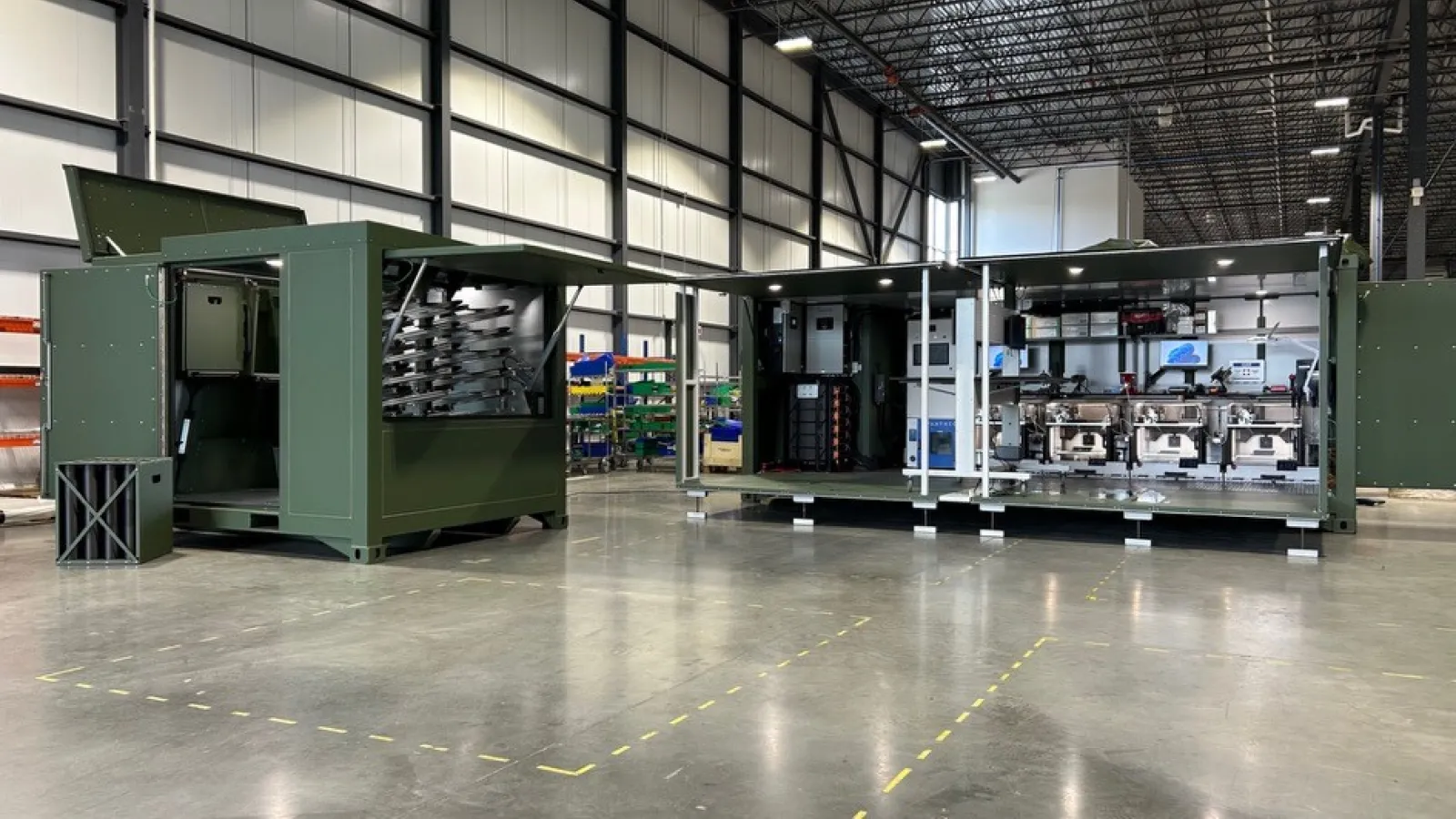
Sentinel Advanced Military Solutions, a Quebec-based defence systems integrator and subsidiary of CMP Advanced Mechanical Solutions, has launched what it calls Canada's Integrated Defence Ecosystem, unveiled at CANSEC 2026. The consortium brings together Canadian and allied partners across unmanned systems, AI-enabled sensing, encrypted communications, edge manufacturing and deployable power, with the University of Alberta serving as the anchor research institution.
The initiative is supported by a $10 million Industrial and Technological Benefits (ITB) contribution from Lockheed Martin, tied to Canada's recently confirmed acquisition of 26 HIMARS rocket systems under the Long-Range Precision Fires Project. Under Canada's ITB policy, major foreign defence purchases must generate proportional economic benefit within Canada; no equity is transferred and no repayment is required.
The platform and its partners
At the centre of the consortium sits Sentinel's StarForge platform, a deployable system designed to detect threats, coordinate response, and manufacture replacement components on site, including 3D-printed parts, in remote or austere environments such as Arctic outposts and forward operating bases. Lockheed Martin's Skunk Works team in Calgary contributes the primary command and control system (VCSi), sensor fusion expertise, and mission software to the programme.
Parent company CMP Advanced Mechanical Solutions, which employs more than 700 people, provides the industrial manufacturing backbone. John Soares, chief executive of Sentinel, framed the capability in operational terms: "Within hours, you have command and control, secure communications, autonomous surveillance, deployable power and the ability to manufacture mission-critical components on site."
Kristen Leroux, vice president and regional executive for Canada and Latin America at Lockheed Martin, said the investment reflects the company's broader commitment to scaling sovereign capability across Canadian industry, noting Lockheed's 85-year presence in the country spanning aerospace, defence and technology sectors.
Market and policy context
The launch sits squarely within a significant shift in Canadian defence policy. Canada's Defence Industrial Strategy, published earlier this year, identified $180 billion in procurement opportunities and $290 billion in related capital investment over the next decade, with an explicit expectation that domestic industry deliver sovereign, scalable capability. The Sentinel consortium is a direct response to that mandate, and it arrives as allied governments across NATO accelerate investment in autonomous systems and distributed manufacturing following lessons drawn from the conflict in Ukraine.
The broader counter-UAS and autonomous systems market has attracted intense activity from established primes and well-funded startups alike, with edge manufacturing and additive production emerging as a differentiating capability for logistics-constrained theatres. Sentinel's model, combining a systems integrator with an industrial-scale manufacturer as its parent, is designed to close a gap that often stalls pure-technology plays: the transition from prototype to production-ready field deployment.
For Canada specifically, the ITB mechanism that underpins the Lockheed contribution is a well-established instrument for channelling foreign procurement spend into domestic innovation, though critics note that the quality and durability of the resulting IP pipelines varies considerably. The University of Alberta's role in anchoring the research and sovereign IP mandate will be a signal to watch: named academic partnerships add credibility to consortium structures, but commercial outcomes depend on how IP ownership and licensing terms are structured between parties, details that Sentinel has not yet disclosed publicly.