
TurbineOne opens Maine defence tech hub for frontline AI work
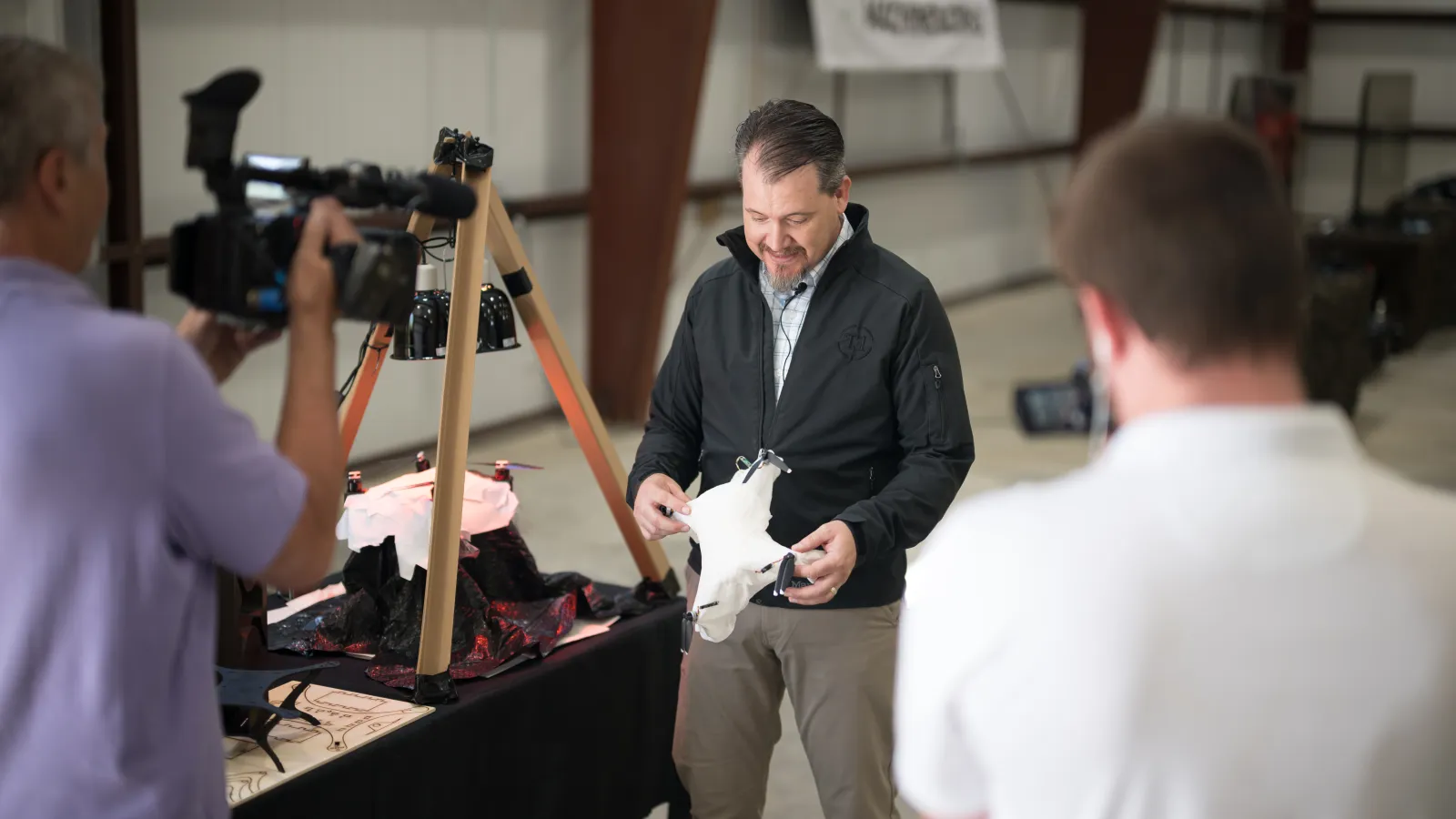
TurbineOne has opened T1 MachineWorks, a defence technology innovation facility in Old Town, Maine, designed to compress the cycle from frontline requirement to working capability. The company says engineers at the site will work across AI model adaptation, cross-platform autonomy software integration, 3D manufacturing and rapid hardware prototyping, with real-world testing available in adjacent aerial and maritime environments.
The site is positioned specifically around disconnected or degraded-connectivity scenarios. TurbineOne's existing software portfolio targets military operators who need AI-assisted decision-making in environments where cloud-dependent systems cannot function, a use case that places a premium on edge inference, local model adaptation and rugged hardware integration.
Chief executive Ian Kalin said the facility gives engineers "the freedom to experiment across software and autonomous hardware" alongside local manufacturing partners, with the aim of accelerating delivery to frontline units. The company expects to make an initial $275,000 investment in Maine operations and create more than 20 jobs over five years. TurbineOne has also received designation under Maine's Dirigo Business Incentives Programme.
Location and ecosystem rationale
Old Town was selected partly for proximity to the University of Maine, which operates a composites and advanced-manufacturing research centre, and for what the company describes as a growing regional defence technology and advanced manufacturing ecosystem. Access to open aerial and maritime test ranges in the area was cited as a practical factor alongside available technical talent.
Maine's Commissioner of Economic and Community Development, Michael A. Duguay, welcomed the investment as consistent with the state's effort to attract innovation-driven capital. U.S. Senator Susan Collins also acknowledged the opening in a letter to TurbineOne, noting the state's history of defence industry engagement.
Market context
The defence edge-AI segment has attracted growing interest from both prime contractors and specialist software vendors over the past two years, driven by US Department of Defense programmes prioritising resilient, low-latency autonomy at the tactical edge. TurbineOne competes in a space that includes a number of well-funded startups as well as established defence-tech integrators offering similar combinations of onboard AI inference, sensor fusion and autonomous platform control.
The emphasis on rapid prototyping and hardware experimentation reflects a broader shift in defence procurement toward software-defined, modular systems that can be updated in the field rather than through lengthy acquisition cycles. Programmes such as the DoD's Replicator initiative, which targets mass production of autonomous systems, have accelerated commercial interest in exactly the kind of cross-domain autonomy integration TurbineOne says it is building toward at T1 MachineWorks.
From a regulatory standpoint, autonomous systems used in defence applications remain subject to DoD Directive 3000.09, which governs human control requirements for lethal autonomous weapons. Commercial vendors supplying software or hardware in this space must align their development and testing practices with those requirements, adding compliance overhead that purpose-built facilities like T1 MachineWorks are intended to help manage.
The $275,000 initial investment figure is modest relative to facility build-outs by comparable defence-tech firms, suggesting the company is entering Maine with a lean footprint and intending to scale as contract wins materialise. Investors and customers will look for named programme affiliations and contract disclosures as the facility moves from opening to active capability delivery.