
Volatus and KHA partner to build sovereign Canadian drone ISR capability
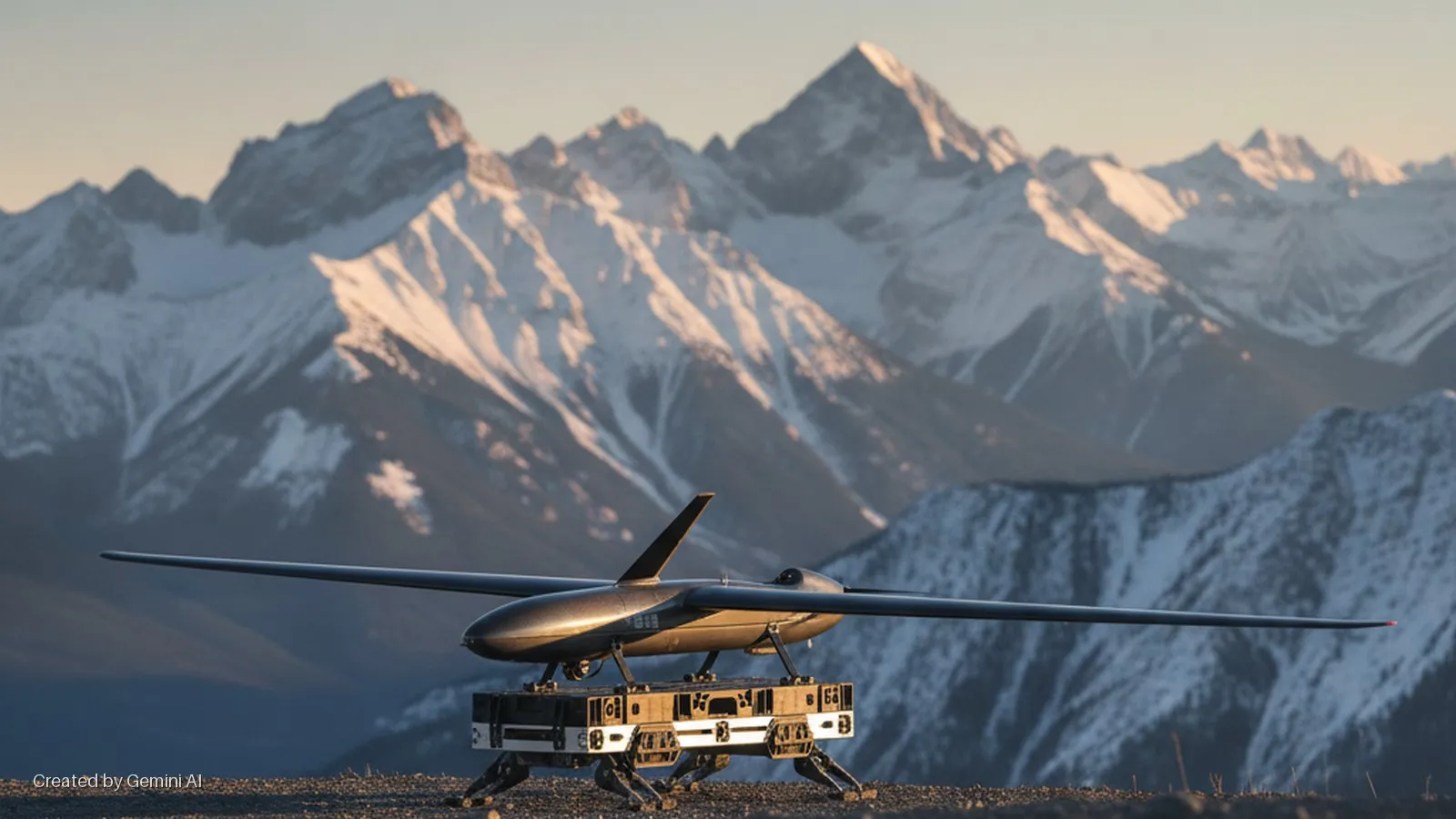
Volatus Aerospace (TSX: FLT) has signed a strategic partnership with US-based Kraus Hamdani Aerospace (KHA) to bring the K1000ULE ultra-long-endurance uncrewed aircraft and the ATNE++ airborne communications architecture into Canada. The agreement names Volatus as Canadian strategic partner and outlines a roadmap covering systems integration, operator training, lifecycle support and, subject to regulatory and commercial milestones, licensed domestic manufacturing at Volatus' facility in Mirabel, Québec.
The primary use case at launch is wildfire intelligence. Canada experienced several of its most destructive fire seasons on record in the early 2020s, and federal and provincial emergency management agencies have been reviewing persistent aerial surveillance as a complement to crewed air attack and satellite imagery. The companies say the partnership will also support Arctic domain awareness, critical infrastructure protection and broader defence applications, with further announcements expected as the programme matures.
The platform
The K1000ULE is a fully electric fixed-wing aircraft in the US military's Group 2 category. KHA says the aircraft has accumulated more than 6,000 operational flight hours supporting US military and allied customers, including the US Army, Air Force, Navy and Customs and Border Protection. A demonstrated non-stop endurance of more than 75 hours while carrying mission payloads is cited in the release as a key differentiator against conventional short-duration drones.
ATNE++ is described as a mesh-enabled, multi-waveform self-healing communications network that bridges voice and data across legacy and modern radio systems, including tactical data links, and is engineered to maintain connectivity in contested or degraded signal environments. Combined with the aircraft's electro-optical and infrared sensor suite, the system is intended to deliver continuous fire-perimeter mapping, thermal hotspot detection, firefighter tracking and unified command support throughout an incident lifecycle.
Volatus chief executive Glen Lynch described the core problem in operational terms. "Wildfires are ultimately an information challenge before they become a suppression challenge," he said. "Persistent airborne intelligence and resilient communications fundamentally improve decision-making, enabling governments to respond earlier, coordinate more effectively and strengthen the exceptional wildfire response capability Canada already possesses."
Market context and sovereign-capability angle
The announcement sits within a wider push by Canadian federal and provincial governments to reduce dependence on foreign intelligence, surveillance and reconnaissance (ISR) systems for domestic emergency management and Arctic security. Canada's vast northern geography and limited ground-based communications infrastructure make persistent unmanned platforms particularly relevant, and the defence procurement community has signalled interest in domestically controlled systems that meet sovereign data-handling requirements.
Volatus faces competition from a growing field of long-endurance UAS vendors, including established US primes and a number of European and Israeli platforms that have previously demonstrated in Canadian conditions. The KHA partnership gives Volatus access to a platform with a verified military operational record, which is likely to carry weight with Transport Canada and the Department of National Defence during any regulatory evaluation.
Any Canadian deployment remains contingent on Transport Canada beyond-visual-line-of-sight approvals and the completion of technical evaluations. The company says it has already begun engaging federal and provincial governments and emergency management agencies on demonstration pathways. The Mirabel manufacturing commitment, if realised, would qualify the programme for Canadian Industrial and Technological Benefits considerations in defence procurement, a meaningful advantage in competitive bids.
Volatus described the announcement as the second milestone in a broader sovereign autonomous intelligence initiative. The first milestone was not identified in the release; additional programme elements are expected to be disclosed as the architecture develops.