
AWS to open Saudi Arabia cloud region by December 2026
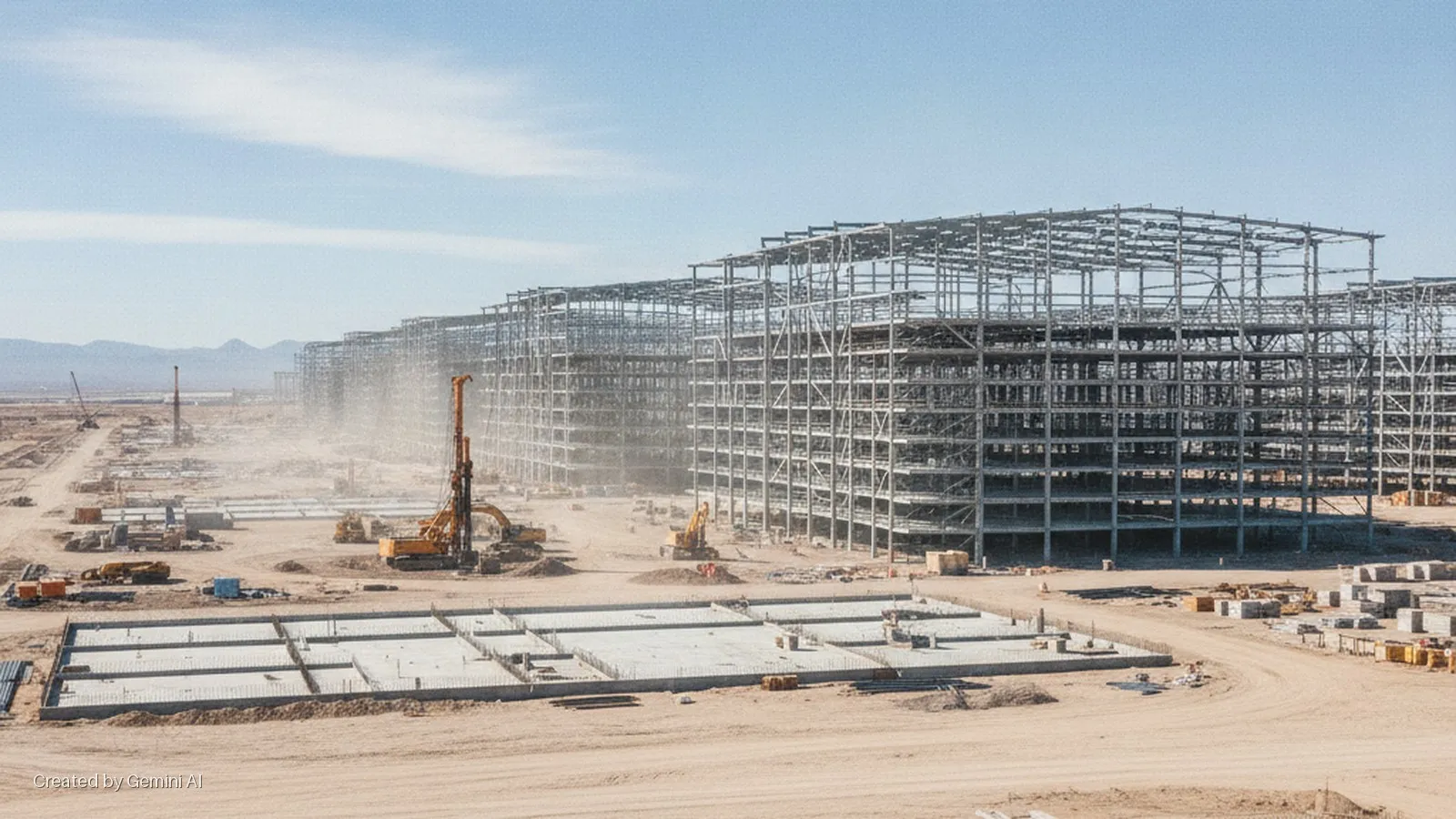
Amazon Web Services has confirmed that its first cloud infrastructure region in the Kingdom of Saudi Arabia will launch by December 2026, marking a significant expansion of the company's footprint across the Middle East. The region was first announced in March 2024 and represents more than $5.3 billion (approximately 19.88 billion Saudi riyal) in planned infrastructure investment, bringing the total number of AWS regions worldwide to 40.
Alongside the regional launch, AWS and HUMAIN, a company owned by Saudi Arabia's Public Investment Fund, have deepened their strategic partnership with a commitment to deliver up to 50 megawatts of capacity within Saudi Arabia's first AI Zone by 2028. The AI Zone infrastructure will include AWS Trainium chips alongside the latest NVIDIA AI accelerators, giving customers access to dedicated compute for training and inference workloads.
The deal
HUMAIN is positioned as AWS's primary AI partner for the Kingdom. As part of the expanded collaboration, HUMAIN's ALLAM Arabic large language model will become available through Amazon Bedrock, giving enterprise customers access to Arabic-language generative AI capabilities via a managed platform. HUMAIN Fabric, the company's AI-native data infrastructure layer and a component of the HUMAIN ONE generative AI operating system, will also be listed on AWS Marketplace.
Several Saudi organisations have announced plans to run AI workloads on the new infrastructure, including Abdul Latif Jameel, Almosafer, stc Group, and Red Bull Mobile. On the partner side, ZainTECH has signed a multi-year agreement to help organisations adopt AWS services and strengthen their security and compliance posture, while stc Group has entered a strategic collaboration focused on accelerating cloud and AI adoption across the Kingdom.
AWS chief executive Matt Garman said at the LEAP conference in Riyadh: "The launch of our new Region and our partnership with HUMAIN will deliver the full-stack cloud and AI infrastructure to help power new industries, create jobs, and accelerate the goals of Vision 2030."
Market context and digital sovereignty
The Saudi launch arrives at a moment of intense competition among hyperscalers for Middle East sovereign cloud mandates. Microsoft, Google, and Oracle have each announced or expanded data centre commitments in the Gulf over the past two years, reflecting the region's appetite for AI compute and its strategic importance as a conduit between Eastern and Western digital economies.
AWS has positioned its new region explicitly around its Digital Sovereignty Pledge, which promises customers advanced data-residency controls and local key management. This framing is directly relevant for Saudi public sector customers and regulated industries, for whom data localisation is not optional. The EU AI Act, though not directly binding on Saudi operators, is increasingly shaping expectations among multinational customers who operate across jurisdictions and will process data through the new region.
An IDC report commissioned by AWS estimates that AI could contribute $130 billion to Saudi Arabia's economy by 2030, a figure that carries all the usual caveats attached to vendor-commissioned forecasting. The Kingdom's Vision 2030 programme provides political tailwinds, with the Ministry of Communications and Information Technology actively co-ordinating foreign investment in digital infrastructure.
Beyond infrastructure, AWS has announced workforce development commitments, including a target to train more than 100,000 Saudi citizens through the Amazon Academy, a programme launched with the Ministry of Communications. A separate initiative aims to train up to 10,000 women through the AWS Saudi Arabia Women's Skills Initiative at no charge. Across the broader Middle East, North Africa, and Turkey footprint, AWS has committed to reaching two million citizens with AI and cloud training by 2030, reporting that it has already reached more than 680,000 individuals to date.