
Cloudera Anywhere Cloud targets multi-cloud AI governance gap
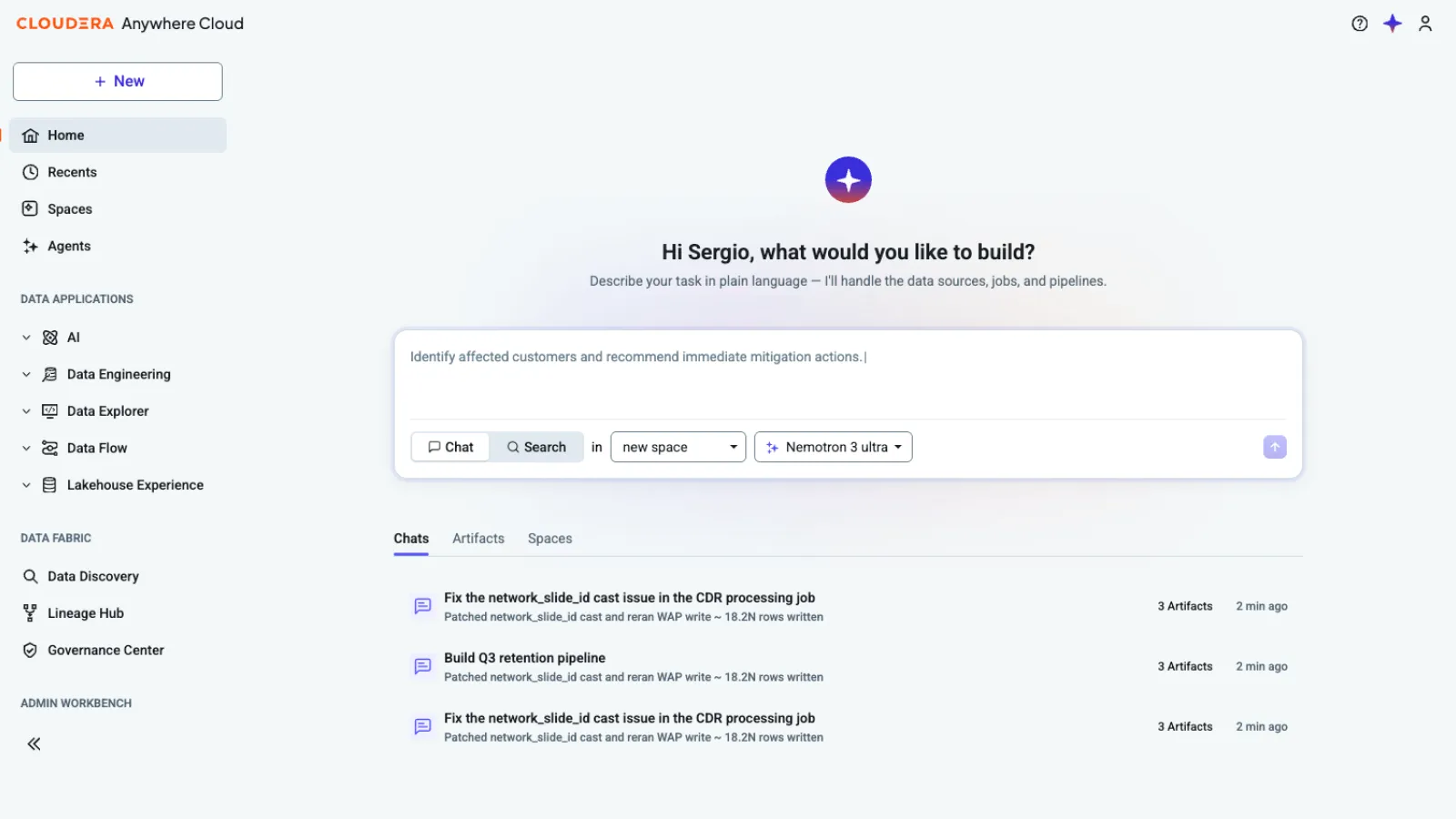
Cloudera has announced Cloudera Anywhere Cloud, a new hybrid platform for building, deploying and scaling production-grade data and AI workloads across multi-cloud, on-premises and sovereign infrastructure. The launch, timed to coincide with the LEAP 2026 technology conference in Riyadh, positions the platform as a response to what Cloudera describes as a structural failure point in enterprise AI adoption: fragmented infrastructure and governance complexity that causes projects to stall before they reach production.
The company cited research in which 73% of IT leaders said infrastructure performance constraints have hindered operational AI initiatives. Cloudera Anywhere Cloud is designed to address this by providing a single control plane across public clouds, private data centres and sovereign environments, without requiring organisations to physically move or copy data between environments.
What the platform delivers
The platform is built on a modular architecture that allows teams to deploy independent data and analytics services, including Cloudera-native engines such as Spark, Kafka and Trino, as well as open-source and partner engines, through a self-service marketplace. Interoperability is anchored to open standards including Apache Iceberg and the Polaris catalogue, with unified APIs designed to reduce what the company calls the "custom integration tax" associated with proprietary connectors.
Governance is handled through a centralised zero-trust model that applies policy automatically across deployments, maintaining data lineage and sovereignty regardless of where workloads run. An agentic copilot, built into the platform, converts plain-language requests into automated data workflows or infrastructure management tasks.
Leo Brunnick, Cloudera's chief product officer, said: "Organisations shouldn't have to choose between innovation and control. Cloudera Anywhere Cloud brings the speed and flexibility of the cloud directly to enterprise data, allowing enterprises to accelerate AI initiatives while maintaining complete ownership of their data and intellectual property."
Named customer design partners include Admiral Technologies, ExxonMobil, IQVIA, IXEN.ai and Mastercard, though Cloudera did not disclose contracted deal terms, pricing tiers or specific deployment benchmarks for any of these relationships.
Market context and competitive landscape
Cloudera is entering an increasingly crowded segment. Databricks, Microsoft Fabric, Snowflake and a range of cloud-native data lakehouse vendors are all pursuing the same enterprise buyer: organisations that need consistent governance across heterogeneous infrastructure. The specific emphasis on sovereign cloud and on-premises interoperability differentiates Cloudera's pitch somewhat, particularly in regulated industries and markets such as the Gulf Cooperation Council region, where data residency requirements are tightening under national digital sovereignty frameworks.
The EU AI Act, the UK's developing AI governance framework, and emerging data localisation mandates in the Middle East and Southeast Asia are creating a structural tailwind for vendors that can credibly offer workload portability without data movement. Cloudera's open-standards approach, anchored to Apache Iceberg rather than proprietary formats, reduces the switching-cost risk that enterprise buyers have been increasingly sensitive to following high-profile vendor lock-in disputes in the cloud infrastructure market.
The agentic AI positioning also reflects a broader industry shift. Several enterprise software vendors are now embedding copilot-style automation into data platform tooling, and buyers evaluating Cloudera Anywhere Cloud will be comparing that capability against native offerings from the major hyperscalers and specialist agentic workflow vendors.
Cloudera will demo the platform live at LEAP 2026, running from 31 August to 3 September in Riyadh, and has indicated a series of EVOLVE events and webinars will follow. The company has not published a standalone general availability date, pricing schedule, or performance benchmarks for the platform at launch.