
Comsol enters SA wholesale 5G home broadband with 2,000-site rollout
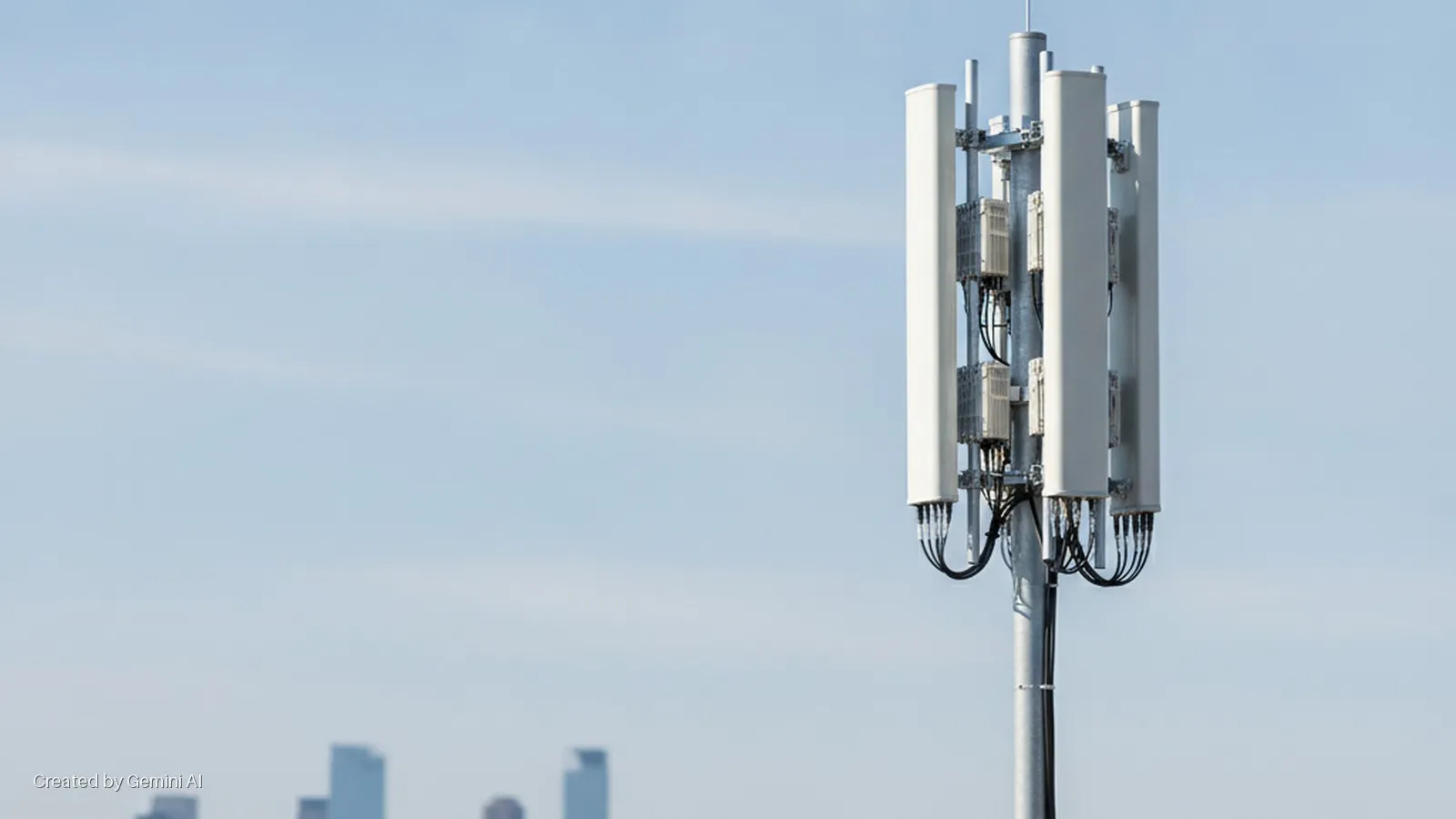
Comsol, a South African fixed wireless and private network operator with nearly three decades of history, has announced its entry into the wholesale home broadband market, backed by a restructured shareholder base and a multibillion-rand capital commitment. The company is deploying a standalone 5G-Advanced fixed wireless access (FWA) network targeting approximately 2,000 base stations across South Africa, which it describes as one of the country's largest standards-based 5G deployments.
The shareholder reshuffle sees Nedbank Private Equity exit after a nine-year investment, while two new investors join the cap table: Platform Investment Partners, a firm with a track record of backing open-access fibre assets including DFA, Vumatel and N99, and Wimsey Capital, a privately held vehicle. Existing shareholder Convergence Partners and founder Iain Stevenson, through his vehicle Mactavish Investments, are each putting in additional growth capital. RMB structured the financing package that supports both the shareholder transaction and the strategic capital expenditure programme.
Network build and coverage
Comsol began construction six months ago and already covers more than one million households in Gauteng. Full Gauteng coverage is targeted by March 2027, with expansion into the Western Cape, KwaZulu-Natal and major regional centres planned through 2027 and 2028. The company holds a C-band spectrum licence from ICASA, received in 2022, covering 60 MHz in the 3.7 GHz band, alongside what it describes as the country's largest contiguous holding of 28 GHz spectrum.
The wholesale model means Comsol does not sell directly to end consumers. Instead, ISPs, MVNOs, WISPs and other service providers access the network infrastructure and retain control over branding, pricing, billing and customer relationships. An API-driven platform allows partners to launch branded 5G-Advanced FWA products within weeks, according to the company.
Stevenson cited ICASA's spectrum allocation mandate as a driver of the wholesale approach: "ICASA has allocated spectrum to network providers to expand broadband access and increase competition in the market. We believe the way to honour that mandate is to build wholesale infrastructure that extends high-speed broadband to new customer segments."
Market context and competitive landscape
The commercial case for 5G FWA in South Africa rests on fibre's limited penetration. Approximately 15% of South African households are connected to fibre, with coverage concentrated in dense metropolitan areas where trenching costs are justifiable. FWA offers faster deployment and lower upfront cost in adjacent suburban and peri-urban areas, and Comsol claims its 5G-Advanced standalone core delivers roughly double the uplink performance of typical hybrid 4G/5G mobile operator networks. It is, according to the release, one of only two production 5G standalone cores currently live in South Africa.
Regulatory and market data support the growth thesis. ICASA figures show FWA subscriptions growing at roughly 39% year on year in 2025. Independent research from BMIT projects that 5G could account for up to 67% of all residential FWA connections in South Africa by 2029, up from 35% in 2024. Declining chipset and customer premises equipment costs have also reduced the barrier to market entry for both ISPs and end users.
Comsol's wholesale neutral-host positioning places it alongside open-access infrastructure models that have gained traction in other markets, including the UK's Openreach-style structural separation and various open-access fibre deployments across sub-Saharan Africa. For established mobile network operators in South Africa, a well-capitalised wholesale FWA entrant with its own spectrum and a modern standalone core introduces a new source of capacity competition, particularly as those operators manage the cost of their own 5G rollouts.
The company's next visible milestones will be the first named ISP partner launches, Gauteng coverage completion by March 2027, and the commencement of Western Cape and KwaZulu-Natal construction.