
FTC Solar posts 52% sequential revenue rise, wins 400MW US order
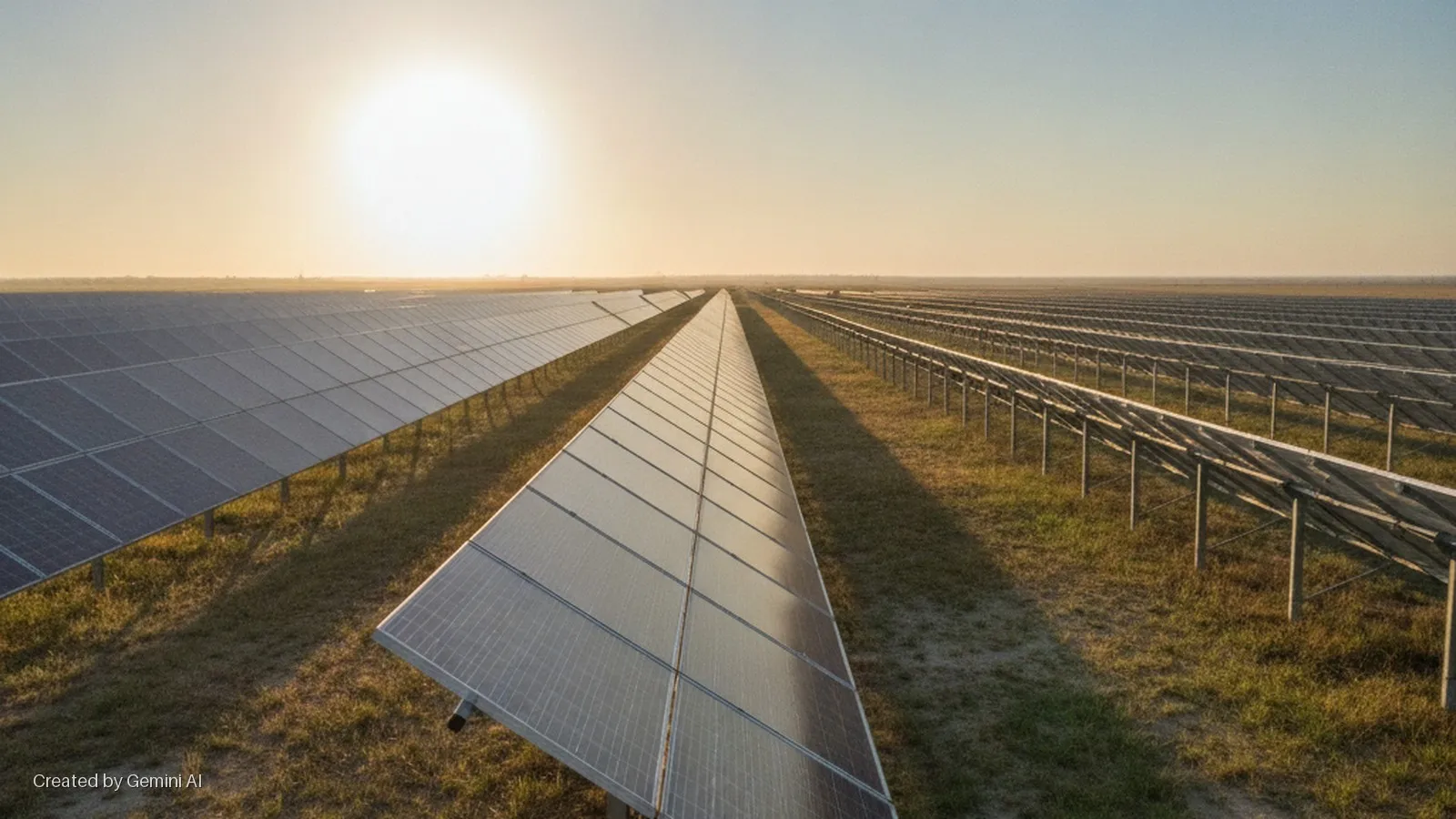
FTC Solar (Nasdaq: FTCI) reported second-quarter 2026 revenue of $26.2 million, a 51.5% increase on the prior quarter and a 30.8% rise year-on-year, beating the upper end of the company's own guidance range of $22m to $26m. The Austin, Texas-based solar tracker manufacturer reaffirmed its full-year 2026 revenue growth target of 40% relative to 2025, projecting a further 24% sequential increase in Q3 to a guidance midpoint of roughly $32.5 million.
The company also disclosed a 400MW purchase order received after the quarter closed, placed by a top-five US engineering, procurement and construction contractor and a top-five US developer. Neither party was named. The order covers a single-axis 1P tracker project and follows earlier collaboration between FTC Solar and the same EPC on smaller schemes.
Project pipeline and international expansion
Beyond the post-period 400MW win, FTC Solar confirmed it has received notice to begin production on a 330-megawatt project in Queensland, Australia, a scheme first awarded in March 2025 that encountered schedule revisions before proceeding. Tracker deliveries are expected in the second half of 2026. A separate 80-plus-megawatt Australian project was also awarded in the quarter for second-half delivery.
The company additionally announced entry into the Indian solar market, stating it has already won multiple projects ranging from pilot scale to over 100MW, with shipments already under way in 2026. India is among the most actively expanding solar deployment markets globally, with government targets calling for 500GW of renewable capacity by 2030, making it a strategically important geography for tracker vendors seeking growth outside a competitive US market.
Financial position and liquidity
Despite the revenue progress, FTC Solar remains firmly loss-making. GAAP gross margin was negative 8.5% in Q2, an improvement on the negative 19.6% recorded a year earlier but wider than the negative 7.1% in Q1 2026. On a non-GAAP basis, the gross margin improved to negative 5.1%, compared with negative 17.4% in Q2 2025. The company's adjusted EBITDA loss was $9.8 million for the quarter.
Cash and cash equivalents stood at $10.1 million at 30 June 2026, down from $21.1 million at the end of 2025. The cash position tightened partly due to $6.3 million in debt repayments in the first half. To bolster liquidity, the company announced an equity line of credit of up to $20 million with institutional investor Lincoln Park Capital, structured so that FTC Solar controls the timing and volume of any share sales and Lincoln Park is contractually barred from short-selling or hedging the stock. No warrants or derivatives are attached to the facility.
Contracted and awarded backlog stands at approximately $560 million, providing forward revenue visibility that management says underpins the second-half growth plan.
Market context and competitive dynamics
The utility-scale solar tracker market is dominated by a small number of global players, with Nextracker (which completed a Nasdaq IPO in 2023 and is now the sector's largest independent), Array Technologies, and FTC Solar among the principal independent specialists. Tracker penetration in utility-scale projects has risen steadily as levelised cost of energy calculations increasingly favour single-axis tracking over fixed-tilt installations.
FTC Solar's focus on its 1P (single-row) tracker format, which the company says customers regard as faster and easier to install than 2P alternatives, is designed to differentiate on installation economics rather than headline panel yield alone. Chief executive Anthony Carroll, who joined in April 2026, noted the company is investing in AI-assisted bidding tools and exploring robotics applications for on-site installation productivity, though neither initiative has yet produced commercial revenue or disclosed technical specifications. The path to gross margin breakeven remains the key financial milestone investors and analysts are likely to monitor over the coming quarters.