
ACM Research wins first production order for panel-level plating tool
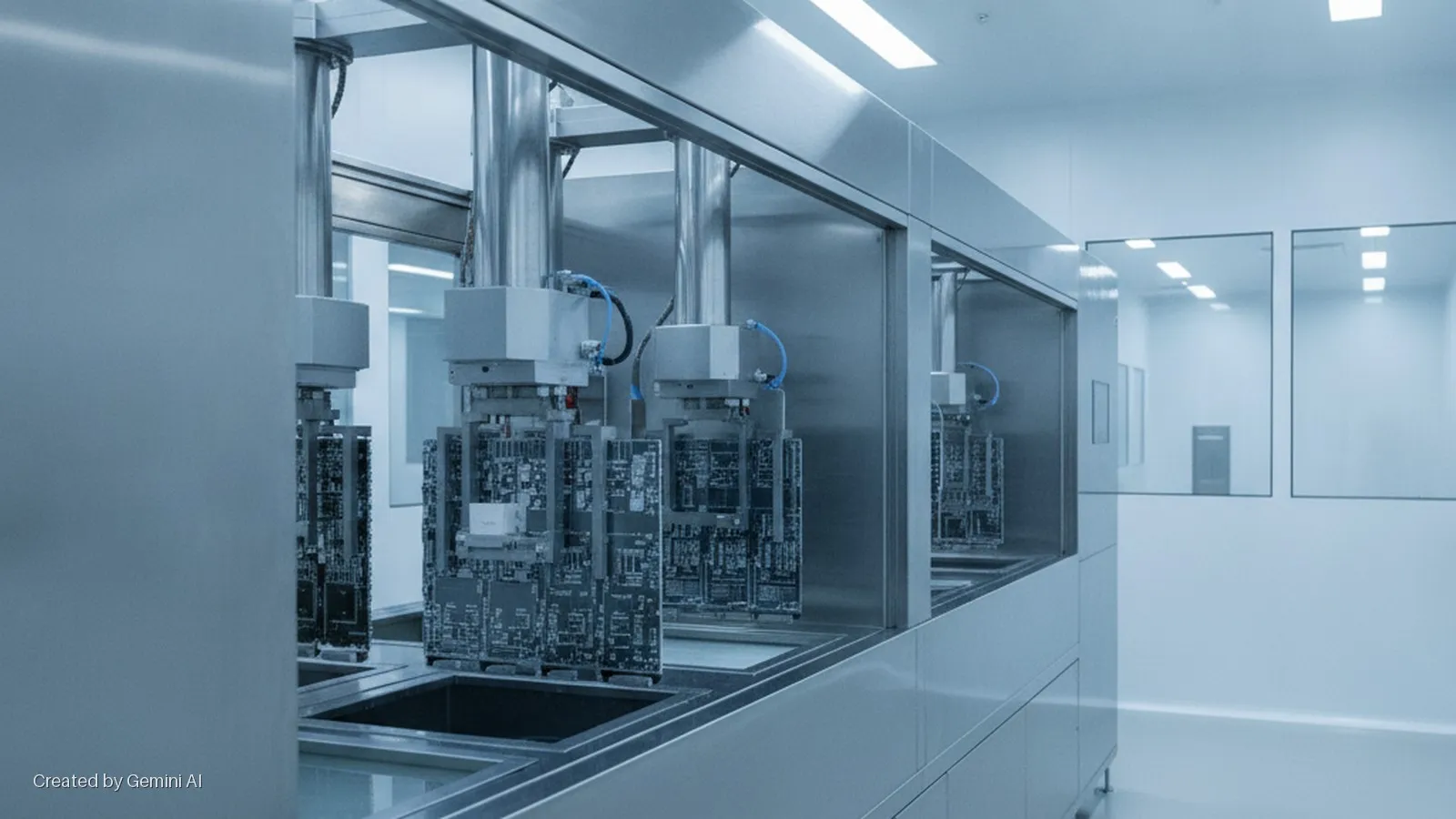
ACM Research (NASDAQ: ACMR) has received two orders for its Ultra ECP ap-p horizontal panel-level electroplating tool, marking what the Fremont-based semiconductor equipment maker describes as the first commercial horizontal panel-level copper deposition system for the large-panel packaging market. The orders come from two separate customers in Asia and represent a meaningful step in the company's bid to establish a position in advanced packaging equipment.
The first order, a full production commitment, covers one 510 x 515 mm tool from an existing advanced packaging customer in mainland China, with delivery scheduled for the first half of 2027. The second is an evaluation order for a smaller 310 x 310 mm unit from a new panel-manufacturer customer elsewhere in Asia, due for delivery in the fourth quarter of 2026.
The technology
The Ultra ECP ap-p supports panel formats up to 600 x 600 mm and handles copper, nickel, tin-silver and gold plating processes. Its design centres on a horizontal electroplating architecture that synchronises a rotating square electrical field with a rotating chuck, a combination the company says delivers superior deposition uniformity across large panel surfaces. Additional features include a four-sided sealing dry contact chuck and in-cell rinse functionality designed to limit chemical cross-contamination between plating cells.
David Wang, President and Chief Executive Officer of ACM Research, said the tool "was developed to address increasing requirements for plating uniformity, process stability and production efficiency as advanced packaging moves toward higher levels of integration and larger panel formats." He added that the company remains committed to supporting customer qualification and volume-production adoption.
ACM's claim to a "world's first" for commercial horizontal panel-level copper deposition has not been independently verified in this release, and the company has not disclosed the contract values of either order.
Market context
Panel-level packaging is attracting growing investment across the semiconductor supply chain as chipmakers push beyond wafer-level fan-out approaches to support higher interconnect density and lower per-die cost. The shift toward larger panel formats is driven partly by the economics of heterogeneous integration: spreading advanced packaging across a panel analogous to a flat-panel display substrate allows more dies to be processed per run, improving throughput.
The electroplating step within that process, covering redistribution layers, copper pillars and bump formation, is a technically demanding area where uniformity at scale is a persistent challenge. ACM competes in the broader semiconductor equipment space against much larger incumbents, including Applied Materials, Lam Research and Tokyo Electron, all of which have their own advanced packaging equipment portfolios. Pure-play panel-level packaging equipment vendors remain a smaller cohort, which is precisely the gap ACM is seeking to occupy.
Regulatory and geopolitical read-across
The production order from a mainland China customer is notable given the ongoing US export-control environment. The US Bureau of Industry and Security has tightened controls on advanced semiconductor manufacturing equipment in successive rounds since 2022, and while panel-level packaging tools occupy a different tier of the control framework than leading-edge logic equipment, ACM's China-heavy revenue mix remains a watchpoint for investors and compliance teams alike. ACM is headquartered in the US but has significant operations and customer exposure in China, a dynamic it has navigated with care in recent filing disclosures.
The evaluation order from the new Asian panel-manufacturer customer, if it converts to a full production commitment following qualification, would broaden ACM's geographic and customer base beyond its existing China-centric footprint. Delivery of the evaluation tool in Q4 2026 means qualification results could inform a production decision in the first half of 2027, roughly coinciding with the China production delivery.