
Canatu wins second CNT reactor order from FST in EUV pellicle push
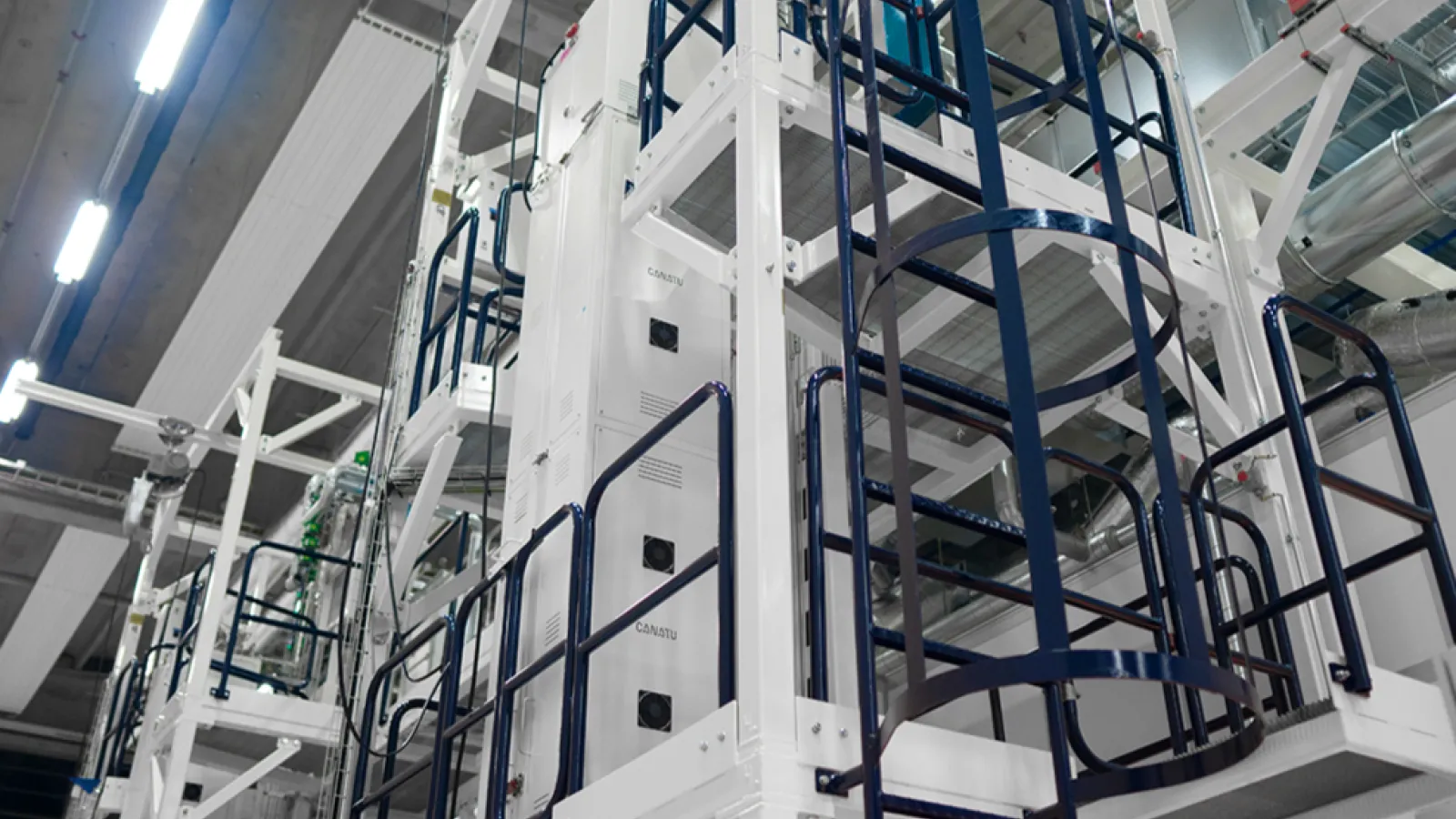
Canatu, the Finnish carbon nanotube specialist listed on Nasdaq First North Growth Market, has received a second order for its CNT100 SEMI reactor from Korean partner Fine Semitech Corporation (FST). The deal, which includes previously announced long-lead-time components, carries a total contract value classified as "large" under Canatu's disclosure policy, corresponding to more than EUR 5 million and excluding royalties and recurring consumable revenues. Delivery is scheduled for 2027, though Canatu expects a partial revenue contribution in the second half of 2026.
The order represents a meaningful step forward in the two companies' joint commercialisation programme for carbon nanotube pellicle membranes used in extreme ultraviolet (EUV) lithography. Canatu chief executive Maximilian Slawinski said the order "marks another huge step towards the implementation of Canatu's CNT technology as a new standard for pellicles used in EUV semiconductor manufacturing," adding that the expanding relationship with FST reflects confidence in the underlying platform.
Commercialisation timeline
The CNT100 SEMI reactor programme has followed a deliberate validation sequence. Canatu shipped the first reactor to FST in September 2024. By July 2025, the equipment had received customer approval for commercial-scale production of advanced EUV pellicles. In October 2025, Canatu granted FST a commercial production licence, establishing the royalty-bearing framework. The current order expands FST's manufacturing capacity and, once production commences, will trigger recurring revenues for Canatu through royalties and proprietary consumables.
This layered revenue model, combining capital equipment sales with a recurring intellectual property stream, is increasingly common among deep-tech component suppliers seeking more predictable income alongside lumpy reactor orders.
Market context
EUV pellicles sit at a critical pinch-point in advanced semiconductor manufacturing. A pellicle is a thin membrane stretched over a photomask to prevent particle contamination during EUV exposure; without a high-transmittance pellicle that can withstand EUV power levels, chip fabs face significant yield losses. Carbon nanotube membranes are positioned by Canatu as a technically superior alternative to existing polysilicon pellicle approaches, offering higher EUV transmittance and better thermal stability, though the company's claims on comparative performance have not been independently benchmarked in public disclosures.
The pellicle market is a niche but strategically important sub-segment of semiconductor process materials, dominated today by a handful of suppliers including ASML's in-house pellicle programme and specialist Korean and Japanese materials companies. As TSMC, Samsung and Intel ramp extreme ultraviolet capacity for sub-3nm nodes, demand for high-performance pellicles is expected to grow in step. Canatu's licensing-plus-equipment model allows it to scale through partners such as FST without bearing the full capital cost of direct fab-scale production.
Regulatory and supply-chain considerations
Advanced semiconductor process materials, including pellicles and the capital equipment used to make them, sit within the broader export-control environment shaped by US Bureau of Industry and Security (BIS) rules and parallel restrictions adopted by Japan and the Netherlands. While CNT pellicle reactors are not currently subject to the same high-profile controls as EUV scanners themselves, any future tightening of materials-technology export rules could affect cross-border equipment shipments between Finland, Korea and Taiwan, where Canatu also maintains operations. The company has not disclosed whether the FST reactor order is subject to any existing export licensing requirements.
For investors, the key near-term milestones will be whether revenue recognition from the current order tracks to the 2026 second-half guidance, confirmation of the delivery schedule, and any disclosure of a third customer or additional licensing agreement that would validate the CNT pellicle platform beyond the FST relationship.