
Sandisk launches NAS 600 SATA and NAS 800 NVMe SSDs for SMB storage
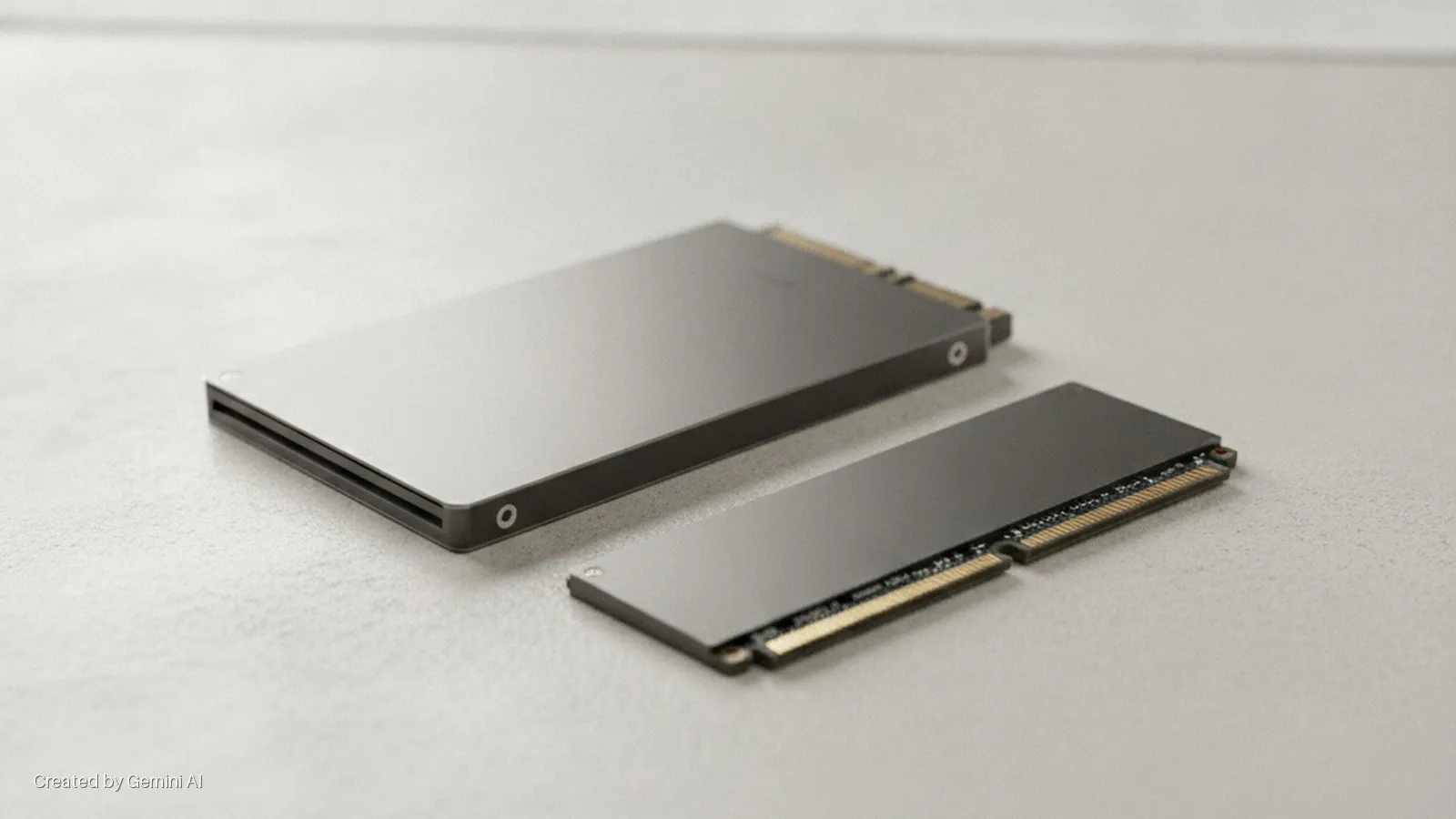
Sandisk has introduced two new solid-state drives designed specifically for network-attached storage deployments: the SANDISK NAS 600 SATA SSD and the SANDISK NAS 800 NVMe SSD. The announcement, made in Dubai on 24 August 2026, targets prosumers, creative professionals and small businesses that are increasingly running always-on, multi-user NAS environments as an alternative to public cloud storage.
The launch reflects a broader shift in how smaller organisations manage data. Growing dataset sizes, collaborative workflows and a heightened appetite for on-premises control of AI-generated content are each contributing to demand for NAS-specific storage that goes beyond the endurance ratings of general-purpose consumer drives.
The products
The NAS 600 SATA is a 2.5-inch, 7mm drive with a SATA interface, offering sequential read speeds of up to 560 MB/s. Its endurance rating reaches 2,500 TBW in the 4 TB variant, and the company quotes a mean time to failure of 2.25 million hours. Capacities run from 500 GB to 4 TB. The form factor is a deliberate design choice: it fits directly into existing 3.5-inch NAS bays that accept 2.5-inch drives, making it a practical drop-in upgrade from spinning hard disks with no mechanical noise.
The NAS 800 NVMe steps up considerably in ambition. Built on a PCIe 5.0 interface and the M.2 2280 form factor, it is aimed at all-flash and hybrid NAS systems handling demanding or business-critical workloads. The top-capacity 7.68 TB variant carries an endurance rating of 14 PBW. Sequential read and write speeds reach 14,900 MB/s and 13,200 MB/s respectively in the 1.92 TB configuration, while the 3.84 TB variant is quoted at up to 2.3 million random read IOPS and 2 million random write IOPS. Sandisk says the drive has been tested for compatibility with a number of leading NAS platforms and uses TLC 3D NAND. Supported workloads include databases, virtualisation, content creation and what the company describes as agentic AI applications.
Anil Moolchandani, vice president of product management at Sandisk, said the NAS use case has changed substantially: "Today, prosumers, creative professionals and small businesses are dealing with larger datasets, more team collaboration, and always-on systems. We designed the SANDISK NAS portfolio to meet these evolving requirements."
Market context
The NAS storage market for SMBs and prosumers sits between consumer-grade drives and enterprise SAS or U.2 SSDs, and it has historically been dominated by spinning hard disks from Seagate and Western Digital. The shift toward all-flash NAS has been gradual, constrained by the per-gigabyte cost premium of SSDs versus HDDs, but that gap has narrowed considerably over the past three years as NAND prices have fallen.
Sandisk itself was spun out of Western Digital in 2024 and now trades independently on NASDAQ under the ticker SNDK. Its entry into a NAS-specific SSD line puts it in more direct competition with Seagate's IronWolf SSD range and Samsung's dedicated NAS SSD offerings, both of which have been available for several years. The NAS 800's PCIe 5.0 specification is a differentiating factor in the prosumer and small-business segment, where PCIe 5.0 NAS enclosures are only beginning to reach the market.
The rise of private cloud and local AI data pipelines is a credible tailwind for the segment. Regulatory pressure around data sovereignty, particularly under GDPR in Europe and emerging frameworks in the Gulf region where this announcement was made, is encouraging organisations to keep sensitive workloads on-premises rather than routing them through hyperscaler infrastructure. That dynamic benefits purpose-built NAS hardware at every capacity tier.
Sandisk did not disclose pricing or regional availability dates in its release. The company's press contact is based in Dubai, suggesting the Middle East and Africa region may be an early focus market for this launch.