
VSMC opens 300mm fab in Singapore, targets 44k wafers by 2029
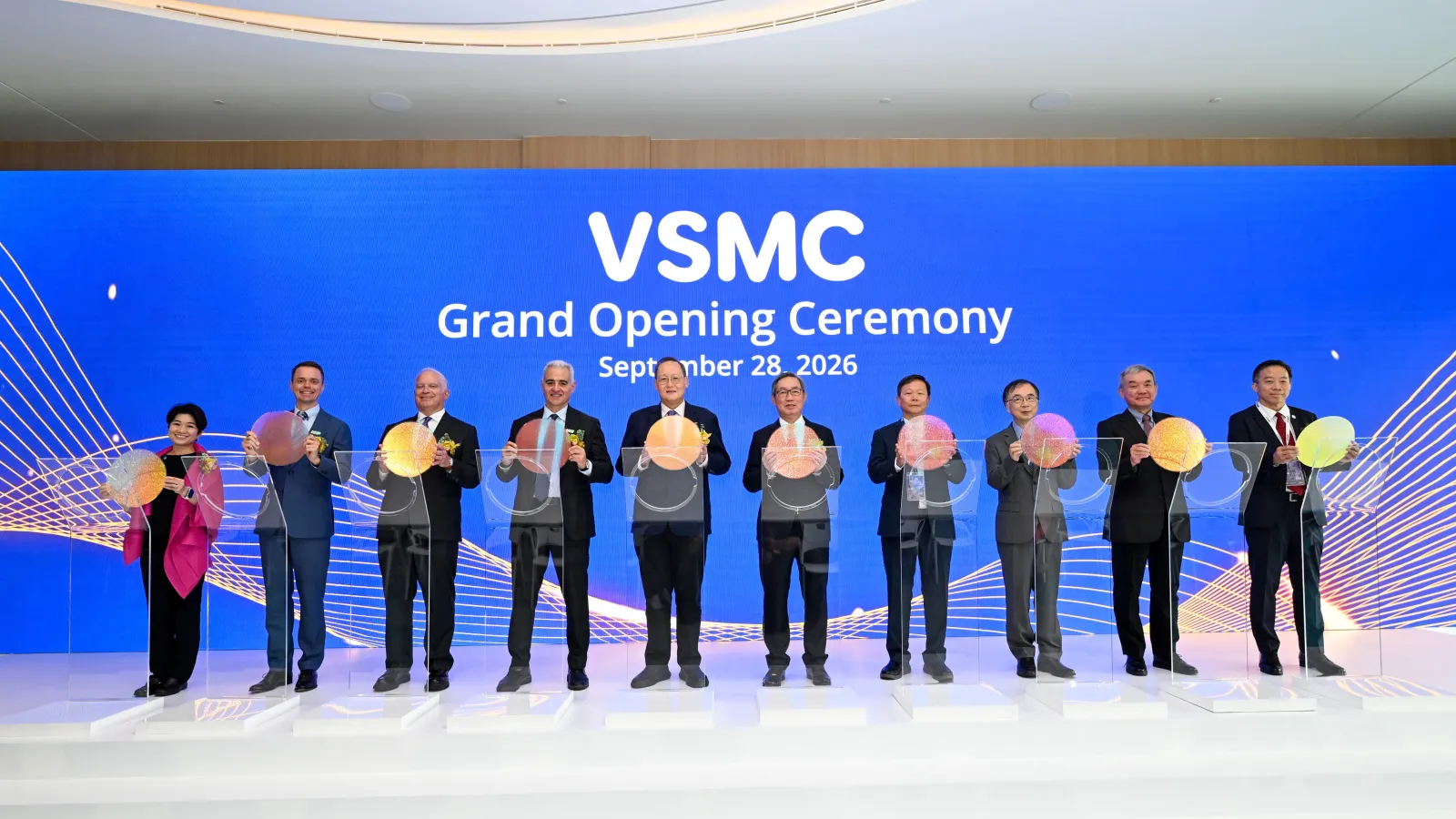
VisionPower Semiconductor Manufacturing Company (VSMC), the specialty foundry joint venture between Taiwan's Vanguard International Semiconductor (VIS) and NXP Semiconductors, has formally opened its first 12-inch (300mm) fab in Tampines, Singapore. The facility, which broke ground in December 2024, completed construction in 22 months and has entered the risk-production stage, having processed its first sample lot at yields above 99%. Volume production is scheduled to begin in the first quarter of 2027.
At full capacity by 2029, the fab is expected to produce approximately 44,000 wafers per month and create around 1,600 jobs. The facility supports process nodes from 130nm to 40nm, covering mixed-signal, power management, analog, and interposer applications. Target end markets span high-performance computing, automotive, industrial, mobile, and consumer electronics.
The fab
The facility operates on a fully automated smart manufacturing model, incorporating AI-driven process control and digital management systems to optimise yield and throughput. It was designed and built to LEED and Singapore's Green Mark sustainability standards, and VSMC says it is integrating renewable energy solutions and water-recycling practices in pursuit of greener operational outcomes.
VSMC chairman Leuh Fang described the opening as a milestone for the joint venture's ambition to strengthen global semiconductor supply-chain resilience. "With the fab now officially operational, we will be better positioned to meet our customers' growing demand for specialty IC manufacturing," Fang said.
NXP president and chief executive Rafael Sotomayor framed the investment in terms of geographic diversification, noting that the Singapore facility advances what NXP describes as a "hybrid manufacturing strategy" combining owned capacity with foundry relationships. NXP has operated in Singapore for several decades; the VSMC venture extends that footprint into 300mm territory, which NXP has previously sourced from third-party fabs.
Market context
The opening arrives at a time when the specialty foundry segment is under significant geopolitical scrutiny. Governments in the US, EU, Japan, and across Southeast Asia have actively pursued semiconductor supply-chain diversification since the chip shortages of 2021 to 2023 exposed concentration risk in Taiwan-centric production. Singapore has emerged as a beneficiary: TSMC, Micron, and several packaging-and-test specialists have expanded their presence on the island alongside VSMC.
The 40nm-to-130nm process window VSMC targets is distinct from the leading-edge logic race dominated by TSMC, Samsung, and Intel Foundry. Demand for mature-node specialty processes, particularly for automotive and industrial applications, has remained structurally robust. Automotive customers in particular require long production lifetimes, high process stability, and assured supply, characteristics that favour new entrants with modern, greenfield fabs over older capacity.
US export controls administered by the Bureau of Industry and Security (BIS) continue to shape where advanced semiconductor equipment can be shipped, but VSMC's node range sits well above the thresholds currently targeted by BIS restrictions, reducing near-term compliance risk for the venture.
VSMC has also signed memoranda of understanding with Singapore universities to support internship and professional training pipelines, reflecting a broader industry effort to close the semiconductor talent gap that has constrained fab ramp timelines globally.
The venture's next milestones to watch are the formal commencement of volume production in Q1 2027, the public disclosure of customer commitments and capacity utilisation targets, and progress toward the 44,000-wafer monthly run rate that defines full capacity by 2029.