
Jitterbit adds deep message inspection to MCP Gateway for AI governance
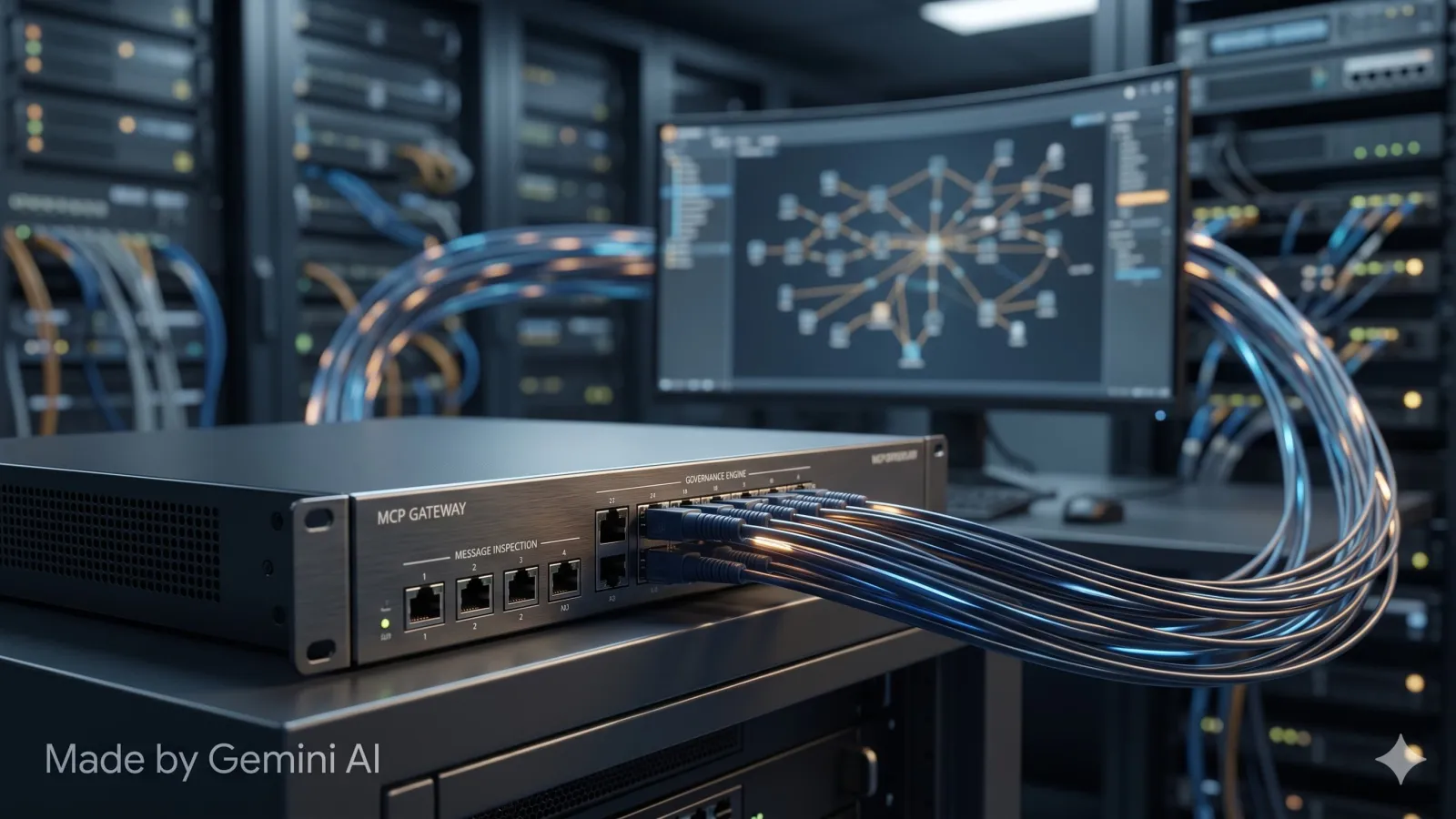
Jitterbit has updated its Harmony integration platform with a Model Context Protocol (MCP) Gateway that includes what the company describes as Deep Message Inspection (DMI) — a capability it positions as an industry first for governing AI agent traffic in real time. The Alameda, California-based vendor says the additions are aimed at enterprises struggling to bring shadow AI deployments under centralised control without slowing AI adoption.
The MCP Gateway sits between AI agents and enterprise APIs, acting as a policy-enforcement layer. According to Jitterbit, DMI monitors prompts, data exchanges and agent requests in motion, evaluating each against configurable security policies. When a transaction is flagged, the system can automatically mask sensitive data, trigger a human-review step, or block the request outright — before any data reaches an underlying language model.
What the platform adds
The Harmony MCP architecture comprises three layers: a Control Plane for lifecycle management and policy enforcement via a unified console; an MCP Runtime that exposes existing enterprise APIs and integrations as agent-ready tools; and the MCP Gateway, which governs traffic between agents and the runtime. Jitterbit says the design lets IT teams reuse existing API and iPaaS investments without rebuilding integrations from scratch, and supports switching between LLMs — the company names Claude, GPT-4 and Gemini as examples — without rewriting workflows.
DMI extends across Jitterbit's broader portfolio, including its iPaaS, EDI and API Manager offerings, providing a unified audit trail of agent actions. Chief technology officer Manoj Chaudary said the goal is to move beyond API-level security: "With Deep Message Inspection, we're moving beyond simple monitoring to provide true, real-time AI accountability."
Separately, Jitterbit announced a beta of an iPaaS AI Assistant, expected in mid-2026, that uses natural language processing to let users describe integration requirements in plain language and generate connections, queries and data transformations. The assistant is designed to work with both new and legacy projects by referencing existing data structures already defined within the platform.
Market context and competitive positioning
The enterprise integration and iPaaS market has become an increasingly busy battleground for AI-native governance tooling. Vendors including MuleSoft (Salesforce), Boomi, Workato and SnapLogic have each introduced AI-layer features over the past 18 months, and hyperscalers are embedding agentic orchestration directly into their own platforms. The Model Context Protocol — originally developed by Anthropic as a standard interface for connecting AI models to external tools — has attracted rapid adoption across this vendor landscape, making MCP-based differentiation a short-lived advantage unless backed by deeper security or operational capabilities.
The concept of "shadow AI" — employees or teams spinning up unsanctioned LLM-connected workflows outside IT visibility — has become a genuine compliance concern, particularly for organisations subject to GDPR, the EU AI Act's transparency and human-oversight requirements, or sector-specific frameworks such as DORA in financial services. Jitterbit's DMI framing maps directly onto these obligations: the EU AI Act, whose high-risk AI provisions are phasing in through 2026 and 2027, requires human oversight mechanisms and auditability of automated decisions, precisely the controls DMI claims to provide.
Standards path
Jitterbit does not reference any third-party certification or independent benchmark in this announcement, and no customer names or performance figures are disclosed. The "industry first" claim for MCP with deep message inspection is vendor-asserted and has not been validated by an external body. Enterprise buyers evaluating the platform should seek independent SOC 2 Type II audit reports and test DMI against their own data-residency policies before committing to production deployments.
The iPaaS AI Assistant beta in mid-2026 will be a near-term indicator of how well Jitterbit's natural language integration tooling performs in practice, and whether the governance layer holds up under real enterprise load.