
3D Systems wins EU MDR Class IIa cert for NextDent jetted denture line
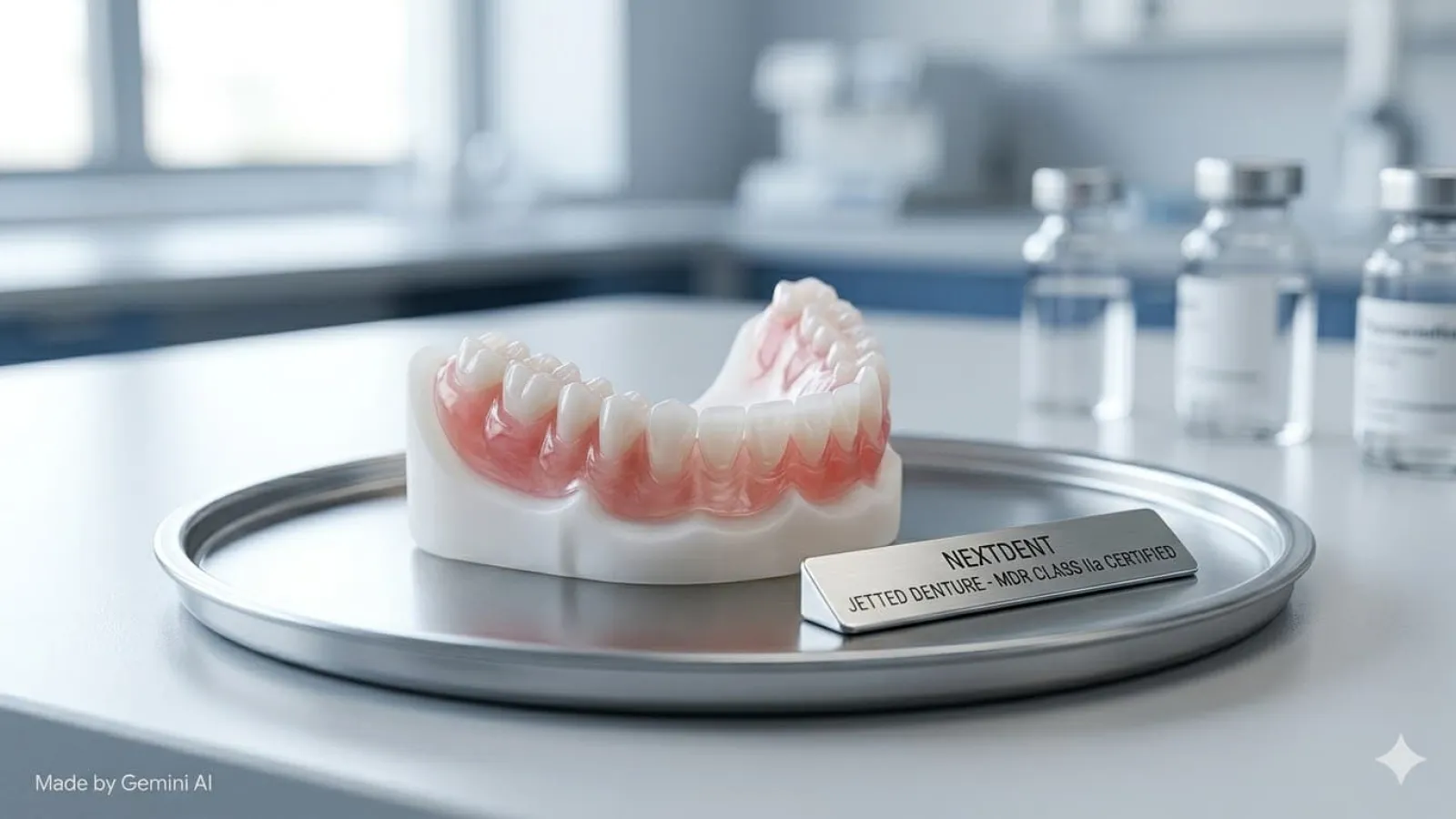
3D Systems has obtained Class IIa certification under the EU Medical Device Regulation (MDR 2017/745) for its NextDent Jet Base and NextDent Jet Teeth materials, alongside the NextDent 300 MultiJet 3D printer. The NYSE-listed additive-manufacturing group said European commercial availability begins on 4 May 2026, roughly two months ahead of its previously stated summer target.
The certification follows a full-scope EU MDR approval the company announced in March 2026 and covers the complete NextDent Jetted Denture Solution — hardware, materials, software and application support — sold as an integrated workflow through 3D Systems and its distribution partners. The company positions the system as the first monolithic, multi-material jetted denture workflow on the market, capable of producing patient-specific dentures in a single print run without additional post-curing.
The product and the market claim
President and chief executive Jeffrey Graves said the certification "validates the strength of our clinical data, quality systems, and innovation pipeline" and that the company expects the platform to "drive significant recurring revenue through premium materials." The revenue projection is forward-looking and subject to the usual execution risks; 3D Systems did not disclose committed contract values, pricing per unit, or early EU order volumes.
The company estimates the combined US and EU addressable market at over 60 million edentulous — fully toothless — patients, representing what it describes as a multi-billion-dollar denture opportunity. That figure is drawn from internal estimates and third-party market data rather than a named independent research house, so the sizing should be treated as directional.
Early US market feedback cited in the release covers patient satisfaction with aesthetics, comfort and performance, but no clinical trial data or specific satisfaction scores were provided.
Competitive landscape and regulatory context
The digital-dentistry sector has attracted significant investment over the past five years, with a range of players offering CAD/CAM milling, resin-based 3D printing, and hybrid workflows for prosthetics and restorative applications. Competitors operating in adjacent spaces include Envista Holdings (Dentsply Sirona-adjacent brands), Straumann Group, and a number of specialist dental-3D-printing software and materials vendors. The claimed advantage of a single-print, no-post-cure monolithic workflow is meaningful for lab throughput if borne out in practice, but durability and long-term clinical outcomes at scale remain to be demonstrated in peer-reviewed literature.
On the regulatory side, EU MDR 2017/745 replaced the older Medical Device Directive and introduced more rigorous clinical evidence requirements, post-market surveillance obligations and Notified Body scrutiny for Class IIa devices — the moderate-risk tier covering most active dental implants and prosthetic materials. Achieving Class IIa status is a materially higher bar than the legacy MDD framework, which gives the certification genuine credibility with EU dental-procurement bodies. Manufacturers selling under MDR must also maintain a European Authorised Representative and submit periodic safety update reports, adding recurring compliance overhead that can disadvantage smaller entrants.
For 3D Systems, the dental segment forms part of a broader strategy to grow high-margin materials revenue alongside hardware sales — a model familiar from the industrial inkjet and plastics-printing markets. Recurring consumables tied to a certified clinical workflow can command premium pricing and lock in laboratory customers in ways that commodity hardware alone cannot. Investors will be watching whether European adoption curves match the company's US trajectory, and whether the materials attach-rate justifies the certification investment at the platform level.