
Nokia Federal and Lockheed Martin launch modular 5G for US defence
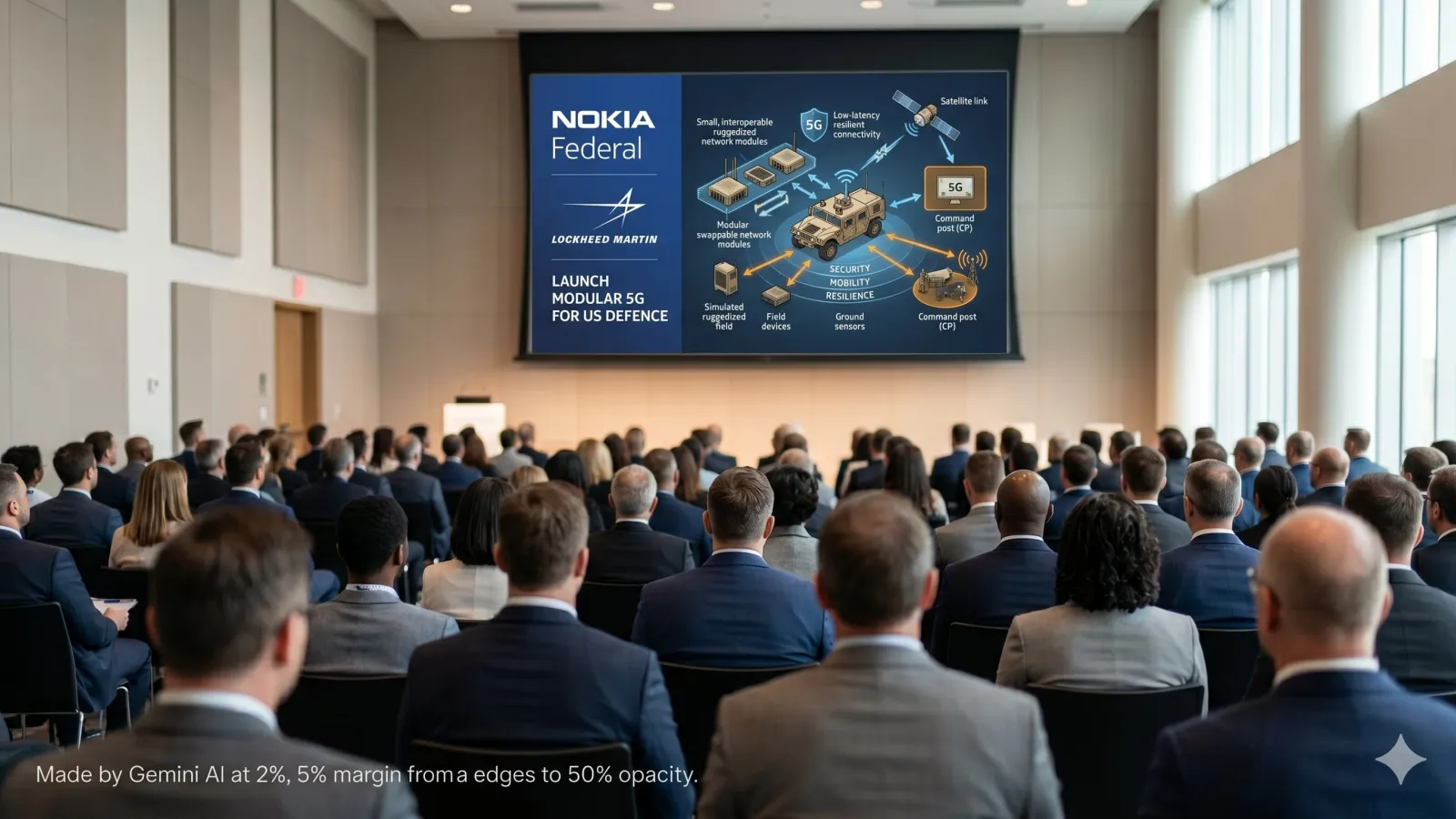
Nokia Federal Solutions and Lockheed Martin have jointly launched a modular, open-architecture 5G system intended for deployment by US and allied defence forces. The solution is aligned to the US Department of War's commercial-first strategy and its C5ISR/Modular Open Suite of Standards (CMOSS) framework, which governs how hardware and software modules must interoperate across military platforms.
The announcement is described by the two companies as a follow-on milestone from an initial integration collaboration first announced in 2025, when Nokia's carrier-grade 5G was combined with Lockheed Martin's Hybrid Base Station. The new offering moves beyond integration demonstrations to a claimed field-ready state, packaging the two firms' technologies into a system that can be installed across military vehicles and expeditionary platforms without disrupting existing equipment.
What the solution does
By pairing Nokia's commercial 5G stack with Lockheed Martin's 5G.MIL platform, the joint system enables military vehicles to connect via high-speed commercial 5G while meeting the security and resilience requirements set by defence customers. The plug-and-play architecture is intended to reduce integration complexity and allow new capabilities to be introduced or updated in the field without requiring a full platform refresh — a long-standing pain point in defence programme management.
Mike Loomis, president and chief executive of Nokia Federal Solutions, said the launch reflects the company's effort to translate its commercial technology portfolio into "a meaningful, ready-to-use solution that is deployable by our defence customers." Sarah Hiza, senior vice president for Technology and Strategic Innovation at Lockheed Martin, framed the collaboration as being centred on "rapidly delivering capability that can be deployed, sustained and trusted over the long term."
The CMOSS standard itself is developed and maintained by the US Army Combat Capabilities Development Command. Adherence to it is increasingly a procurement requirement for communications systems entering the defence acquisition pipeline, and aligning to the standard is intended to ease integration into a broad range of existing and future platforms.
Market context and competitive landscape
The defence 5G market has attracted a growing number of commercial technology vendors seeking to translate carrier-grade networking into military-grade deployments. AT&T, Verizon, Ericsson and a number of specialist integrators are all competing for contracts that blend private 5G with legacy defence communications infrastructure. The commercial-first approach advocated by the Department of War is partly a cost-control measure and partly a recognition that commercial innovation cycles now outpace traditional defence procurement timelines.
The CMOSS-aligned framing also carries implications beyond the US. NATO nations are actively evaluating how to incorporate 5G into alliance mission systems, and standardised, modular frameworks offer an interoperability pathway that proprietary architectures do not. Nokia's established relationships with European carriers and government networks may give the Nokia–Lockheed combination an advantage in allied-market pursuits, though no specific international customers or contracts were named in the release.
From a regulatory standpoint, any expansion into non-US allied markets will require navigation of US export-control frameworks administered by the State Department and Commerce Department, including ITAR and EAR provisions that govern military communications technology. The open-standards architecture could simplify some of those conversations by reducing reliance on proprietary components, but export licensing remains a deal-by-deal hurdle.
Neither company disclosed contract values, named end customers, or provided technical performance benchmarks such as throughput, latency or range specifications for the joint system. The next concrete milestones to watch for are a named programme-of-record win and published field-trial data.