
Mercury Systems taps Palantir Foundry to automate defence factory ops
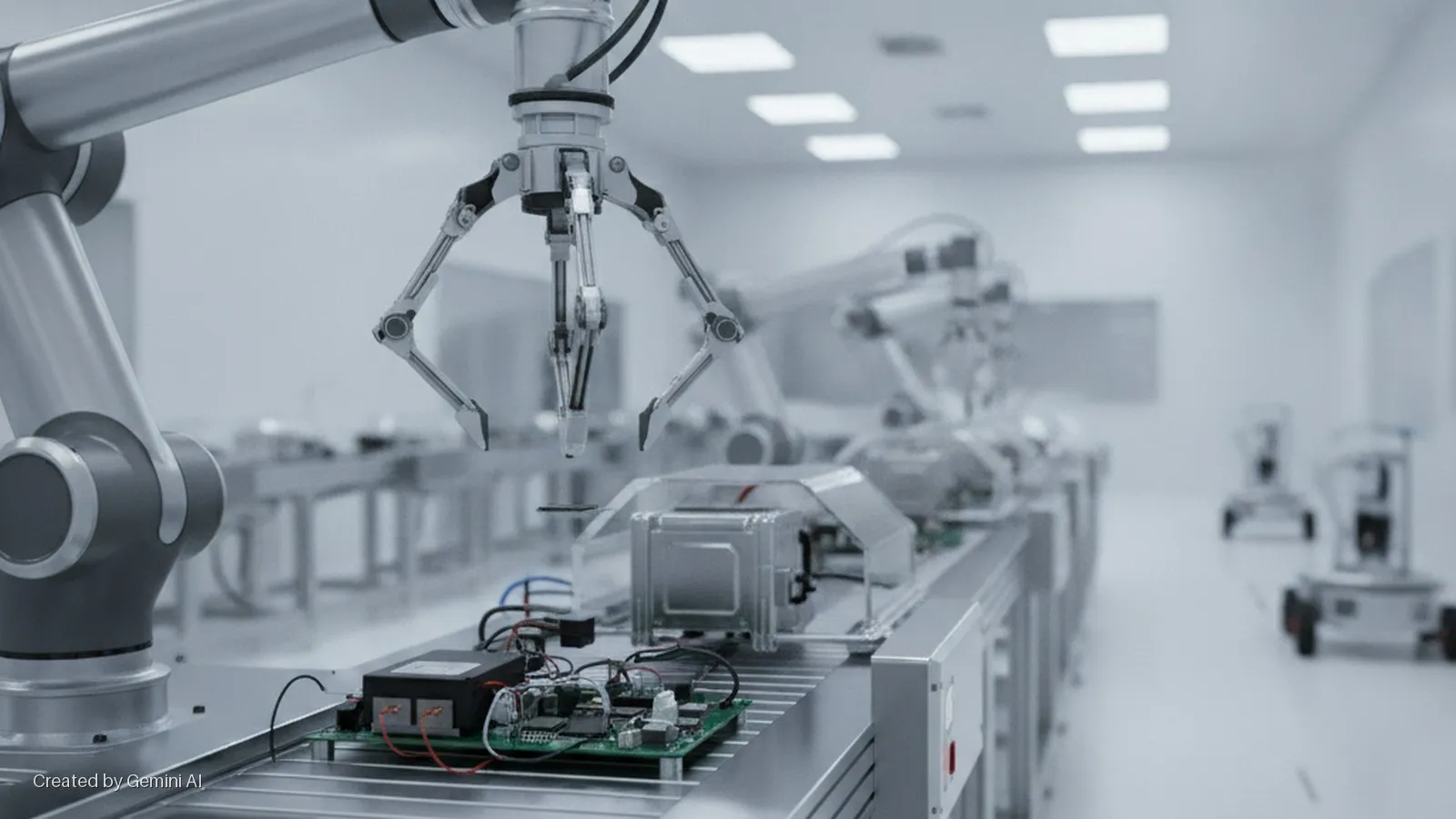
Mercury Systems (NASDAQ: MRCY) and Palantir (NASDAQ: PLTR) have announced a strategic agreement to deploy AI software across Mercury's manufacturing operations, with the stated aim of cutting delivery timelines and increasing throughput on US military programmes. The deal is sponsored under a Tradewind Prototype Agreement with the US Government and forms part of a broader Palantir initiative to embed its software across the American defence industrial base.
Under the arrangement, Palantir will deploy two initial workflows targeting material planning and factory floor operations. Mercury expects the tooling to reduce manual workloads and expand production capacity without proportionally increasing costs. A longer-term deliverable is the construction of an enterprise ontology using Palantir's Foundry platform, which will function as a digital twin of Mercury's operations, intended to improve production predictability and accelerate decision-making.
Bill Ballhaus, Mercury's chairman and chief executive, said the partnership was central to the company's wider programme of operational improvement. "Partnering with Palantir will enable Mercury to further drive automation and efficiency in our supply chain and manufacturing operations, which are key to accelerating delivery of critical, high-demand capabilities for the warfighter," he said.
Mike Gallagher, Palantir's Head of Defense, framed the deal in terms of US strategic readiness, saying that integrating data sources within a shared operational layer would allow Mercury to "deliver vital processing technologies at the speed and scale necessary to maintain US deterrence and warfighting advantage."
Market context
Palantir has been systematically expanding its footprint among second and third-tier defence contractors, using its Foundry and AIP platforms to address supply-chain fragility exposed during recent US defence procurement reviews. Mercury is one of several mid-tier suppliers the company has engaged; peers in the defence electronics sub-sector, including Curtiss-Wright and Kratos Defense, are similarly under pressure from the Pentagon to compress production cycles on high-priority programmes including electronic warfare, signals intelligence and edge-compute systems destined for contested environments.
The broader push to modernise the US defence industrial base has intensified since 2023, when the Department of Defense identified supply-chain throughput as a critical vulnerability. Factory digitalisation, digital twins and AI-assisted demand forecasting are now recurring themes in Department of War contracting language, reflecting a shift from bespoke programme management to commercial software adoption.
Regulatory and procurement considerations
The Tradewind framework under which this effort is funded is a rapid-acquisition vehicle designed to prototype and transition commercial technology into defence programmes faster than traditional Federal Acquisition Regulation pathways allow. That context matters commercially: it signals a relatively low barrier to contract execution but also means the work remains at prototype stage, with no guarantee of a full production contract unless Mercury can demonstrate measurable improvements in output metrics.
Mercury carries existing compliance obligations under the Defense Federal Acquisition Regulation Supplement (DFARS) and must maintain manufacturing quality certifications such as AS9100. Any AI-assisted production system operating in that environment will need to demonstrate auditability and traceability, areas where Palantir has invested heavily in its government-facing product line. Neither company disclosed financial terms of the agreement.