
Sentinel AMS launches StarForge consortium with $10m Lockheed input
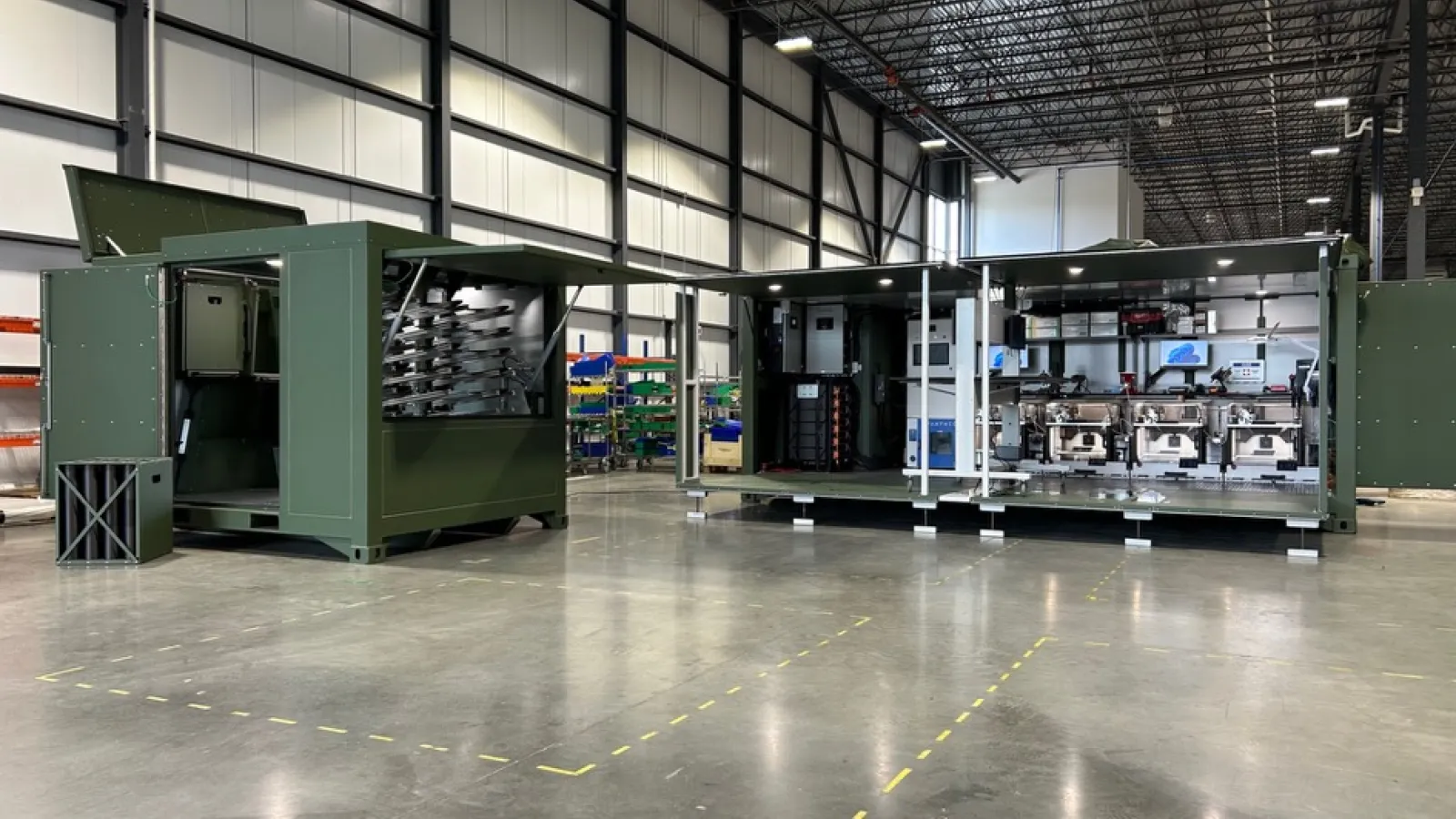
Sentinel Advanced Military Solutions, a Quebec-based subsidiary of CMP Advanced Mechanical Solutions, has launched an integrated defence technology consortium centred on its StarForge platform. The announcement was made at CANSEC 2026, Canada's principal defence and security trade show. The consortium brings together Canadian and allied partners across unmanned systems, AI-enabled sensing, tactical communications, edge manufacturing, and deployable power, with the University of Alberta providing research infrastructure and sovereign IP development.
The Lockheed Martin contribution takes the form of a $10 million Industrial and Technological Benefits (ITB) payment linked to Canada's acquisition of 26 HIMARS long-range rocket systems under the Long-Range Precision Fires Project. Canada's ITB policy obliges foreign defence prime contractors to direct proportional economic benefit back into Canadian industry when major procurement contracts are awarded. The funds carry no equity transfer and no repayment obligation, and are earmarked for novel IP development across the consortium, with the majority flowing to Canadian small and medium-sized enterprises.
Lockheed Martin Skunk Works, operating out of Calgary, Alberta, is identified as a critical technology contributor. It is providing the primary Command and Control system, VCSi, alongside sensor fusion capabilities and systems integration expertise.
The StarForge platform
Sentinel positions StarForge as a deployable system capable of operating in contested, infrastructure-sparse environments including Arctic terrain and forward operating bases. The platform is described as combining command and control, secure mesh communications, autonomous surveillance, on-site power generation, and field manufacturing, including additive production of drone components and replacement parts. Chief executive John Soares said the vision is a capability that can be stood up within hours of arriving at a remote location with no conventional supply chain.
CMP Advanced Mechanical Solutions, the parent company, employs more than 700 people and provides the vertically integrated manufacturing base that Sentinel says distinguishes it from pure-play defence technology startups. The consortium's partners span Atlantic Canada, Quebec, Ontario, British Columbia, and Alberta.
Market and policy context
The announcement lands at a moment of significant expansion in Canadian defence spending. Canada's Defence Industrial Strategy, published earlier in 2026, identified $180 billion in procurement opportunities and $290 billion in defence-related capital investment over the next decade. That policy explicitly requires Canadian industry to be positioned to deliver sovereign, scalable capability domestically, rather than relying on foreign prime contractors for end-to-end supply.
The broader market context is competitive. Counter-UAS, autonomous sensing, and edge manufacturing are among the fastest-growing categories in Western allied defence spending, with the war in Ukraine having accelerated demand for low-cost autonomous platforms and AI-enabled battlefield systems. A number of NATO-aligned startups and established primes are pursuing similar integrated-ecosystem approaches, making the speed of prototype-to-deployment transition a key differentiator.
For Sentinel, the immediate milestones to watch will be named programme wins beyond the HIMARS-linked ITB context, published performance data for StarForge in field conditions, and progress on the University of Alberta research partnership's IP outputs. The consortium model, connecting regional innovators into a nationally integrated network, mirrors approaches seen in UK and Australian sovereign defence programmes, where government procurement policy has been used deliberately to build domestic industrial capacity rather than import finished systems.