
Virtuix picks AVRT for Marine Corps VR infantry trainer
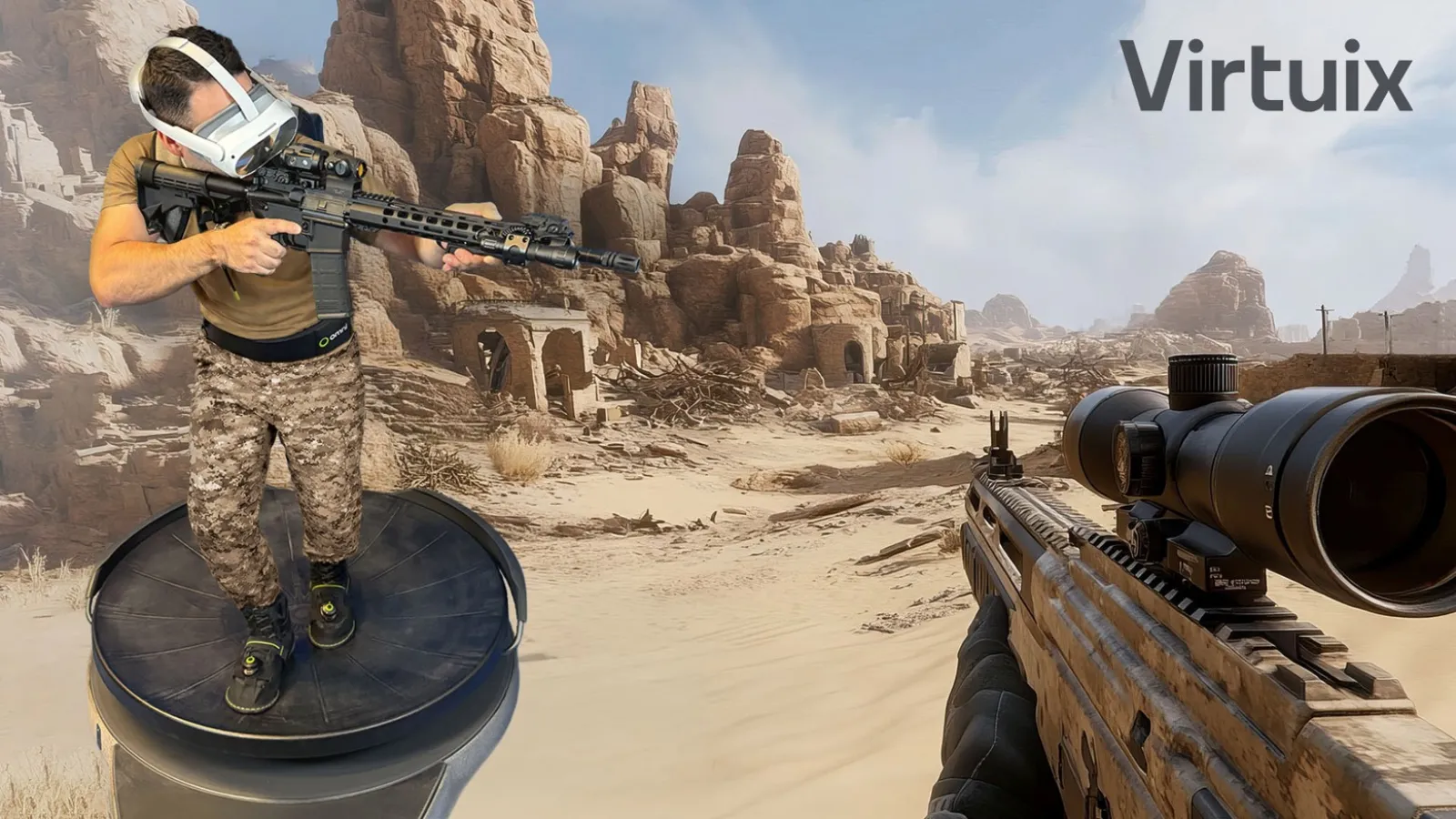
Virtuix Holdings (NASDAQ: VTIX) has named Adaptive Virtual Reality Training (AVRT) as a key subcontractor on the US Marine Corps Infantry Fireteam Virtual Trainer (IFVT), a multi-user immersive simulation system being developed through defence services firm KBR, on which Virtuix holds the lead integrator role.
AVRT will supply its tracked synthetic weapon system, based on an M4 rifle surrogate, along with instructor tools and mission scenario content. These will be integrated with Virtuix's Omni One omni-directional treadmill platform, which allows trainees to walk, run and crouch in physical space rather than relying on joystick input or limited room-scale navigation. Meta Quest headsets complete the hardware stack. The system supports up to four Marines training together through close-quarters battle drills, patrol operations, threat identification and mission rehearsal scenarios, with instructors monitoring exercises in real time and running after-action reviews.
The deal
Delivery to the Marine Corps base at Quantico, Virginia is scheduled for the fourth quarter of 2026. If the system passes operational assessment, Virtuix said the programme could be extended to Marine Corps training centres across the country, though no contract value, unit volumes or expansion timeline were disclosed in the release.
Jan Goetgeluk, founder and chief executive of Virtuix, said: "Natural locomotion fundamentally changes how Marines train by allowing them to move exactly as they would in combat instead of relying on joysticks or teleportation."
The IFVT contract sits within a broader push into the defence sector. Over the past twelve months Virtuix also received a US Air Force SBIR Phase I award, entered a development agreement with the US Navy, sold systems to the US Army and the Pennsylvania Air National Guard, and partnered with LeadTech on a counter-UAS training system. The company additionally completed a collaboration with NASA on a Moon and Mars exploration analogue mission and deployed a system to Tesla's Optimus robotics division.
Market context
Military and law-enforcement VR training is a growing niche within the broader extended-reality market. The appeal is straightforward: immersive simulation can replicate high-stress tactical scenarios at a fraction of the cost and logistical overhead of live-fire ranges, and results are more repeatable and instrumented than traditional exercises. A number of specialist vendors compete in this space, offering tracked-weapon platforms, synthetic training environments and after-action review tooling to armed forces and public safety agencies in the US and allied nations.
Virtuix's differentiation rests on its locomotion hardware. Most military VR solutions use stationary platforms or limited-area setups; the Omni One treadmill claims unrestricted 360-degree movement, which the company positions as a more faithful replication of the physical demands of infantry combat. Whether that advantage translates into a durable procurement edge will depend on how the Quantico operational assessment scores the system against conventional approaches and competing vendors.
From a procurement perspective, the programme operates under a US government contracting framework, which carries inherent risks including potential contract cancellation, scope changes or funding modifications, as noted in the company's forward-looking disclosures. Investors in the small-cap NASDAQ-listed stock should weight those caveats accordingly when evaluating the pipeline of defence engagements the company has outlined.