
Crusoe and Lancium plan 1 GW AI data centre campus in Texas
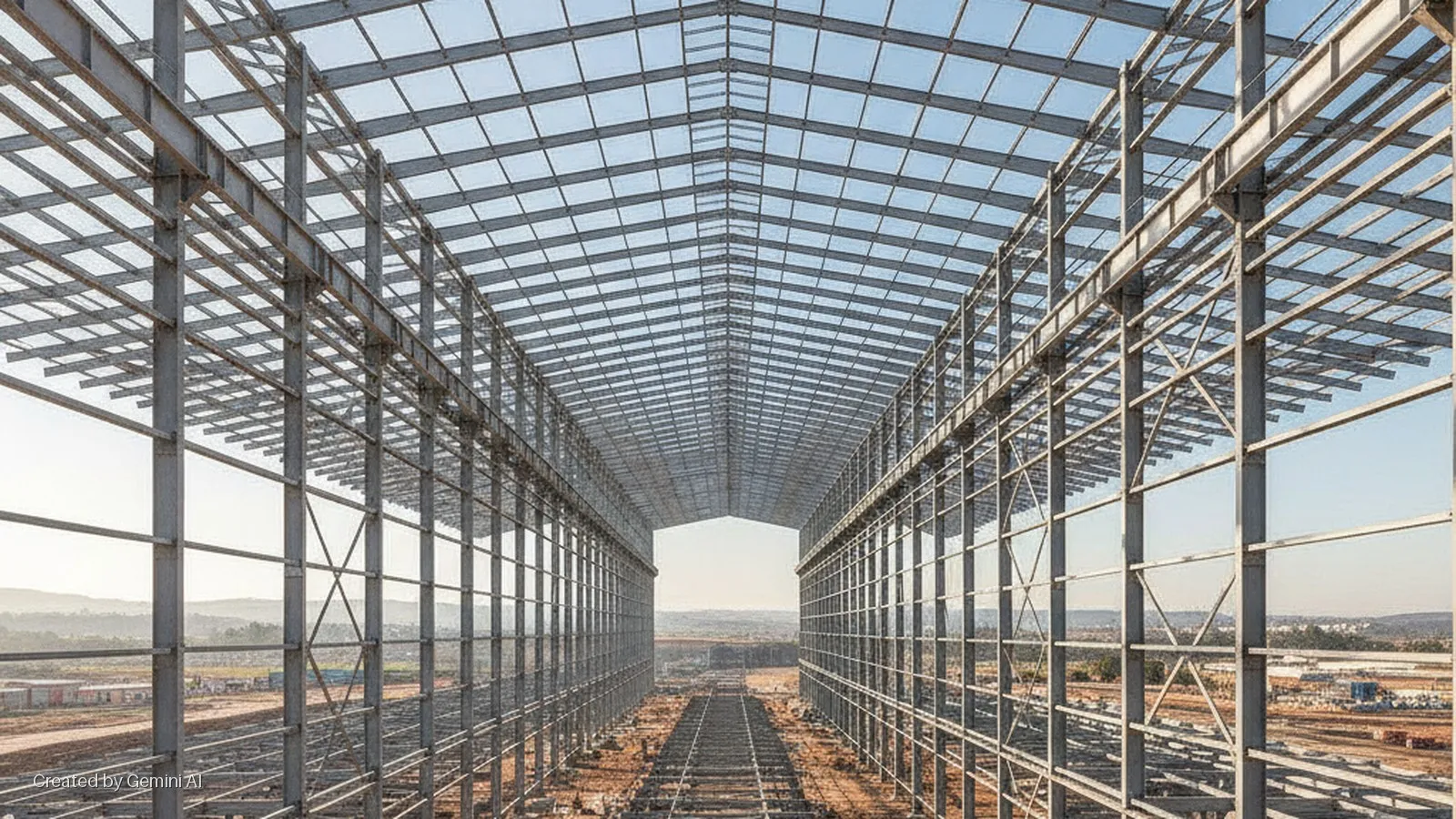
Crusoe and Lancium have announced a 1.0 gigawatt AI data centre campus in Childress, Texas, extending a partnership structure the two companies first deployed in Abilene. Lancium will own the 270-acre site, secure the grid interconnect, and manage energy orchestration; Crusoe will design, build, and operate the data centre itself. Construction is expected to begin in Q3 2026.
The campus will be purpose-built to serve a single unnamed hyperscale technology company. At full capacity, the site is intended to support hundreds of thousands of advanced AI accelerators for both training and inference workloads. The release did not disclose financial terms, the identity of the hyperscaler tenant, or a target completion date.
The campus and its infrastructure
Three technical features distinguish the Childress site from a generic co-location build. The campus will incorporate behind-the-meter solar generation and battery storage to supplement grid supply, which Lancium says improves reliability and reduces exposure to grid price volatility. Cooling will use a closed-loop, non-evaporative liquid system, an approach that avoids the large water-consumption footprint of traditional evaporative cooling towers and is increasingly favoured as regulators and communities scrutinise data centre water use. The combination of on-site generation and liquid cooling reflects a broader industry push to de-risk power supply and reduce environmental friction in permitting.
Chase Lochmiller, co-founder and chief executive of Crusoe, described the Childress project as "more than a data centre," citing a long-term commitment to the local community, including direct investment in water infrastructure, housing, education, and emergency services. Lancium chief executive Michael McNamara said the Childress campus is a "natural next step" in the two companies' working relationship. The development is projected to generate thousands of construction roles and more than 100 permanent positions in Childress County.
Market context and competitive positioning
The Crusoe-Lancium model is notable for its vertical integration across energy management and compute operations, a structure that competes with both hyperscaler-owned campuses and independent co-location operators such as Equinix, Digital Realty, and QTS. The partnership's playbook in Abilene, where the first two buildings were energised within a year of breaking ground in June 2024 before the campus expanded to 1.2 GW, gives the model a track record that pure-play developers cannot yet match at comparable scale. Crusoe is also building a separate 900 MW facility on adjacent Lancium land in Abilene, bringing the two companies' combined Texas footprint toward 3 GW if both projects reach full capacity.
The broader US hyperscaler data centre buildout has accelerated sharply since 2024 as demand for AI training and inference infrastructure outpaces available power. West Texas has attracted significant investment because of its relatively low grid congestion and proximity to large renewable generation, though ERCOT grid constraints and interconnect queues remain practical bottlenecks for projects of this scale. The Texas Public Utility Commission has been actively reviewing interconnection procedures in response to the surge in large-load applications.
The Childress announcement adds to a picture of sustained capital flowing into purpose-built AI infrastructure outside traditional data centre markets. Whether the Crusoe-Lancium model can be replicated in jurisdictions with more complex permitting environments or less favourable power economics will be a key test of its long-term scalability.