
Lettie launches free maintenance reporting plan for small landlords
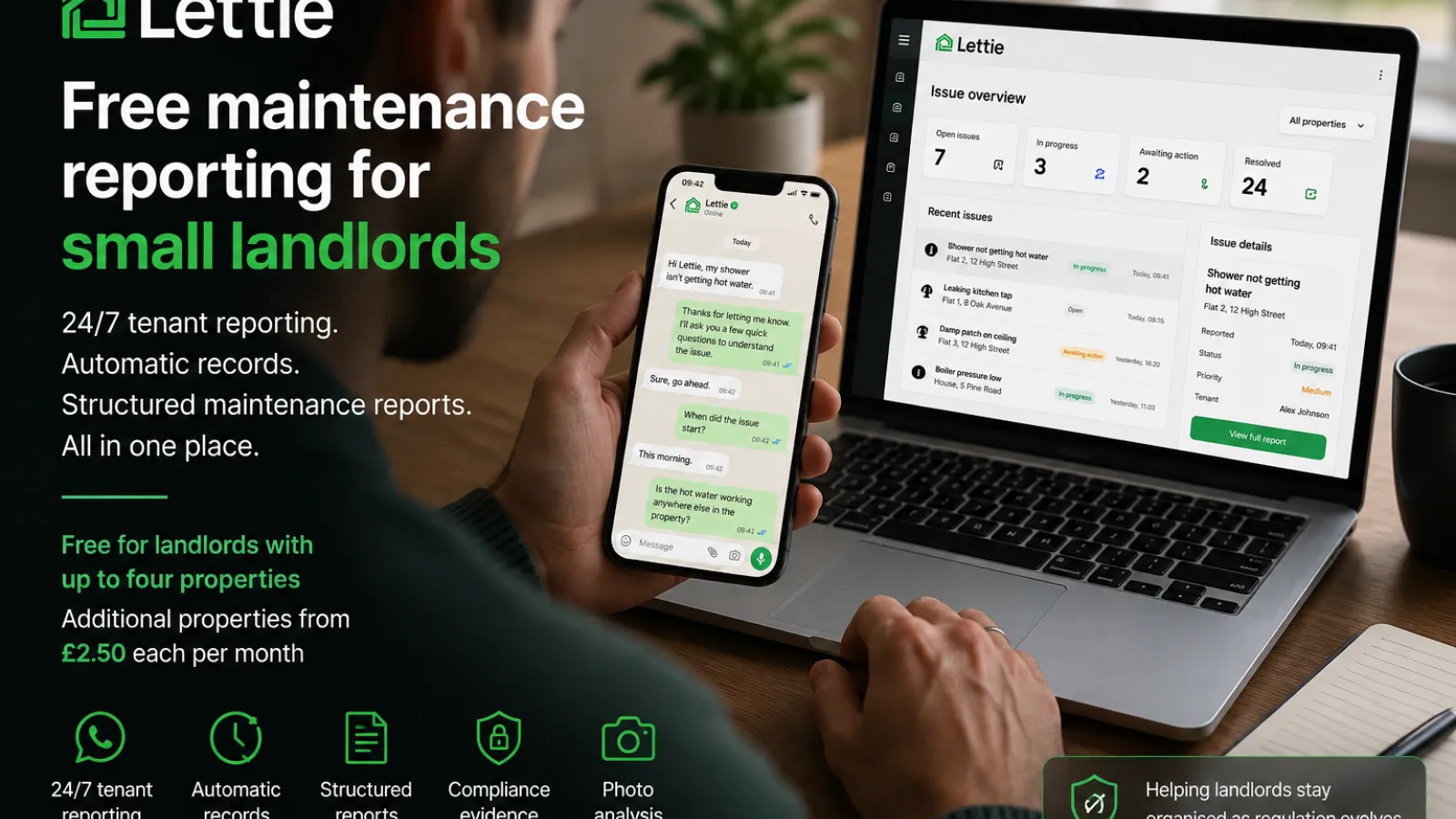
Qualisync, the Suffolk-based software company behind the Lettie platform, has launched a free tier of its tenant maintenance reporting service for landlords managing up to four rental properties. The move targets the estimated 83% of landlords in England who fall within that threshold, according to government research cited in the release, and removes what the company describes as the primary barrier to structured record-keeping for smaller portfolio holders.
Under the free plan, landlords gain access to 24/7 tenant maintenance reporting via WhatsApp, automated triage, time-stamped communication logs, photographic fault analysis, a web dashboard, prioritised issue tracking, structured maintenance reports, automated tenant onboarding, and a compliance evidence locker. Additional properties beyond the four-property ceiling can be added at £2.50 per property per month. No payment card is required to register.
The regulatory backdrop
The timing is deliberate. The first phase of the Renters' Rights Act 2025, which received Royal Assent in October 2025, came into force on 1 May 2026. A regional rollout of the government's planned Private Rented Sector Database is expected to begin later this year, while mandatory membership of a Private Rented Sector Landlord Ombudsman is currently anticipated in 2028. The future extension of Awaab's Law to privately rented homes, which would impose stricter timelines for addressing hazardous conditions such as damp and mould, has been announced but has not yet received a confirmed implementation timetable.
Together, these measures are expected to place greater weight on documentary evidence: what was reported, when, how it was triaged, and what action followed. Calum Hopkins, co-founder of Qualisync, said the challenge for smaller landlords is not intent but documentation. "Maintenance conversations often happen across phone calls, emails, text messages and WhatsApp, making it difficult to demonstrate exactly what happened if questions are raised months later," he said. "Software cannot make a property safe or carry out a repair. What it can do is ensure a report isn't lost, the right questions are asked promptly and there is a reliable record for the landlord, tenant or anyone later reviewing how an issue was managed."
Market context and competitive landscape
The private rented sector compliance-software market is crowded at the upper end, with established property management platforms such as Arthur Online, Fixflo and Landlord Vision offering maintenance workflow tools as part of broader subscription suites. Fixflo in particular has carved a strong position in mid-to-large agency and build-to-rent portfolios, but its pricing and feature depth are aimed at professional operators rather than the fragmented small-landlord segment.
Lettie's WhatsApp-native approach is a meaningful differentiator in that segment: tenants do not need to download a separate app, which reduces the adoption friction that has historically limited uptake of structured reporting tools among smaller portfolios. The automated audit trail is also positioned to serve as evidence in potential Ombudsman proceedings, a use case that will become commercially relevant once mandatory Ombudsman membership takes effect.
The broader UK proptech market has attracted sustained venture interest over the past three years, with investment flowing into rent-collection automation, energy performance certificate management, and compliance tooling ahead of anticipated regulatory deadlines. Qualisync's freemium entry point follows a pattern seen across B2B SaaS in regulated verticals: establish market presence at zero cost during a period of regulatory transition, then convert users as compliance obligations intensify. Investors and observers will be watching whether the conversion rate from free to paid tiers proves sufficient to sustain the model as the regulatory calendar progresses.