
Sandisk unveils BiCS10 NAND and HBF technology at FMS 2026
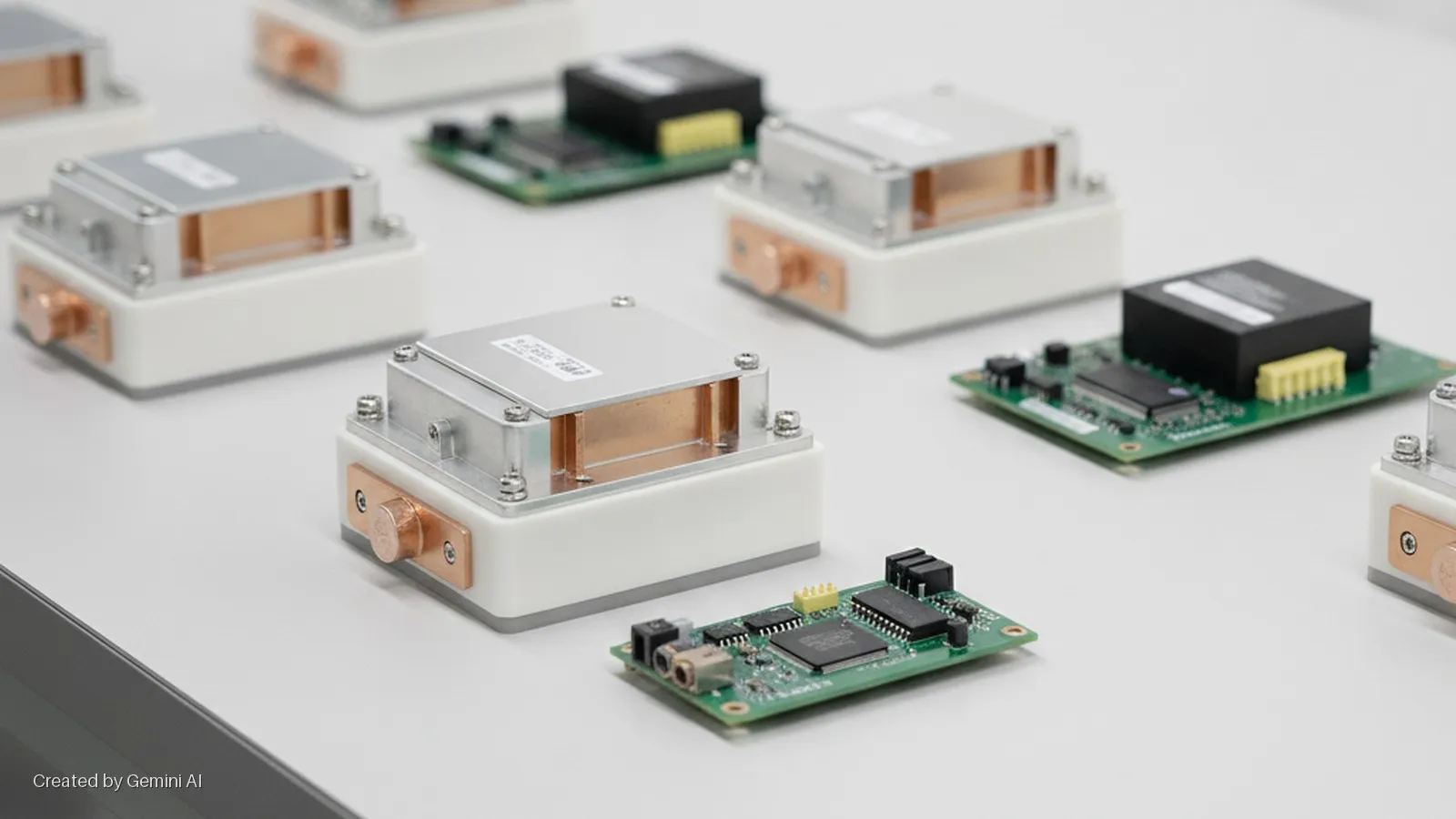
Sandisk used its appearance at the Future of Memory and Storage (FMS) 2026 conference in Santa Clara this week to present a suite of NAND innovations aimed squarely at AI inference infrastructure. The NASDAQ-listed flash-memory vendor (SNDK) highlighted four product and framework disclosures across its booth and keynote sessions, arguing that storage capacity, bandwidth and power efficiency have become as strategically important as compute in large-scale AI deployments.
The announcement comes as AI model sizes continue to expand, context windows lengthen, and agentic workloads place new demands on memory hierarchies. Sandisk's chief product officer Karam Ishmail said the company sees a structural shift under way. "As AI inference scales, customers need memory and storage technologies that deliver the right performance, capacities and power efficiency without adding complexity to the infrastructure," he said. "Building on decades of flash innovation, Sandisk continues to advance next-generation NAND alongside emerging technologies like HBF to move the industry forward."
What Sandisk showed at FMS
The centrepiece of the company's technical programme was BiCS10 QLC NAND, the latest generation of its 3D NAND architecture. Sandisk positions BiCS10 as delivering higher storage density, improved performance and better power efficiency than its predecessors, making it suited to AI data lakes, model storage and retrieval-augmented generation (RAG) workflows. Full benchmark specifications were not included in the release.
Alongside BiCS10, the company introduced an updated version of its AI Data Cycle framework, a proprietary mapping tool designed to characterise storage requirements at each stage of the AI pipeline, from raw data archives and high-speed data lakes through training, inference and AI-generated content repositories.
The most technically distinctive disclosure was HBF (High Bandwidth Flash), a NAND-based memory technology Sandisk describes as a new category aimed at large-scale AI inference. A panel session on the Thursday of the conference brought together Sandisk, Google and SK hynix to discuss HBF architecture, its ecosystem requirements, and what would be needed to make the technology deployable in real-world AI infrastructure. Sandisk did not publish qubit-level or bandwidth specifications in its release, but the presence of Google and SK hynix on the panel suggests early ecosystem formation around the standard.
The company also showcased Enterprise SSDs with high-endurance configurations for KV Cache workloads, forward-looking PCIe Gen 6 support, high-capacity E3.S form factors, and reduced DRAM dependency.
Market context and competitive landscape
The enterprise storage market is consolidating around AI-driven demand. Hyperscalers and large cloud providers have driven a multi-year investment cycle in NVMe SSD capacity, but inference at scale is surfacing a new constraint: the gap between GPU memory bandwidth and the volume of model weights and context data that must be streamed from storage. This is the gap that both HBF and high-density QLC NAND are designed to address.
Sandisk competes in this space against Samsung and SK hynix on the NAND side, and against a broader set of storage architects including Micron and Kioxia. SK hynix's participation alongside Sandisk and Google in the HBF session at FMS is notable: it signals that at least two major NAND vendors are aligning on a shared architectural approach, which could accelerate standardisation through bodies such as JEDEC or the Storage Networking Industry Association (SNIA).
Power efficiency is increasingly a boardroom-level concern for data-centre operators. Under the EU's Energy Efficiency Directive and emerging UK data-centre sustainability guidance, operators face growing pressure to account for storage-tier power draw alongside compute. QLC NAND's density-per-watt advantage over DRAM-heavy architectures gives vendors a regulatory as well as economic argument for adoption.
Sandisk's next near-term milestones will be commercial availability dates and independent benchmark results for BiCS10 and HBF. Customer design wins and any JEDEC standardisation progress for HBF will be the metrics the market watches most closely.